
The Messiah is the Zohar

The Messiah is the Zohar
By
James Scott Trimm

We read in the Book of Hebrews:

1 Elohim, who at sundry times and in divers manners spake in time past to the fathers by the prophets,
2 Has in these last days spoken unto us by his Son, whom he has appointed heir of all things, by whom also he made the worlds;
3 Who being the brightness of his glory, and the express image of his person, and upholding all things by the word of his power, when he had by himself purged our sins, sat down on the right hand of the Majesty on high;
(Heb. 1:1-3)

The word for “brightness” above, in our Hebrew manuscripts of Hebrews, is “zohar”. Of course many know that there is a book known as the Zohar, but fewer know the original significance of the term. The Hebrew word ZOHAR appears only twice in the Tanak. One of these is in the Book of Daniel:

And they that are wise, shall shine as the brightness [Zohar] of the firmament, and they that turn the many to righteousness, as the stars; forever and ever.
(Dan. 12:3)

The other is in the Book of Ezekiel as part of Ezekiel’s description of the “Likeness” of Elohim:

Then I beheld, and behold, a likeness as the appearance of fire. From the appearance of his loins and downward, fire: and from his loins and upward, as the appearance of brightness (Zohar), as the color of electrum.
(Ezekiel 8:2)

This brings us to Ezekiel’s vision of the Merkavah (Divine Throne-Chariot):

22 And over the heads of the living creatures there was the likeness of a firmament; like the color of the terrible ice, stretched forth over their heads above.
23 And under the firmament were their wings conformable, the one to the other. This one of them had two which covered, and that one of them had two which covered, their bodies.
24 And when they went, I heard the noise of their wings like the noise of great waters; like the voice of Shaddai–a noise of tumult like the noise of a host. When they stood, they let down their wings.
25 For, when there was a voice above the firmament that was over their heads, as they stood, they let down their wings.
26 And above the firmament that was over their heads, was the likeness of a throne, as the appearance of a sapphire stone. And upon the likeness of the throne was a likeness as the appearance of a man, upon it; above.
27 And I saw as the color of electrum, as the appearance of fire round about enclosing it, from the appearance of his loins and upward. And from the appearance of his loins and downward, I saw as it were the appearance of fire, and there was brightness round about him.
28 As the appearance of the bow that is in the cloud in the day of rain, so was the appearance of the brightness round about. This was the appearance of the likeness of the glory of YHWH. And when I saw it, I fell upon my face, and I heard a voice of one that spoke.
(Ezekiel 1:22-28)

The “firmament” mentioned by Daniel is that which is above the four living creatures in Ezekiel 1:22.  The Zohar is the brightness of the likeness seated on the Merkavah (Throne-Chariot).

It is this brightness which is the namesake of the book known as the Zohar.  This is what the book called the Zohar says about the ZOHAR:

It is written: And they that are wise, shall shine as the brightness [Zohar] of the firmament, and they that turn the many to righteousness, as the stars; forever and ever (Dan. 12:3). There was indeed a “brightness” (Zohar). The Most Mysterious struck its void, and caused this point to shine. This “beginning” then extended, and made for itself a palace for its honor and glory. There it sowed a sacred seed which was to generate for the benefit of the universe, and to which may be applied the Scriptural words “the holy seed is the stock thereof” (Is. 6:13). Again there was Zohar, in that it sowed a seed for its glory, just as the silkworm encloses itself, as it were, in a palace of its own production which is both useful and beautiful. Thus by means of this “beginning” the Mysterious Unknown made this palace. This palace is called Elohim, and this doctrine is contained in the words, “By means of a beginning (he) created Elohim.”

The Zohar is that from which were created all the creative utterances through the extension of the point of this mysterious brightness. Nor need we be surprised at the use of the word “created” in this connection, seeing that we read further on, “And God created man in his image” (Gen. 1:27).

A further esoteric interpretation of the word Bereshith is as follows. The name of the starting-point of all is Ehyeh (I shall be). The holy name when inscribed at its side is Elohim, but when inscribed by circumscription [i.e. between the two Ehyeh’s. v. Ex. 3:4.] is Asher, the hidden and recondite temple, the source of that which is mystically called Reshith. The word Asher (i.e. the letters, Aleph, Shin, Resh from the word Bereshith) is anagrammatically Rosh (head), the beginning which issues from Reshith. So when [15b] the point and the temple were firmly established together, then Bereshit combined the supernal Beginning with Wisdom. Afterwards the character of that temple was changed, and it was called “house” (beit). The combination of this with the supernal point which is called rosh gives Bereshith, which is the name used so long as the house was uninhabited. When, however, it was sown with seed to make it habitable, it was called Elohim, hidden and mysterious. The Zohar was hidden and withdrawn so long as the building was within and yet to bring forth, and the house was extended only so far as to find room for the holy seed. Before it had conceived and had extended sufficiently to be habitable, it was not called Elohim, but all was still included in the term Bereshith. After it had acquired the name of Elohim, it brought forth offspring from the seed that had been implanted in it.
(Zohar 1:15a-15b)

In the book called the Zohar the Zohar is likened to a “seed” which is elsewhere called the “Son of Yah”.  The Zohar says that the Most Mysterious (the Infinite One) created a palace for himself called Elohim into which he placed his Zohar (brightness) like a seed sowed of himself, in much the same way that a silkworm encloses itself in a cocoon.  The “seed” is elsewhere known as the “Son of Yah”.  The book called the Zohar also says of the Zohar that he “is that from which were created all the creative utterances”.

Now we can better understand what Hebrews means when it says:

1 Elohim, who at sundry times and in divers manners spake in time past to the fathers by the prophets,
2 Has in these last days spoken unto us by his Son, whom he has appointed heir of all things, by whom also he made the worlds;
3 Who being the brightness (zohar) of his glory, and the express image of his person, and upholding all things by the word of his power, when he had by himself purged our sins, sat down on the right hand of the Majesty on high;
(Heb. 1:1-3)

We must raise at least $400 by the end of the day Monday, or our account will plunge into the negative and start a cascade of returned items.

As you know we have been digging ourselves out of a budget shortfall.  As I have said to you many times, I look on this work as a co-operative one with me, and all of you combining our resources together in order to get the job done of helping to teach this great truth to all in the world who will listen. Thank you so much from the bottom of my heart for your continued support, you are the ones who make it all possible by your contributions and your prayers for our work. I truly appreciate your help in every way.

If you can make a one time donation of $500 or $1,000 dollars to support this work.

Donations can be sent by Paypal to donations@wnae.org

Or click HERE to donate

After the Order of Melchizedek (Part 1)

After the Order of Melchizedek (Part 1)
By
James Scott Trimm

There have a lot of creative interpretations of just what a “Priest forever after the order of Melchizedek” is. But to get a good idea of what this phrase really means, lets begin by looking at it in the original Hebrew. Where the KJV has “after the order of Melchizedek” the actual Hebrew is:

עַל־דִּ֝בְרָתִ֗י מַלְכִּי־צֶֽדֶק

This phrase עַל־דִּ֝בְרָתִ֗י is a compound of two words על which is a preposition meaning “about, concerning, upon” and דברתי “word, speech, cause”.

What does this phrase mean?

According to the primary Jewish tradition, the “you” in Psalm 104:4 who is told “you are a priest forever after the order of Melchizedek” (Ps. 110:4) is Avraham, and the event refers to Gen. 14:18-20

Rashi comments on Ps. 110:4

you are a priest forever because of the speech of Malchizedek: From you will emerge the priesthood and the kingship that your children will inherit from Shem your progenitor, the priesthood and the kingship, which were given to him. דִבְרָתִי מלכי-צדק. The “yud” is superfluous, like (Lam. 1: 1): “the city that was once so populous (רבתי).” Because of the speech of Malchizedek, because of the command of Malchizedek. You are a priest, Heb. כהן. The word כהן bears the connotation of priesthood and rulership, as (II Sam. 8:18) : “and David’s sons were chief officers.”

This agrees with a tradition in the Midrash Rabbah:

AND SAID UNTO HIM: ABRAHAM; AND HE SAID: HERE AM I (ib.). R. Joshua said: On two occasions Moses compared himself to Abraham, and God answered him, Glorify not thyself in the presence of the king, and stand not in the place of great men (Prov. XXV, 6). Now Abraham said, HERE AM I-ready for priesthood, ready for kingship, and he attained priesthood and kingship. He attained priesthood, as it says, The Lord hath sworn, and will not repent: Thou art a priest for ever after the manner of Melchizedek (Ps. CX, 4); kingship: Thou art a mighty prince among us (Gen. XXIII, 5). (Midrash Rabbah Genesis 55:6)

R. Ishmael said: Abraham was a High Priest, as it says, The Lord hath sworn, and will not repent: Thou art a priest for ever after the manner of Melchizedek (Ps. CX, 4). (Midrash Rabbah Genesis 46:5)

And the Talmud:

R. Zechariah said on R. Ishmael’s authority: The Holy One, blessed be He, intended to bring forth the priesthood from Shem, as it is written, And he [sc. Melchizedek] was the priest of the most high God.(Gen. 14:18) But because he gave precedence in his blessing to Abraham over God, He brought it forth from Abraham; as it is written, And he blessed him and said. Blessed be Abram of the most high God, possessor of heaven and earth, and blessed be the most high God. (Gen. 14:19f) Said Abraham to him, ‘Is the blessing of a servant to be given precedence over that of his master?’ Straightway it [the priesthood] was given to Abraham, as it is written, The Lord said unto my Lord (i.e. Abraham see  Ber. 7b), Sit thou at my right hand, until I make thine enemies thy footstool; (Ps. 110:1) which is followed by, The Lord hath sworn, and will not repent, Thou art a priest for ever, after the order of Melchizedek,’(Ps. 110:4) meaning, ‘because of the words of Melchizedek.’ Hence it is written, And he was a priest of the most High God, [implying that] he was a priest, but not his seed. (b.Nedarim 32b)

According to this tradition the priesthood diverted from Shem’s direct line, to Avraham because of Melchizedek’s words.  The Talmud going so far as to indicate this was a penalty for Melchizedek’s words in Gen. 14:18-19. 

Rabbi Abraham ben Meir Ibn Ezra (Hebrew: אַבְרָהָם אִבְּן עֶזְרָא or ראב”ע‎‎‎, also known as Abenezra or Aben Ezra, 1089–1167) was one of the most distinguished Jewish biblical commentators and philosophers of the Middle Ages. His is one of the classic commentators included in the Miqrat Gedolot. He writes in his commentary on Exodus. 19:6:

A Kingdom of Priests. In my opinion, “priest” in the Bible means “one who serves,” just as the verbal form is taken in 28:41 to mean “serve me as priests.” Jethro is the “priest of Midian” (18:1) because he served God, as did Melchizedek of Salem, the “priest of God Most High” (Gen. 14:18). The same is true when David’s sons are called “priests” in 2Sam. 8:18. There would be no point in telling us that they were “princes,” for we know that a king’s sons possess high rank; this verse informs us that they served God. So telling Israel that they will be “a kingdom of priests” means, “By means of you, My kingdom shall appear, when you are serving Me.” But others understand it to mean “There is no kingship other than serving Me.”

He seems to identify the priesthood “after the order of Melchizedek” with the general priesthood of the Assembly of Israel as a “kingdom of priests”:

And you shall be unto me a kingdom of priests, and an holy nation. These are the words which you shall speak unto the children of Israel.
(Ex. 19:6)

But you shall be named the Priests of YHWH: men shall call you the Ministers of our Elohim: ye shall eat the riches of the Gentiles, and in their glory shall you boast yourselves.
(Isaiah 61:6)

But you are a chosen generation, a royal priesthood, an holy nation, a peculiar people; that you should show forth the praises of him who has called you out of darkness into his marvelous light:
(1Kefa 2:9)

Following this interpretation, then, Abraham, and by extension, the Assembly of Israel are called a Priest forever after the order of Melchizedek, and then Psalms 110 can be applied as midrash to Messiah, because the Messiah and Israel have an allegorical relationship. (See my blog Out of Egypt I have Called My Son for a full understanding of this relationship).

In Part 2 I will dig even deeper into the SOD meaning of Psalm 110:4.

We are $150 short in clearing the bank tonight (Monday 8/22/22)!

As you know we have been digging ourselves out of a budget shortfall.  As I have said to you many times, I look on this work as a co-operative one with me, and all of you combining our resources together in order to get the job done of helping to teach this great truth to all in the world who will listen. Thank you so much from the bottom of my heart for your continued support, you are the ones who make it all possible by your contributions and your prayers for our work. I truly appreciate your help in every way.

If you can make a one time donation of $500 or $1,000 dollars to support this work.

Donations can be sent by Paypal to donations@wnae.org

Or click HERE to donate

The Deity of Messiah in the Scriptures

The Deity of Messiah in the Scriptures
By
James Scott Trimm

The Deity of Messiah is Scriptural

The deity of Messiah is very easy to show from the Scriptures. The simplest way to show the deity of Messiah in the Scriptures is to point to instances where the “New Testament” quotes passages from the Tanak (“Old Testament”) and applies them to the Messiah.

For example in John 19:37, Zech. 12:10 is quoted:

But when they came to Yeshua, they saw that he was dead already
and did not break his legs.
But one of the soldiers stuck him in his side with a spear
and immediately blood and water came forth,…
For these things happened that the scripture might be fulfilled
which said, A bone of him will not be broken.(Ps. 34:21(20))
And again another scripture that said, They will look at him
whom they pierced. (Zech 12:10)

But now let us look at Zechariah 12:10 in context:

The burden of the word of YHWH concerning Israel.
The saying of YHWH, who stretched forth the heavens,
And laid the foundation of the earth,
And formed the spirit of man within him…
I will pour out upon the house of David,
And upon the inhabitants of Jerusalem,
The spirit of grace and supplication;
And they shall look at Me whom they pierced;
And they shall mourn for him, as one mourns for an only son….
(Zech. 12:1, 10)

The one being pierced in Jn. 19:37 is clearly Yeshua but the one being pierced in Zech. 12:10 is clearly YHWH. (For more on this passage see my blog They Shall Look Toward Me Whom They Have Pierced)

Lets now look at the quotation of Is. 8:14 in Rom. 9:32:

Because it was not from faith but from “Works of the Law”,
for they stumbled at the stumbling stone.
(Rom. 9:32)

Now Paul is clearly referring here it Messiah, but lets now look at Is. 8:14 in context:

YHWH of hosts, Him shall you sanctify; and let Him be your
fear, and let Him be your dread. And He shall be for a sanctuary;
but for a stumbling stone and for a rock of offense
to both the houses of Israel…
(Is. 8:13-14)

Here it is clearly YHWH who is the “stumbling stone”.

OK now lets look at Phil. 2:10-11:

That at the name of Yeshua every knee will bow
that is in heaven or on earth and that is under the earth,
and every tongue will confess that Yeshua the Messiah is YHWH,
to the glory of Eloah the Father.

Here Paul clearly refer to Is. 45:23:

Thus says YHWH…
That unto Me every knee shall bow,
and every tongue shall swear.
(Is. 45:1, 23)

Clearly Paul applies a Tanak passage which clearly speaks of YHWH to the Messiah.

Now lets look at Rom. 10:9, 13:

And if you confess with your mouth our Adon Yeshua,
And you believe in your heart that Eloah raised him from the dead,
you will be saved. …
For all who will call on the name of YHWH will be saved.
(Rom. 10:9, 13)

Here Paul clearly quotes Joel 3:5 (2:32) but applies the passage to Yeshua despite the fact that Joel is clearly here speaking of YHWH.

There are several other examples:

James 5:7 clearly speaks of the coming of Messiah as likened to the “former and latter rain” while in Hosea 6:3 this is clearly the coming of YHWH.

Likewise Jude 1:14 & 1 Thes. 3:13 refer to the coming of Messiah yet quote 1Enoch 1:9 & Zech. 14:5 which clearly refer to the coming of YHWH.

Finally in Mt. 22:41-46 Yeshua himself identifies himself with the “YHWH” at the right hand of “YHWH” in Ps. 110:1-2, 5. (See my blog The Lord said to My Lord – Psalm 110 and the Messiah)

In all of these passages we can clearly see that the Nazarene authors of the Ketuvim, believed in the deity of Messiah and did not hesitate to cite passages from the Tanak that were clearly speaking of YHWH to apply them to the Messiah.

Our rent is due in just ten days and right now we do not have it!

As you know we have been digging ourselves out of a budget shortfall.  As I have said to you many times, I look on this work as a co-operative one with me, and all of you combining our resources together in order to get the job done of helping to teach this great truth to all in the world who will listen. Thank you so much from the bottom of my heart for your continued support, you are the ones who make it all possible by your contributions and your prayers for our work. I truly appreciate your help in every way.

If you can make a one time donation of $500 or $1,000 dollars to support this work.

Donations can be sent by Paypal to donations@wnae.org

Or click HERE to donate

John Darby and the Pre-Tribulation Rapture

John Darby and the Pre-Tribulation Rapture
By
James Scott Trimm

This was originally a post I made in the “HebRoots” Discussion group in the late 1990’s:

It was John Darby founder of the Plymouth Brethren and creator of
Dispensationalism that greatly popularized the Pre-Trib rapture of the
Church.

During the 1820’s and 1830’s Darby developed a new systematic theology
called “Dispensationalism.” Dispensationalism has since become very
popular in Christendom. It is a fact that Dispenstionalism did not
exist until the nineteenth century. It has no roots in Judaism whatsoever
and did not even exist in Christianity until the 19th century.

Like most 19th century theologians John Darby was an anti-nomian, he
believed that the Law of Moses had passed away at the cross. Darby was
disturbed however with certain problems created by that theology. Darby
noticed that during the seven years of Daniel’s final week the offerings
are being made at the Temple. Since the Law of Moses was clearly being
kept during this seven year tribulation, Darby concluded that the Law comes
back into effect at the beginning of the tribulation. This train of
thought caused Darby to segregate biblical and prophetic history into
compartmentalized ages. Darby theorized an age of Law that ended at the
cross and an age of grace or church age that began at the cross. Then at
the seven year tribulation the age of Law kicks back in and the church age
of grace ends. This created a problem for Darby’s theory. How can the age
of Law return if the Church is still here? Darby saw the age of Law as an
age in which God dealt with Israel and the tribulation as a return to God
dealing with Isarel. So what happens to the Church? Surely the Church
will not leave Grace and come under the Law of Moses. As a result Darby
adopted the idea of a pre-trib rapture. This idea had the Church leave the
earth at the beginning of the tribulation, leaving Israel behind to enter
the tribulation and the age of law’s return. Darby now had another
problem. If the Church is raptured leaving Israel behind, then what about
so-called “Jewish Christians.” Do they get raptured with the Church, or
stay behind with Israel. Darby proposed yet another solution:
Church/Israel dichotomy. This theory taught that a Jew who becomes a
believer in Messiah becomes part of the Church and is no longer part of
Israel. As a result no one can be both a part of the Church and Israel.
Jewish believers, according to this theory, stop being Jews and become part
of the Church of God, which he taught contained people that are not Jews or
gentiles.

Thus the three pillars of Dispensationalism are:

1) The Law is not for today

2) The pre-trib rapture

3) Church Israel dichotomy

Now Messianic Jews cannot accept that the Law is not for today or Church
Israel Dichotomy. The Pre-Trib rapture was only needed because of a belief
that the Law is not for today. The PreTrib rapture does not work without
Church/Israel Dichotomy which was created to solve problems created by a
Pre-Trib rapture. Two of the three pillars which must be present to
support Dispensationalism are noncompatible with Messianic Judaism.
Moreover the only remaining pillar cannot stand alone, it only exists to
solve a problem created by the Law not for today theory, and it cannot
stand without Church/Israel dichotomy. When examined in light of the
truths that Messianic Judaism has, the whole structure of Dispensationalism
comes crashing down. It is a late 19th century invention of Christendom
with NO roots in first century Judaism at all.

See also The Premature, Pre-Trib Rapture

Our rent is due in just ten days and right now we do not have it!

As you know we have been digging ourselves out of a budget shortfall.  As I have said to you many times, I look on this work as a co-operative one with me, and all of you combining our resources together in order to get the job done of helping to teach this great truth to all in the world who will listen. Thank you so much from the bottom of my heart for your continued support, you are the ones who make it all possible by your contributions and your prayers for our work. I truly appreciate your help in every way.

If you can make a one time donation of $500 or $1,000 dollars to support this work.

Donations can be sent by Paypal to donations@wnae.org

Or click HERE to donate

Did Messiah “Become Sin” (2Cor. 5:21)?

Did Messiah “Become Sin” (2Cor. 5:21)?
By
James Scott Trimm

The King James Version of 2Cor. 5:21 reads:

For he hath made him to be sin for us, who knew no sin; that we might be made the righteousness of God in him.

But is this true? Did Messiah become sin?

The truth is that Messiah did not become sin. That very idea runs contrary to who and what the Messiah is. The problem is that the KJV translators were translating from the Greek text of 2Corinthians, which wrongly says that Messiah became “sin” due to the fact that the Greek translator misunderstood the original Hebrew or Aramaic text of this passage.

The Hebrew word for “sin” is חטאת (as in Ex. 28:9; Is. 6:27) however the same word can also refer to a “sin offering” (as in Lev. 6:18, 23) (the same ambiguity exists in Aramaic).

The Greek translator misunderstood this word to mean “sin” rather than “sin offering” and thus wrongly translated the passage, as we read in the KJV and many other versions translated from the Greek, to mean that Messiah “became sin” when the original Hebrew/Aramaic of this verse was actually saying that the Messiah became a “sin offering” for us!

Rent is due in just two days and we are still $500 in the hole! We need your help today!

What other ministry puts out this kind of material…. free!

As I have said to you many times, I look on this work as a co-operative one with me, and all of you combining our resources together in order to get the job done of helping to teach this great truth to all in the world who will listen. Thank you so much from the bottom of my heart for your continued support, you are the ones who make it all possible by your contributions and your prayers for our work. I truly appreciate your help in every way.

If you can make a one time donation of $500 or $1,000 dollars to support this work.
Donations can be sent by Paypal to donations@wnae.org or by Zelle or Go Fund Me

Click HERE to donate

The Blessed Holy One Has a Son (Zohar 2:105a) Video Teaching

Handouts:

The Son in the Zohar

Three Pillars Handouts

In these trying economic times donations are way down while prices are all way up! We need your help today!

What other ministry puts out this kind of material…. free!

As I have said to you many times, I look on this work as a co-operative one with me, and all of you combining our resources together in order to get the job done of helping to teach this great truth to all in the world who will listen. Thank you so much from the bottom of my heart for your continued support, you are the ones who make it all possible by your contributions and your prayers for our work. I truly appreciate your help in every way.

If you can make a one time donation of $500 or $1,000 dollars to support this work.

Donations can be sent by Paypal to donations@wnae.org

Or click HERE to donate

Paul and Women’s Head Coverings: Oral Law Again

Paul and Women’s Head Coverings: Oral Law Again
By
James Scott Trimm

Paul writes:

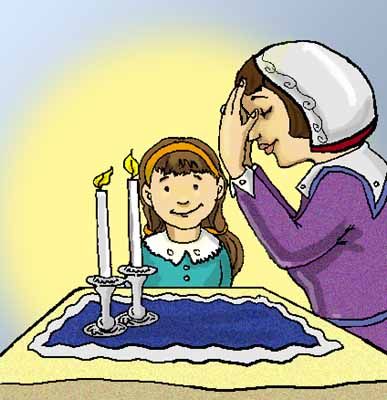
5 But every woman that prays or prophesies with her head uncovered dishonors her head: for that is one and the same as if she were shaven.
6 For if the woman is not covered, let her also be shorn: but if it is a shame for a woman to be shorn or shaven, let her be covered.
(1Cor. 11:5-6)

It is very interesting that Paul directs women not to pray or prophecy with their heads uncovered (unveiled), because there is no such commandment in the written Torah. Moreover Paul is prohibited by Torah, from adding commandments to the Torah (Deut. 4:2; 12:32 (13:1)). So from where does Paul derive a commandment about women wearing head coverings? The answer is to be found, not in the written Torah, but in the Oral Torah.

We read in the Mishnah:

These are the women who may be divorced and not given their marriage settlement [as promised in their Ketuvah]: She who transgresses the Law of Moshe and the Jewish law:… And what is the Jewish law? If she goes out [in public] with her hair flowing loose, or spins cloth in the street [so that her arms are exposed] or spends time talking loosely [flirting] with all kinds of men.
(m.Ketuvot 7:6)

Here Paul is not referring to a commandment in the written Torah and he is not creating a new commandment, he is referring to a custom from the Oral Law which can be found in the Mishnah.

Our rent is due in just two days and we are in the hole! We need your help today!

What other ministry puts out this kind of material…. free!

As I have said to you many times, I look on this work as a co-operative one with me, and all of you combining our resources together in order to get the job done of helping to teach this great truth to all in the world who will listen. Thank you so much from the bottom of my heart for your continued support, you are the ones who make it all possible by your contributions and your prayers for our work. I truly appreciate your help in every way.

If you can make a one time donation of $500 or $1,000 dollars to support this work.
Donations can be sent by Paypal to donations@wnae.org or by Zelle or Go Fund Me!

Click HERE to donate

Original Hebrew Reading Found in Hebrew Manuscript of Mark!

Original Hebrew Reading Found in Hebrew Manuscript of Mark!
By
James Scott Trimm

Several weeks ago I told you I had received a thumb drive (from Dr. Albert Garza) containing some 4,000 pages of Hebrew manuscripts of “New Testament” books. As time has allowed, i have been slowly wading thru these manuscripts. I am pleased to announce that I have discovered in one of these many mss., what is clearly the original Hebrew reading of a passage in Mark, which is mistranslated in all known ancient manuscript versions of Mark in Aramaic, Greek, Latin etc.

Just about two years ago, I wrote a blog titled Did Yeshua Say Everyone is Salted with Fire? In which I reconstructed the original Hebrew reading of Mark 9:49/ Om that blog I wrote:

The original Hebrew of the original phrase in Mark 9:49 must have been כי כל באש ימלח

The Aramaic translator must have read this כִּי כֹּל בָּאֵשׁ יִמְלַח “for everyone with fire, shall be salted” which is rendered in the Old Syriac with the words כול אנש גיר בנורא נתמלח “for every man with fire will be salted” and in the Greek with Πᾶς γὰρ πυρὶ ἁλισθήσεται “for everyone with fire will be salted”. The references to “fire” in the previous verses of Mark 9 probably contributed to the translator taking באש to mean “with fire”.

However the original Hebrew of Mark 9:49 is correctly understood to read as כִּי כֹּל בָּאַשׁ יִמְלַח “For everything decaying is salted”. The original Hebrew word was בָּאַשׁ (Strong’s 887) “decaying, spoiling” (1).

This leads us into the next phrase in Mark 9:50 = Luke 14:34 “salt is good”. This fits perfectly because the word בָּאַשׁ can also mean to become evil, and באש can actually mean “bad” or “evil” so that that which decays contrasts with salt which is “good”.

All of this leads into the parallel to Matthew 5:13 “You are the salt of the earth” meaning that without the influence of those identified with the “salt of the earth” the earth, or the “world” in the parallel in Matthew 5:14 “you are the light of the world”, the world decays and becomes evil.

[End quote from my previous blog]

Recently, while working on an English translation from various Hebrew mss. of Mark, I discovered exactly this predicted original reading in a Hebrew ms. of Mark, which is actually part of a Hebrew manuscript of the entire “New Testament”, found in the Biblioteque Nationale in Paris France (Hebrew Ms. No. 131).

This manuscript of Mark includes written vowels, but to my pleasant surprise the vowels for באש were not בָּאֵשׁ (with fire) but בָּאַשׁ (decaying)! This Hebrew manuscript of Mark contained the lost original Hebrew reading of this passage!

In the reading in question, the scribe seems to have written a patach under the aleph, creating the reading “spoiling”, before later “correcting” it to agree with the traditional reading “with fire” by adding a dot to the right of the patach (the reading “with fire” would have a tzere under the aleph, which is written with two dots. ) The Hebrew word for “fire” can actually be seen on the line above (around the middle) with a tzere (two dots) under the alef.

The dot written to the right appear to be an attempt at a scribal “correction” though the original reading is actually the correct one.

The reading in question is the middle row above, the first word on the right.

How the scribe came to write the original reading us unclear. The original Hebrew of Mark would have been written without vowels (which contributed to the mistranslation in our received versions of Mark). The manuscript itself (Biblioteque Nationale Paris 131) appears to be a Hebrew translation of the Latin Vulgate New Testament, or at least is has a very strong tendency to follow the readings of the Latin Vulgate (with the present example being a clear exception). The scribe may have been familiar with a manuscript tradition that contained the original reading, and then “corrected” his copy when he realized that what he had initially written was not the reading in the manuscript from which he was actually copying. He may also have been creating a translation of the Latin Vulgate, working from a Hebrew copy of Mark that descended from the original Hebrew of Mark (possibly not realizing this) and revising it to agree with the Vulgate as he went. However this original reading ended up in this Hebrew manuscript of Mark, it did end up there, and it is quite obviously the original reading.

Here we now have actual manuscript evidence for the reading בָּאַשׁ

Our rent was due on the first, and we still do not have it! We need your help today!

What other ministry puts out this kind of material…. free!

As I have said to you many times, I look on this work as a co-operative one with me, and all of you combining our resources together in order to get the job done of helping to teach this great truth to all in the world who will listen. Thank you so much from the bottom of my heart for your continued support, you are the ones who make it all possible by your contributions and your prayers for our work. I truly appreciate your help in every way.

If you can make a one time donation of $500 or $1,000 dollars to support this work.

Donations can be sent by Paypal to donations@wnae.org

Or click HERE to donate

Baptism is Oral Law

Baptism is Oral Law
By
James Scott Trimm

While the Four Gospels begin at different points, they all first converge with the ministry of Yochanan the immerser and Yeshua’s immersion. In the past I have written blogs about Yochanan and his Essene background, Yeshua’s immersion by Yochanan and the reasons for his immersion. All of this is helpful background information for this blog. As is my blog establishing that the Qumran Community were Essenes.

In all four (five counting the Gospel according to the Hebrews) accounts of Yochanan’s ministry, we find that Yochanan is in the wilderness calling Pharisees and Sadducees to be “baptized for the remission of sins”. What many Christians do not know, is that Yochanan did not institute the practice of baptism. Baptism (ritual immersion) was a Jewish practice of the Oral Law, was commonly practiced in Judaism long before Yochanan, and is still practiced in Rabbinic Judaism today.

Terminology

Before we get started, we should clarify some terminology. The English word “baptism” is from the Greek word meaning “immersion” which appears in the Greek versions of the “New Testament”. The Hebrew word for this practice is “T’villah” (the Hebrew word for immersion). Another term often used in “Jewish English” is “Mikveh” however “Mikveh” is actually a Hebrew noun referring to the water itself used for this ritual.

Washings in the Written Torah

While the practice of ritual immersion (Baptism/T’villah) is not found in the written Torah, there are several rituals that involved “washings”.

In Exodus 19:10 the people washed their clothes before receiving Torah.

In Leviticus 8:6 Aharon and his sons were washed as part of their ordination as priests.

In Leviticus 16:4 Aharon was to wash himself before and after performing the Yom Kippur rituals.

In Numbers 19:7f there is a commandment to be washed for ritual purity after coming into contact with a dead body.

In Numbers 31:21-24 we read of water of sprinkling being used to purify Israelites and their plunder after their battle with Midianites.

In Leviticus chapters 13-15 we read of ritual purification via “washing” for men and women who have become ritually impure for various reasons.

The Hebrew word used in these passages in רחץ which simply means “to wash, or bathe” and does not necessarily involve complete “immersion” (T’villah, Baptism).

The Jewish Practice of T’villah

While the written Torah only has commandments that involve washings, the Oral Law requires many of these “washings” to involve complete immersion. There are three general reasons for T’villah in Rabbinic Judaism:

1. Purification for ritual impurity.

2. Initiation of a Priest of Rabbi.

3. Conversion to Judaism.

While the first two of these are extensions of written Torah, the third, T’villah for conversion, is purely a practice of the Oral Law, as we read in the Talmud:

As soon as he is healed (from his circumcision) arrangements are made for his immediate immersion, when two learned men must stand by his side and acquaint him with some of the minor commandments and with some of the major ones. When he comes up after his immersion he is deemed to be an Israelite in all respects.
(b.Yebamot 47b)

An entire tractate of the Mishnah (Tractate Mikvaot) is dedicated to the various matters of Oral Law surrounding T’villah and specifications for what constitutes an acceptable Mikveh.

T’villah in the Dead Sea Scrolls

Baptisms played an important part in the lives of the Qurman Community, for whom ritual purity was very important. Archaeologists have even uncovered several of the actual Mikvaot used at Qumran, cisterns with steps leading down into them. These mikvaot meet the same specifications laid out in the Mishnah.

A Mikveh excavated at Qumran

The Dead Sea Scrolls speak several times of these baptisms. The Manual of Discipline (1QS) says of those who refuse to enter their community:

Ceremonies of atonement cannot restore his innocence, neither cultic waters his purity. He cannot be sanctified by baptism in oceans and rivers, nor purified by mere ritual bathing. Unclean, unclean shall he be all the days that he rejects the laws of God, refusing to be disciplined in the Yahad of His society. (1QS 3,4-6)

None of the perverse men is to enter purifying waters used by the Men of Holiness and so contract their purity. (Indeed, it is impossible to be purified without first repenting of evil, inasmuch as impurity adheres to all who transgress His word. (1QS 5,13-14)

Other scrolls tell us that these mikvaot required at least enough water to form ripples (Damascus Document 10, 10-13) and that the individual was to bathe his entire body in living water (The Temple Scroll 11Q19 XLV 15–16) and in 4Q274 the verb yitbôl is used, telling us that these ritual bathings definitely involved complete immersion (T’villah).

Josephus on Yochanan

This brings us to Josephus’ description of the ministry of Yochanan. Josephus states that Yochanan:

...commanded the Jews to exercise virtue, both as to righteousness towards one another, and piety towards God, and so to come to baptism [immersion] for that the washing would be acceptable… (Jospehus; Ant. 18:5:2)

Baptism in the “New Testament”

Yochanan the immerser’s Baptism for the remission of sins (Matt. 3:6, 11; Mk. 1:4-5; Luke 3:2-3, 7; Acts 19:3-4) certainly recalls the Qumran immersions to purify one from the ” impurity [that] adheres to all who transgress His word.” (1QS 5,13-14)

Later in the Gospel of Matthew, we see Baptism being clearly used as a ritual for conversion, when Yeshua sends out his Talmidim in the “Great Commission” saying:

19 Go you therefore, and teach all nations, immersing them in the name of the Father, and of the Son, and of the Ruach HaKodesh:
20 Teaching them to observe all things whatever I have commanded you: and, lo, I am with you always, even unto the end of the world. Amen.
(Matthew 28:19-20)

Yocahnan’s Baptism for the remission of sins comes directly from the Essene practice of Baptism for purification from the impurity that adheres to all who transgress the Torah (sin), and Yeshua’s Baptism for conversion echos the ritual immersion for conversion to Judaism found in the Talmud.

The doctrine of ritual immersion rather than mere “washings” which would not necessarily involve actual immersion, and the use of these immersions for “remission of sins” and for conversion, are traditions taken from Essene and Pharisaic Judaism, and which originated in the Oral Law.

Baptism is Oral Law.

Our rent was due yesterday! We need your help today!

What other ministry puts out this kind of material…. free!

As I have said to you many times, I look on this work as a co-operative one with me, and all of you combining our resources together in order to get the job done of helping to teach this great truth to all in the world who will listen. Thank you so much from the bottom of my heart for your continued support, you are the ones who make it all possible by your contributions and your prayers for our work. I truly appreciate your help in every way.

If you can make a one time donation of $500 or $1,000 dollars to support this work.

Donations can be sent by Paypal to donations@wnae.org or by Zelle or Go Fund Me.

Click HERE to donate

Understanding Kefa’s Vision (Acts 10)

Understanding Kefa’s Vision
By
James Scott Trimm

Kefa’s vision in Acts 10 is often cited to “prove” that the laws concerning which animals are kosher to eat as food, have been abrogated. However this is not the true understanding of this vision.

In Acts 10 we read:

10 And he was hungry and wanted to eat: and while they were preparing for him, an amazement came over him.
11 And he saw heaven being opened, and a kind of garment being held by four corners, and it was like a great linen cloth, and it was descending from heaven to the earth:
12 And there were in it, all four-footed animals, and creeping things of the earth, and birds of heaven.
13 And a voice came to him that said: Shim’on, arise: kill and eat.
14 And Shim’on said, Never, my Adon, because I have never eaten anything that is defiled and unclean.
15 And again a second time, a voice came to him: That which Eloah has cleansed, do not regard as defiled.
16 Now this happened three times, and the garment was taken up to heaven.
17 And while Shim’on wondered in his nefesh, what the vision that he had seen was, those men who had been sent from Cornelius arrived, and asked concerning the house in which Shim’on lodged: and they came and stood at the gate of the courtyard.
(Acts 10:10-17 HRV)

The meaning of this vision is revealed in then next chapter:

5 While I was praying in Yafo, I saw in a vision one garment, which resembled a linen cloth that came down. And it was held by four corners, and it was descending from heaven, and came all the way towards me.
6 And I looked at it, and saw that there were in it, four-footed animals, and creeping things of the earth, and also birds of the heaven.
7 And I heard a voice that said to me: Shim’on, arise: kill and eat.
8 And I said, Never, my Adon: because there has not entered to my mouth, that which is unclean and defiled.
9 And again a voice said to me from heaven: That which Eloah has cleansed, do not [count] defiled.
10 This happened three times, and all the things were taken up to heaven.
11 And immediately, three men, who were sent to me from Cornelius of Caesarea, came and stood at the gate of the courtyard, in which I lodged.
12 And the Spirit said to me: Go with them without doubt. And these six brothers also came with me, and we entered the house of the man.
(Acts 11:5-12 HRV)

In Acts 10:12 the types of animals are described as follows:

And there were in it, all four-footed animals,
and creeping things of the earth,
and birds of heaven.
(Acts 10:12)

This description does not specify that the animals are unclean animals. Some four footed animals (cows, for example) are kosher, while others (pigs, for example) are not. Some birds are kosher, while others are not. This collection of animals does not seem to have any connection to the koshrut.

In Acts 11:5-12 we are told that these animals represent the three Gentiles who came to see Kefa. This vision probably draws from the so-called “Animal Apocalypse” in 1Enoch 85-90 in which such animals are used to represent various gentile nations.

In Acts 10:13 Kefa hears a voice which says “arise, kill and eat” (We are not told that this voice was the voice of Elohim). Kefa was not being instructed to arise kill and eat the animals mentioned in verse 12. First of all they was not real, it was only a vision. Secondly we know from Acts 11:5-12 that the Animals represented Gentiles. Kefa was not being told to kill and eat the Gentiles!

Instead Kefa was being instructed to greet these gentiles as guests by following the custom of arising, killing an animal and eating with them as honored guests (see for example Gen. 18:1-8 when Avraham greeted three men as guests). Kefa was being told in this vision to greet these three gentiles with hospitality, just as Avraham had greeted his three guests in Genesis 18.

Kefa’s vision in Acts 10 has nothing whatsoever to do with the Kosher laws of the Torah, which is for all generations, forever.

We must raise at least $320 by the end of the day today, or our account will plunge into the negative and start a chain reaction of returned items and fees.

As I have said to you many times, I look on this work as a co-operative one with me, and all of you combining our resources together in order to get the job done of helping to teach this great truth to all in the world who will listen. Thank you so much from the bottom of my heart for your continued support, you are the ones who make it all possible by your contributions and your prayers for our work. I truly appreciate your help in every way.

If you can make a one time donation of $500 or $1,000 dollars to support this work.

Donations can be sent by Paypal to donations@wnae.org or by Zelle or Go Fund Me!

Click HERE to donate