Are Nazarene Jews Christians? By James Scott Trimm
Nazarene Jews are not Christians, but despite this fact, like all Jews, we see Christians as our brothers in the larger Judeo-Christian tradition and we readily join with them in promoting shared Judeo-Christian principles.
Epiphanius writes:
But these sectarians… did not call themselves Christians–but “Nazarenes,” … However they are simply complete Jews. (Epiphanius; Panarion 29)
Notice that these original Jewish followers of Yeshua were a sect of Judaism which “did not call themselves Christians”. No Nazarene in the Ketuvum Netzarim (the so-called “New Testament”) ever refers to themseves as a “Christian”. In fact Paul never calls himself a Christian, but frequently identifies himself as Jewish (Acts 21:39; 22:3) and even as a “Pharisee” (Acts 23:6). The word “Christian(s)” appears only three times in the so-called “New Testament” and always in a context of being used by non-believers to describe believers. In the Aramaic of Acts and 1Kefa (The only books to use the word “Christian(s)”) the word always appears as a transliterated Greek word and not as the Aramaic word for “Christian” implying that Hellenists who spoke Greek were the ones calling them “Christians”. The Greek word Christes is closely related to the Greek word Chrestes which was the name of a false god and was a word indicating a pagan priest or prophet and was often a title for pagan gods. Although CHRISTI is used by Homer as applied to the rubbing with oil of the body after bathing (Il. 23, 186; also in Od., 4, 252) the word Christes meant a white-washer, but Chrestes was a common title for pagan gods. The persecutors probably were poking fun at believers in Messiah because if one adapts Greek CHRISTI (anoint) in the same was as the Hebrew word Mashiach is derived from the three letter root M-SH-CH (anoint), then the result is a word meaning “white washer” (i.e. one who covers things up and makes them look white/pure when they are not so on the inside). The Greek speakers probably got a good laugh out of this.
Originally the term “Christian” was a derogatory term used for Gentiles who were attracted to Nazarene Judaism and did not refer to a follower of a religion later named “Christianity”. The word “Christianity” was coined later by Ignatious sometime after 98 CE. Nazarenes see Christianity as an apostate movement which has rebelled against and rejected the Torah of YHWH and incorporated a great deal of paganism into its new non-Jewish religion.
We do not believe that Yeshua came to create a new religion, but to be the Messiah of Judaism. This is why we are working to restore Nazarene Judaism, the faith of the original Jewish followers of Yeshua.
In these uncertain times, we need your support more than ever. The time is short, and there is much work to be done. This is no time to pull back from the great work in front of us!
As I have said to you many times, I look on this work as a co-operative one with me, and all of you combining our resources together in order to get the job done of helping to teach this great truth to all in the world who will listen. Thank you so much from the bottom of my heart for your continued support, you are the ones who make it all possible by your contributions and your prayers for our work. I truly appreciate your help in every way.
If you can make a one time donation of $500 or $1,000 dollars to support this work.
Now is time to step up to the plate!
Donations can be sent by Paypal to donations@wnae.org.
Or click HERE to donate by Zelle, Go Fund Me, Bitcoin or Ethereum.
16 And if the first is Set-Apart, the lump of dough is also: and if the root is Set-Apart, thebranches [are] also. 17 And if some branches were broken off, and you who are a wild olive [tree], weregrafted into their place and became partakers of the root and of the oil of the olive [tree], 18 Do not boast against the [natural] branches. But if you boast, you are not bearing theroot, but the root bears you! 19 And perhaps you should say of the branches that were broken off, I will be grafted intheir place. 20 These [matters] are beautiful. They were broken off because they did not have trust,but you stand, by trust. Do not be exalted in your mind, but fear: 21 For if Eloah did not spare the natural branches, perhaps He will also not spare you. 22 See then the gentleness and the harshness of Eloah: upon those who fell, harshness,but upon you, gentleness, if, you remain in the gentleness. And if not, you will also bebroken off. 23 And those, if they do not remain in their lack of trust, also will be grafted in: for Eloahis able to graft them in again. 24 For if you, who are from the olive [tree] that was wild by your nature, were cut off andwere grafted–contrary to your nature–into the good olive [tree], how much more then,those, if they be grafted in their natural olive [tree]? 25 For I want you to know this mystery, my brothers, so that you will not be wise in thethought of your nefesh: that blindness of the heart, in part, has happened to Yisra’el untilthe fullness of the Goyim should come, 26 And then all Yisra’el will have Life. Thus it is written, From Tziyon a Deliverer willcome, and turn iniquity from Ya’akov. 27 And then they will have the covenant that is from Me, when I forgive them theirsins. (Isaiah 59:20-21; 27:9) (Romans 11:16-27)
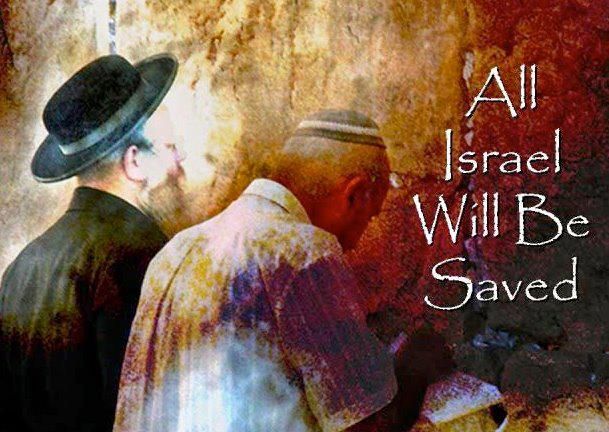
Notice Paul’s comment “And then all Yisra’el will have Life” (9:26) or as we read in the Greek “And all Israel shall be saved”. This comment has become the subject of much debate, but I find it especially interesting. This statement is actually a reference to the Mishnah statement:
All Israelites have a share in the world to come… And these are the ones who have no part in the World to Come: (m.Sanhedrin 10:1)
While the Mishna was not codified until around 250 CE, it was based on much older oral material. In another article I have written about how Paul makes use of the Gemara to this very precept of Mishna when he defended himself before the Sanhedrin in Acts 23:6
The point of this portion of the Mishnah is to determine who is to be regarded as part of the people of Israel and who is not. For example:
All Israelites have a share in the world to come… And these are the ones who have no part in the World to Come: He who says, the resurrection of the dead is a teaching which is not derived from the Torah… (m.San. 10:1)
The point here is that Sadducees are not to be regarded as truly part of the people of Israel.
After dealing with several other questions of “who has a portion in the world to come” and is therefore part of the people of Israel (since “all Israel had a part in the world to come”) and who does not have a portion in the world to come (and therefore is not part of the people of Israel). The Mishnah says:
The ten tribes are not destined to return, since it is said, “And he cast them into another land, as on this day” (Deut. 29:28). Just as the day passes and does not return, so they have gone their way and will not return,” the words of Rabbi Akiva. Rabbi Eliezer says, “Just as this day is dark and then grows light, so the ten tribes for whom it is now dark– thus in the future it is destined to grow light for them.” (m.San. 10:3)
Here the Mishnah is recording a debate between Rabbi Akiva and Rabbi Eliezer os to whether the Ten Lost Tribes would return, and therefore have a part in the World to Come or not. The Gemara to this section of Mishnah resolves the conflict:
Our Rabbis taught: The ten tribes have no portion in the world to come, as it says, And the Lord rooted them out of their land in anger, and in wrath, and in great indignation: And the Lord rooted them out of their land, refers to this world; and cast them into another land — to the world to come: this is R. Akiba’s view. R. Simeon b. Judah, of the Kefar of Acco, said on R. Simeon’s authority: If their deeds are as this day’s, they will not return; otherwise they shall. Rabbi said: They will enter the future world, as it is said, [And it shall come to pass] in that day, that the great trumpet shall be blown, [and they shall come which were ready to perish in the land of Assyria, and the outcasts in the land of Egypt, and shall worship the Lord in the holy mount of Jerusalem]. (Is. 27:13) (b.San. 110b)
It must be understood here that the “World to Come” here refers to the Messianic Kingdom. In the Gemara we see that Rabbi Y’hudah, the Nasi of the Sanhedrin ruled in favor of Rabbi Eliezer’s view, that the Ten Tribes would in fact return and have a part in the World to Come. (Whenever the Talmud refers to “Rabbi” without a name, it is a reference to Rabbi Y’hudah the Nasi)
I another ruling Rabbi Y’hudah (Rabbi Judah) also indicated that the Lost Ten Tribes had lost their identity and become mingled among the nations, but would have their identity revealed in the future:
Rab Judah said in the name of R. Assi: If at the present time a heathen betroths [a daughter in Israel], note must be taken of such betrothal since it may be that he is of the ten tribes. (b.Yev. 16b)
Clearly the Talmud here indicates that the Lost Tribes scattered among the nations, though they have lost their identity and are thought of as “heathen”, will later be revealed and therefore to be counted as part of the People of Israel.
It actually makes perfect sense for Paul to cite this Mishnah in Romans 1:26 as he wraps up his parable of the two olive trees. In a recent article I showed that this alagory refers to the grafting in of persons from the Lost Ten Tribes into Judah.
In Romans 11, Paul is intentionally giving his halachic view concluding that the Lost Tribes are part of the people of Israel (being grafted back into the cultivated tree) and “all Israel shall have life (be saved)” or “all Israel shall have a part in the World to Come”. (Although Paul came before Eliezer and Akiva, the issue was clearly existed earlier, and these Rabbis had championed the opposing views).
We need your help now more than ever. We must raise at least $500 by the end of the day today or our account will plunge into the negative and start a chain reaction of returned items and fees!We need your help now more than ever. This is no time to pull back from the great work in front of us!
I want to thank our supporters from the bottom of my heart. We are living in an exciting age! Elohim is going to bless us with even more knowledge and understanding regarding His plan. Elohim has called us not only to know “who we are”? and “where we are going” but also to realize the responsibilities that God has placed on us. We are His people and Elohim has a plan for us all to have a partnership with Him in bringing Torah and Messiah to the world. I am doing my part, and I believe that Elohim is pleased with our efforts (yours and mine).
We cannot do this work alone, but if we work together we can accomplish so much. So don’t forget to support this work with your contributions, tithes and offerings.
You make this work possible. Please help us bring the message of Torah and Messiah to a lost world and create Scripture study materials for believers.
Now is time to step up to the plate!
Donations can be sent by Paypal to donations@wnae.orgor by Zelle or GoFundMe
The Torah: A Light in a Dark Place By James Scott Trimm
There is a spiritual battle taking place between light and darkness. Paul writes:
“…what communion has light with darkness? And what concord has Messiah with Belial…” (2 Corinthians 6:14b-15a)
Throughout the New Testament there are extended metaphores revolving around light and darkness. Believers are called “sons of light” (Lk. 16:8; Jn. 12:36; Eph. 5:8; 1Thes. 5:5). The full armour of God is also called the “armour of light” (Rom. 13:12). The New Testament speaks of those “who walk in darkness” (John 8:12; 12:35).
But what does this idiomatic use of the terms light and darkness mean? For the answer let us turn to the Tanak:
“For the commandment is a lamp; and the Torah is light…” (Proverbs 6:23)
“Your word is a lamp to my feet, and a light to my path.” (Psalm 119:105)
“To the Torah and to the testimony; if they speak not according to this word, it is because there is no light in them.” (Isaiah 8:20)
“…for a Torah shall proceed from me, and I will make my judgement to rest for a light of the people.” (Isaiah 51:4)
So according to the Tanak the Torah is a light for our paths. Those that walk in the Torah walk in the light. This is why the New Testament speaks of those who walk in darkness (Jn. 8:12; 12:35; 1Jn. 1:6; 2:11). These are those who do not walk by the light of Torah. Of these John writes:
“And if we say that we have fellowship with him, and walk in darkness, we are liars and we do not walk in truth.” (1 John 1:6)
Notice that John equates “walking in truth” with walking in the light.
As we noted previously “the Torah is truth” (Ps. 119:142) thus if “walking in the light” means “walking in truth” then both phrases refer to walking in the Torah. This takes us back to our passages from the Tanak given above. John also confirms this by writing the parallel statements:
“…walking in truth.” “…walk according to his commandments.” (2 John 1:4, 6)
Now lets look back at a moment to the full armour of God. As we have noted Paul also calls this armour the “armour of light” (Rom. 13:12). According to Paul we are involved in a spiritual battle with “the rulers of the darkness of this world.” (Eph. 6:12) and thus he instructs us to put on this “armour of light” (Ephesians 6:13 & Romans 13:12)
Now several of the items of the “armour of light” also tie in with the Torah:
The Belt of Truth
“Your righteousness is an everlasting righteousness, and your Torah is truth.” (Psalm 119:142)
“You are near, O YHWH, and all your commandments are truth.” (Psalm 119:151)
The Breastplate of Righteousness
“What great nation is there that has statutes and judgements as righteous as this whole Torah which I am setting before you today?…” (Deuteronomy 4:6)
The Shield of Faith
“Remove the false way from me, and graciously grant me your Torah. I have chosen the way of faith; I have placed your ordinances before me.” (Psalm 119:29-30)
The Sword of the Word
“…For the Torah will go out from Zion; and the word of YHWH from Jerusalem.” (Isaiah 2:3)
Thus the Armour of Light is the armour of the Torah which lights our path. There are two paths before us, one of darkness and one of light. On the one hand one may “walk in darkness” on the other hand one may “walk in the light” of Torah. The “son’s of light” put on the “armour of light” and walk in the light of Torah, while the “sons of darkness” walk in the Torah-lessness which is the darkness of this dark world.
Red Alert: We must raise at least $450 by the end of the day today or our account will plunge into the negative and start a chain reaction of returned items and fees! We need your help now more than ever. This is no time to pull back from the great work in front of us!
I want to thank our supporters from the bottom of my heart. We are living in an exciting age! Elohim is going to bless us with even more knowledge and understanding regarding His plan. Elohim has called us not only to know “who we are”? and “where we are going” but also to realize the responsibilities that God has placed on us. We are His people and Elohim has a plan for us all to have a partnership with Him in bringing Torah and Messiah to the world. I am doing my part, and I believe that Elohim is pleased with our efforts (yours and mine).
We cannot do this work alone, but if we work together we can accomplish so much. So don’t forget to support this work with your contributions, tithes and offerings.
You make this work possible. Please help us bring the message of Torah and Messiah to a lost world and create Scripture study materials for believers.
Now is time to step up to the plate!
Donations can be sent by Paypal to donations@wnae.org or by Zelle, Go Fund Me Bitcoin or Ethereum.
Way back in April 2019, several months before Covid-19 was even identified, the International Nazarene Beit Din was led by the Ruach HaKodesh to pass an Official Declaration Concerning Vaccines, which reads:
The Torah commands, ונשמרתם מאד לנפשותיכם “Guard your selves/lives carefully” (Deut. 4:15a) This Biblical commandment requires one to be very vigilant in caring for one’s nefesh (life/self), and to refrain from any action that may put his life or health in danger. Additionally, many vaccines contain unkosher substances. The benefits and risks of vaccination are a much-debated matter in medical and scientific circles. Although one may follow the opinion of most doctors and choose to vaccinate his/herself and his or her children, the individual who has done his or her own research has the obligation to act according to his or her own knowledge. If one’s research has led him or her to understand that the risks of vaccination outweigh its benefits, and especially when his or her view is supported by many medical doctors and researchers, the commandment of ונשמרתם מאד לנפשותיכם “Guard your selves/lives carefully” (Deut. 4:15a) obligates that person to shield himself/herself and his or her children from vaccines. Moreover, such an individual would also be bound to refuse such a vaccination due to its unkosher content. This is even more true when a parent has reasons to believe that his or her children are sensitive to vaccines. To act otherwise would be a transgression of the above Torah commandment.
We absolutely believe that this vaccine falls into this category, whereby a Nazarene should fulfill the commandment to “guard your life carefully” by refusing this vaccine
Now the federal government is intent upon a vaccine mandate. This runs contrary to the first amendment as well as our own Official Declaration concerning Abortion (cells from aborted fetus’ were used in making or testing the vaccine) and our Official Declaration on Freedom of Religion which states in part:
We as Nazarenes claim the right of worshiping Elohim according to the dictates of our own conscience. No secular government ought, in any case whatever, to control or interfere with the rights of conscience in matters of religion, and no preference should ever be given by secular law to any religious society or mode of worship. But it should be the duty of secular governments to pass such laws as may be necessary to protect the free exercise of religion and should make no law respecting an establishment of religion, or prohibiting the free exercise thereof….
Thomas Jefferson said, “Freedom of religion is the most inalienable and sacred of all human rights.” He also stated famously in the U.S. Declaration of Independence “We hold these truths to be self-evident, that all men are created equal, that they are endowed by their Creator with certain unalienable Rights.” The rights we claim here-in are inalienable rights. These rights were not granted by secular governments nor are they gifts from them, they were endowed upon us by our Creator and secular Governments may only respect them, or infringe upon them….
Religious freedom that embraces the right to believe but allows “regulation” to limit the right to act, is no real religious freedom at all. For example the secular government that says that one can believe in their own mind whatever religion of doctrine they want, but the government claims the right to regulate what they actually do, can effectively infringe on the free exercise of religion. Exercise by nature is the right to act, not just the right to believe.
If you are a Nazarene and are in need of a religious exemption letter, hit me up!
Rabbi James Scott Trimm Rabbi General Worldwide Nazarene Assembly of Elohim Nasi (President) International Nazarene Beit Din
Red Alert: We did not raise the funds needed by the end of the day Wednesday and are in the red!
I want to thank our supporters from the bottom of my heart. We are living in an exciting age! Elohim is going to bless us with even more knowledge and understanding regarding His plan. Elohim has called us not only to know “who we are”? and “where we are going” but also to realize the responsibilities that God has placed on us. We are His people and Elohim has a plan for us all to have a partnership with Him in bringing Torah and Messiah to the world. I am doing my part, and I believe that Elohim is pleased with our efforts (yours and mine).
We cannot do this work alone, but if we work together we can accomplish so much. So don’t forget to support this work with your contributions, tithes and offerings.
You make this work possible. Please help us bring the message of Torah and Messiah to a lost world and create Scripture study materials for believers.
Now is time to step up to the plate!
Donations can be sent by Paypal to donations@wnae.org.
Red Alert: We did not raise the funds needed by the end of the day Wednesday and are in the red!
I want to thank our supporters from the bottom of my heart. We are living in an exciting age! Elohim is going to bless us with even more knowledge and understanding regarding His plan. Elohim has called us not only to know “who we are”? and “where we are going” but also to realize the responsibilities that God has placed on us. We are His people and Elohim has a plan for us all to have a partnership with Him in bringing Torah and Messiah to the world. I am doing my part, and I believe that Elohim is pleased with our efforts (yours and mine).
We cannot do this work alone, but if we work together we can accomplish so much. So don’t forget to support this work with your contributions, tithes and offerings.
You make this work possible. Please help us bring the message of Torah and Messiah to a lost world and create Scripture study materials for believers.
Now is time to step up to the plate!
Donations can be sent by Paypal to donations@wnae.org.
A Torah that Unites with my Mind: Paul and Tanya Sing the Same Song By James Scott Trimm
Romans 7:21 is a perfect example of a passage in which the original Aramaic makes Paul’s meaning clear, while the Greek translator totally lost Paul’s meaning.
Which I have translated in the Hebraic Roots Version:
I find, therefore, a Torah that unites with my mind, which desires to do good, whereas evil is near to me. (Rom. 7:21 HRV)
The Greek translator omitted the words דשלם לרעיני “that unites with my mind” and in doing so, misses Paul’s meaning.
In the Aramaic Paul is teaching the same teaching we find in the Tanya (but centuries before the Tanya was written). As we read in Tanya:
For, when a person actively fulfils all the precepts which require physical action, and with his power of speech he occupies himself in expounding all the 613 commandments and their practical application, and with his power of thought he comprehends all that is comprehensible to him in the Pardes of the Torah— then the totality of the 613 “organs” of his soul are clothed in the 613 Commandments of the Torah.
Specifically: the faculties of ChaBaD (Wisdom, Understanding and Knowledge) in his soul are clothed in the comprehension of the Torah, which he comprehends in Pardes, to the extent of his mental capacity and the supernal root of his soul. And the middot, namely fear and love, together with their offshoots and ramifications, are clothed in the fulfilment of the commandments in deed and in word, namely, in the study of Torah which is “The equivalent of all the commandments.” For love is the root of all the 248 positive commands, all originating in it and having no true foundation without it, inasmuch as he who fulfils them in truth, truly loves the name of G-d and desires to cleave to Him in truth; for one cannot truly cleave to Him except through the fulfilment of the 248 commandments which are the 248 “Organs of the King,” as it were, as is explained elsewhere; whilst fear is the root of the 365 prohibitive commands, fearing to rebel against the Supreme King of kings, the Holy One, blessed be He; or a still deeper fear than this— when he feels ashamed in the presence of the Divine greatness to rebel against His glory and do what is evil in His eyes, namely, any of the abominable things hated by G-d, which are the kelipot and sitra achra, which draw their nurture from man below and have their hold in him through the 365 prohibitive commands [that he violates]. (Tanya Likutei Amarim Chapter 4)
Now, when an intellect conceives and comprehends a concept with its intellectual faculties, this intellect grasps the concept and encompasses it. This concept is [in turn] grasped, enveloped and enclothed within that intellect which conceived and comprehended it.
The mind, for its part, is also clothed in the concept at the time it comprehends and grasps it with the intellect. For example, when a person understands and comprehends, fully and clearly, any halachah (law)…, his intellect grasps and encompasses it and, at the same time, is clothed in it. Consequently, as the particular halachah is the wisdom and will of G-d, … when a person knows and comprehends with his intellect such a verdict in accordance with the law … he has thus comprehended, grasped and encompassed with his intellect the will and wisdom of the Holy One, blessed be He, Whom no thought can grasp, nor His will and wisdom, except when they are clothed in the laws that have been set out for us. [Simultaneously] the intellect is also clothed in them [the Divine will and wisdom].
This is a wonderful union, like which there is none other, and which has no parallel anywhere in the material world, whereby complete oneness and unity, from every side and angle, could be attained.
Hence the special superiority, infinitely great and wonderful, that is in the commandment of knowing the Torah and comprehending it, over all the commandments involving action, and even those relating to speech, and even the commandment to study the Torah, which is fulfilled through speech. For, through all the commandments involving speech or action, the Holy One, blessed be He, clothes the soul and envelops it from head to foot with the Divine light. However, with regard to knowledge of the Torah, apart from the fact that the intellect is clothed in Divine wisdom, this Divine wisdom is also contained in it, to the extent that his intellect comprehends, grasps and encompasses, as much as it is able so to do, of the knowledge of the Torah, every man according to his intellect, his knowledgeable capacity, and his comprehension in Pardes.
Since, in the case of knowledge of the Torah, the Torah is clothed in the soul and intellect of a person, and is absorbed in them, it is called “bread” and “food” of the soul. For just as physical bread nourishes the body as it is absorbed internally, in his very inner self, where it is transformed into blood and flesh of his flesh, whereby he lives and exists— so, too, it is with the knowledge of the Torah and its comprehension by the soul of the person who studies it well, with a concentration of his intellect, until the Torah is absorbed by his intellect and is united with it and they become one. This becomes nourishment for the soul, and its inner life from the Giver of life, the blessed En Sof, Who is clothed in His wisdom and in His Torah that are [absorbed] in it [the soul].
This is the meaning of the verse, “Yea, Thy Torah is within my inward parts.” (Tanya Likutei Amarim Chapter 5)
Red Alert: Our rent was due on the first! We still must raise at least $800 by the end of the day today!
I want to thank our supporters from the bottom of my heart. We are living in an exciting age! Elohim is going to bless us with even more knowledge and understanding regarding His plan. Elohim has called us not only to know “who we are”? and “where we are going” but also to realize the responsibilities that God has placed on us. We are His people and Elohim has a plan for us all to have a partnership with Him in bringing Torah and Messiah to the world. I am doing my part, and I believe that Elohim is pleased with our efforts (yours and mine).
We cannot do this work alone, but if we work together we can accomplish so much. So don’t forget to support this work with your contributions, tithes and offerings.
You make this work possible. Please help us bring the message of Torah and Messiah to a lost world and create Scripture study materials for believers.
Now is time to step up to the plate!
Donations can be sent by Paypal to donations@wnae.org or by Zelle, Go Fund Me, Bitcoin or Ethereum.
“Thus saith YAHWEH, Stand ye in the ways, and see, and ask for the old paths, where is the good way, and walk therein, and ye shall find rest for your souls” (Jeremiah 6:16).
“Always give thanks to Yahweh the Father for everything for this is Yahweh’s will for you in Messiah YahShua.” (I Thessalonians 5:18).
As I sit at the computer this Thanksgiving morning and smell the food Sis. Marlene is cooking; I am overwhelmed at a sense of thanksgiving. Yahweh has been so very good to me. I am in need of nothing. He continues to show me great mysteries from His Word and I feel His presence everyday.
But as I sit free to express my personal relationship with Yahweh I am indebted today to the pioneers of the Messianic Movement in America, men who wanted only to share the full message with their neighbors sometimes in peril of their life.
“And this full message of the Kingdom will be preached in the whole world as a testimony to all nations, and then the end will come. (Matthew 24:14)
All who are familiar with American history remember that in 1620 the Puritans landed at Plymouth Rock, Massachusetts, coming to the New World primarily to escape religious persecution which prevailed in Europe. They sailed from Plymouth, England and aboard were 44 Pilgrims that the crew began to call Pilgrims because they had wandered to find a home first to Holland and then to the New World. The Puritans were divided into two groups: 44 Separatists who called themselves the “Saints”, and 66 others, who called themselves the “Strangers”. The long trip was cold and damp and took 65 days. There was always the danger of fire on the wooden ship, so food had to be eaten cold. Many passengers became sick and one person died and one person was murdered by the time land was sighted on November 10th. The long trip led to many disagreements between the “Saints”, the “Strangers” and the crew.
“Therefore remember that you, once Gentiles in the flesh—who are called Uncircumcision by what is called the Circumcision made in the flesh by hands— that at that time you were without Messiah, being aliens from the commonwealth of Israel and strangers from the covenants of promise, having no hope and without Yahweh in the world. But now in Messiah YahShua you who once were far off have been brought near by the blood of Messiah. (Ephesians 2:11-13
The Puritans were a group of people who grew discontented in the Church of England and decided that the Church was beyond reform.
“We would have healed Babylon, but she cannot be healed; let us leave her and each go to his own land, for her judgment reaches to the skies, it rises as high as the clouds.’ Yahweh has vindicated us; come, let us tell in Zion what Yahweh our Elohim has done.’ (Jeremiah 51:9, 10)”
Here’s what the Separatists believed concerning Holy Days, “From the beginning of the Reformation to this present year of our Lord 1618, the Kirk (Church) of Scotland has diverse ways condemned the observation of all holy days (Lev. 23), the Lord’s Day (7th day Sabbath) only excepted. In the first chapter of the First Book of Discipline penned anno 1560, the observation of holy days to Saints, the feast of Christmass, Circumcision, Epiphany, Purification, and other fond feasts of our Lady are ranked amongst the abominations of the Roman religion, as having neither commandment nor assurance in the word. It is further affirmed that the obstinate maintainers and teachers of such abomination should not escape the punishment of the civil magistrate. The book aforesaid was subscribed by the Lord’s of secret Council.” (David Calderwood’s (1575-1651) Perth Assembly (1619))
This document was printed and circulated by William Brewster in 1619. William Brewster had mortgaged his house in Holland to purchase a printing press. This document, as Brewster must have known was viewed by the King of England as the crime of high treason punishable by death. The King of England pressured Holland, a land long known for religious tolerance, to confiscate the press and deport Brewster to England to stand trial. Dutch authorities got the printing press but Brewster stowed away on the Mayflower for the famous voyage of 1620.
The Puritans believed that the Holy Scriptures was Yahweh’s true law, and that it provided a plan for living. The Church described access to Yahweh as monastic and possible only within the confines of “church authority”. Puritans stripped away the traditional trappings and formalities of Christianity which had been slowly building throughout the previous 1500 years. Theirs was an attempt to “purify” the Assembly and their own lives. The laws for the new colony were an outgrowth of their religion, very much based on the theocracy of the Hebrews.
The Puritans had zealously endeavored to purify the Church of England, with the result that those who felt they could no longer remain with the established church went afterwards by such names as Non-Conformists and Separatists. They were not a small group of people. In England many Puritans sat in Parliament.
“Therefore come out from them and be separate, says Yahweh. Touch no unclean thing, and I will receive you. (2 Corinthians 6:17 see Isaiah 52:11; Ezek. 20:34, 41)”
There was also widespread excitement about Scriptural prophecy, and many anticipated the imminent return of the Messiah. One group, called the Fifth Monarchists (after Nebuchadnezzar’s dream of Daniel 2, in which Yahweh’s Kingdom is portrayed as the fifth and greatest of a prophesied series of empires), stressed the literal millennial reign of Messiah on earth. The most radical Fifth Monarchists hoped to pave the way for that reign by overthrowing the King. So great was the struggle that England’s Civil War pitted the Puritans against the Crown Forces. Though the Puritans won the fight with Oliver Cromwell’s ceasing control of the Government, making England a republic and leading the Commonwealth of England and executing the King, their victory was short-lived with Cromwell struck by a sudden bout of malarial fever, the Puritans were hunted down and the Crown restored; hence their displacement to America. In 1661, Oliver Cromwell’s body was exhumed from Westminster Abbey, and was subjected to the ritual of a posthumous execution. Finally, his disinterred body was thrown into a pit, while his severed head was displayed on a pole outside Westminster Abbey until 1685. Afterwards the head changed hands several times, before eventually being buried in the grounds of Sidney Sussex College, Cambridge, in 1960.
Puritans held the Ten Commandments in very high regard. Applying that the Sabbath commandment to be observed strictly as a day of rest, rather than merely being a day on which to hold worship services. Given the Puritan respect for the Torah and the Protestant belief that the Holy Scriptures should be the ultimate source of belief and practice, it was inevitable that some would respond to the Sabbath controversy by adopting the scriptural seventh day Sabbath. And indeed, that is what happened.
“Remember the Sabbath day by keeping it holy. Six days you shall labor and do all your work, but the seventh day is a Sabbath to Yahweh your Elohim. On it you shall not do any work, neither you, nor your son or daughter, nor your manservant or maidservant, nor your animals, nor the alien within your gates. For in six days Yahweh made the heavens and the earth, the sea, and all that is in them, but he rested on the seventh day. Therefore Yahweh blessed the Sabbath day and made it holy. (Exodus 20:8-11)”
“It is the privilege of God’s power to appoint a day of rest, and to sanctify it to his honor…In the book of Ecclesiasticus (cap. 33: 7, 8) it is demanded, Why doth one day excel another, when as the light of every day of the year is of the Sun? It is answered, By the Knowledge of the Lord they were distinguished, and he altered seasons and feasts. Some of them hath he made high days, and hallowed them; Some of them he hath made ordinary days. …The Papists will confess that one day is not holier than another in its own nature, no not the Lord’s Day: for then the Sabbath might not have been changed from the last to the first day of the week .” (David Calderwood’s Perth Assembly)
During the seventeenth and early eighteenth centuries, groups of Sabbatarians sprang up in various parts of England and Wales; more than sixty congregations that either met on Saturday or included Sabbatarians, they have been identified by historian Bryan W. Ball. Many of these groups lasted only a generation or two, but some survived much longer—one of them for over three hundred years. Moreover, the majority of the Sabbatarian Believers in the world today can trace their spiritual lineage, directly or indirectly, to these brave and determined people.
The decision to observe the seventh day Sabbath was not one to take lightly. Those who made this choice placed themselves conspicuously outside of the mainstream of society. In the seventeenth century, people who adopted practices different from those of the Church of England were placed under close scrutiny and could be subjected to fines or imprisonment. For example, in the 1660s and 1670s, local churchwardens kept careful records of all “Nonconformists”, including anyone who worked or didn’t attend church on Sunday, refused to have infants baptized, or kept the seventh day Sabbath. (These records have provided historians with valuable clues about the identities and locations of Sabbath keepers.) Sabbath keepers were often labeled as “Jews,” and this label was not intended as a compliment. In England, the anti-Semitism of the time was exacerbated by ignorance. All Jews in England had been expelled from the country in 1290 CE.
One well-known example of the persecutions faced by early English Sabbatarians is the story of John and Dorothy Traske. John Traske (1585-1636) was a controversial and apparently rather colorful traveling preacher whose words and actions repeatedly got him into trouble with the authorities. What exactly he taught is difficult to determine, because the available sources on his life are largely hostile ones. It is also not certain how many followers he attracted; only the names of a few have come down to us, including Hamlet Jackson, Returne Hebdon, and Christopher Sands. We do know that in 1617, Traske was in London teaching that one should obey the fourth commandment by resting on the seventh day and working on each of the other six days. He also taught obedience to Scriptural dietary laws and is said to have advocated Christian observance of the Days of Unleavened Bread.
Traske’s preaching was too radical to go unnoticed for long. By late 1617, Traske and several associates had been arrested, and on June 19, 1618, he was charged with “having a fantastical opynion of himselfe with ambicion to bee the Father of a Jewish faccion” and making “the people of God, his majesty’s subjects, little better than Jews.” Traske was whipped and pilloried, and his forehead was branded with a letter “I” (for “Iew”, as “Jew” was written at that time). He was also sentenced to life in prison, where he subsisted on a meatless diet (rather than eat the pork prescribed by the court) until he recanted his “Jewish” views and was released in 1619. He published an account of his changed beliefs in “A Treatise of Libertie from Judaisme” (1620) and apparently never taught seventh-day Sabbath keeping after that. However, two of his associates refused to recant and eventually died in prison—Returne Hebdon in 1625, and Traske’s wife Dorothy in 1645. The example of Dorothy Traske, who remained steadfast over many years in prison, was a great inspiration to other seventeenth-century Sabbatarians.
John Traske was by all accounts very eccentric, and he was threatened with arrest and imprisonment both before and after he advocated observance of the Sabbath. However, one didn’t have to be as provocative as Traske to face persecution; a thoroughly orthodox Christian who wrote or spoke in favor of the Sabbath was also in danger in the early seventeenth century. Such was the case with Theophilus Brabourne (1590-1662), an Anglican clergyman who hoped to persuade the Church of England to adopt the seventh day Sabbath in two books that he wrote in 1628 and 1632. In 1634 and early 1635, Brabourne was imprisoned, repeatedly examined by church officials, and threatened with excommunication and a fine of 1000 pounds before his carefully-worded recantation was accepted on April 30, 1635. (Brabourne claimed that he never recanted anything of any substance, and in the more tolerant climate of the 1650s he wrote again in favor of the Sabbath.)
Were any Sabbatarians on the Mayflower which brought the Puritans to America? “Strange as it may seem in the early history of America there was an attempt at suppression of the Christmas spirit. The stern Puritans at Plymouth, imbued with the rigorous fervor of what they called the Old Testament, abhorred the celebration of the worldly holidays. “I say there is no power either civil or ecclesiastical can make a holy day: no King, no Kirk (Church): only the Lord that made the day, and distinguished it from the night: he hath sanctified the seventh day. If the special sanctification of a day to an holy use depends upon God’s commandment and institution, then neither King nor kirk representative may make a holy day.”…In the Assembly held in April anno 1577, it was ordained that the Visitor with the advice of the Synodal Assembly, shall admonish ministers preaching or ministering the communion at Pasche (Passover – they favored the Seder over communion), Yule (Christmass), or other like superstitious times, or Readers reading, to desist, under the pain of deprivation. … It was a part of the idolatry of the golden calf to proclaim a holy day. It is numbered among one of Jeroboams sins that he ordained a feast after the devise of his own heart (1 Kings 12:33). Musculus (Loci Communes Praec. 4.) says, If any man shall attempt to make holy at his pleasure the things that God has not sanctified, is not only superstitious, but challenges unto himself that which belongs only to God. When God blesses and sanctifies a day, then may man look for a blessing in sanctifying it. … Nay let us utter the truth, December-Christmas is a just imitation of the December Saturnal of the ethnic Romans, and so used as if Bacchus, and not Christ were the God of Christians…Of the ancient kirks (Churches) I have spoken before. Some excuse the ancients with good intention, because to win the Gentiles they converted their days into Christian holy days. Others excused them with the circumstance of time, that dwelling among pagans, they made profession before their eyes of Christ’s birth, passion, resurrection, etc., by observing such days. But the wisdom of their intention has proven folly, as the seventh reason makes manifest. The like circumstance of time is not offered: therefore we may not be excused. It is gross ignorance to say that holy days were so many hundred years before Papistry. For Papistry has been in the kirk ever since the days of Apostles; yea the mystery of iniquity was working in their times. The errors of the Orthodox Kirk were the beginnings of Papistry, at length they grew to a great mass. …” (David Calderwood’s Perth Assembly) Their worship was on the Sabbath (Saturday), rather than Sunday, and Christmas in particular they considered a pagan celebration. Later immigrants attempted to observe Christmas as a time of joy, but were suppressed. Governor Bradford, Elder Brewster, Miles Standish and other leaders were firm against the yuletide spirit as we know it today (Hugh Sprague, editor of the St. Joseph Gazette (Missouri), December, 1934).” Instead they kept only the Scriptural Holy Days.
In a private conversation between Elder A. N. Dugger (who became a pioneer in the Sacred Name Movement) and Editor Hugh Sprague, after this editorial appeared, the latter stated that he was a member of the “Mayflower Association” meaning the Puritan Colony were his direct ancestors, and that he very well knew their religious beliefs and practices. And in addition, he stated that all his grandparents and great-grandparents knew that the Puritans of the Mayflower days were strict Sabbath keepers on the seventh day of the week instead of Sunday.
When the Puritans crossed the Atlantic Ocean in 1620, they landed, December 11, on the rocky shores of a territory that was inhabited by the Wampanoag (Wam pa NO ag) Indians. The small band of Puritans passed the harsh winter filled with sickness and hardships. Forty-seven of the 103 Mayflower passengers died.
We can only guess what the Wampanoags must have thought when they first saw the strange ships of the Puritans arriving on their shores. But their custom was to help visitors, and they treated the newcomers with courtesy. It was mainly because of their kindness that the Puritans survived at all. The wheat the Puritans had brought with them to plant would not grow in the rocky soil. They needed to learn new ways for a New World, and the man who came to help them was called “Tisquantum” (Tis SKWAN tum) or “Squanto” (SKWAN toe).
Squanto was originally from the village of Patuxet (Pa TUK et) and a member of the Pokanokit Wampanoag nation. Patuxet once stood on the exact site where the Pilgrims built Plymouth. In 1605, fifteen years before the Puritans came, Squanto went to England with a friendly English explorer named John Weymouth. He had many adventures and learned to speak English. Squanto came back to New England with Captain Weymouth. Later Squanto was captured by a British slaver who raided the village and sold Squanto to the Spanish in the Caribbean Islands. A Spanish Franciscan priest befriended Squanto and helped him to get to Spain and later on a ship to England. Squanto then found Captain Weymouth, who paid his way back to his homeland. In England Squanto met Samoset of the Wabanake (Wab NAH key) Tribe, who had also left his native home with an English explorer. They both returned together to Patuxet in 1620. When they arrived, the village was deserted and there were skeletons everywhere. Everyone in the village had died from an illness the English slavers had left behind. Squanto and Samoset went to stay with a neighboring village of Wampanoags.
One year later, in the spring, Squanto and Samoset were hunting along the beach near Patuxet. They were startled to see people from England in their deserted village. For several days, they stayed nearby observing the newcomers. Finally they decided to approach them. Samoset walked into the village and said “welcome,” Squanto soon joined him. The Puritans were very surprised to meet two Indians who spoke English.
The Puritans were not in good condition. They were living in dirt-covered shelters, there was a shortage of food, and nearly half of them had died during the winter. They obviously needed help and the two men were a welcome sight. Squanto, who probably knew more English than any other Indian in North America at that time, decided to stay with the Puritans for the next few months and teach them how to survive in this new place.
By the time fall arrived things were going much better for the Puritans, thanks to the help they had received. The corn they planted had grown well. There was enough food to last the winter. They were living comfortably in their Native American-style wigwams and had also managed to build one European-style building out of squared logs. This was their Sanctuary. They were now in better health, and they knew more about surviving in this new land. The Puritans decided to have a thanksgiving feast to celebrate their good fortune. They had observed thanksgiving feasts in the fall High Holy Days as religious obligations in England for many years before coming to the New World. That first Thanksgiving was actually a Feast of Tabernacles celebration.
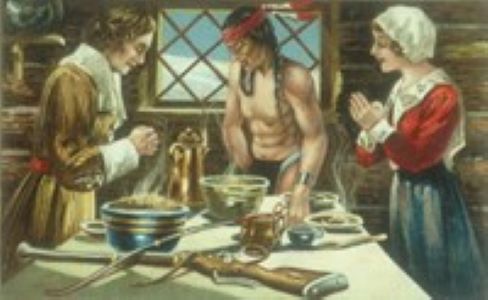
Captain Miles Standish, the leader of the Puritan Settlement, invited Squanto, Samoset, Massasoit (the leader of the Wampanoags), and their immediate families to join them for a celebration, but they had no idea how big Native American families could be. As the Thanksgiving feast began, the Puritans were overwhelmed at the large turnout of ninety relatives that Squanto and Samoset brought with them. The Puritans were not prepared to feed a gathering of people that large for three days. Seeing this, Massasoit gave orders to his men within the first hour of his arrival to go home and get more food. Thus it happened that the Indians supplied the majority of the food: Five deer, many wild turkeys, fish, beans, squash, corn soup, corn bread, and berries. Captain Standish sat at one end of a long table and the Clan Chief Massasoit sat at the other end. For the first time the Wampanoag people were sitting at a table to eat instead of on mats or furs spread on the ground. The Indian women sat together with the Indian men to eat. The Puritan women, however, stood quietly behind the table and waited until after their men had eaten, since that was their custom.
For three days the Wampanoags feasted with the Puritans. It was a special time of friendship between two very different groups of people. A peace and friendship agreement was made between Massasoit and Miles Standish giving the Puritans the clearing in the forest where the old Patuxet village once stood to build their new town of Plymouth.
What does appear evident is that among the Puritans, first in England, and then in America, were conscientious Sabbatarians. The earliest Sabbath keeping congregations in America were not formally incorporated or organized into conferences, but merely local congregations going by various designations or names, such as: Sabbatarians, Church of God, Church of Christ, Seventh Day Baptists, and even Independents. The Seventh Day Baptists were among the earliest to effect a General Conference organization (1802).
Arthur Elwell Main, D.D., in Seventh Day Baptists in Europe and America, Volume 1, says as early as 1646 Sabbath-keeping was the occasion of much earnest discussion in New England, this dates the Sabbath debate twenty-six years after the Puritans arrived in 1620, and about eighteen years prior to the London Seventh Day Baptists’ sending of Stephen Mumford to America. Since Sunday observers would not have advocated seventh-day Sabbath observance, it appears evident that it came about by the Pilgrim descendants. The situations of those times may also be ascertained from Felt’s Ecclesiastical History of New England, Volume 1, p. 593.
As far as documented written historical records go, it appears that the first local organization of Sabbath keeping Christians in America was that of the congregation at Newport, Rhode Island, in 1671. Mumford attended the first-day Baptist Church, and for several years taught the Sabbath truth among them. As a result, a number of them embraced the Sabbath in 1665 and in 1666, but the intention was not to sever their connection with the Baptist Church. They soon learned, however, that even in the church of Roger Williams, where liberty of conscience was supposed to prevail, it was not possible to have close communion on such drastic differences in beliefs as the Sabbath and Sunday brought about. Accordingly, the seventh-day observers left the Baptist Church on December 7, 1671, and sixteen days later, on the 23rd of December, they covenanted together in a congregational organization.
As the Puritans immigrated and formed individual colonies, their numbers rose from 17,800 in 1640 to 106,000 in 1700.
Journals of the Puritans that settled New Salem, Massachusetts, record that they were so moved by the stories of the ancient Israelites that they saw themselves fulfilling a similar role seeing America as their Zion and New Salem as their Jerusalem. They wanted to build a Torah based society.
Other Sabbath keeping centers established shortly after the Newport group was formed were the group near Philadelphia, Pennsylvania, through the labors of Able Noble, who came from England about 1684; and the group at Piscataway, New Jersey. From these centers streams of Sabbatarian emigration flowed westward and southward until there were not less than twenty congregations and settlements of Sabbath keepers in nine of the ten colonies or states when the General Conference of Seventh Day Baptists was organized in 1802. Their headquarters is at Plainfield, New Jersey.
There also is in the state of Pennsylvania a small body of German Seventh Day Baptists, who have a very interesting Sabbath keeping heritage. It dates approximately from 1728 when Conrad Beissel, a native of Germany, became the real leader of an independent Sabbath keeping group established in the Ephrata community. In those years it was largely a monastic movement, comprised of the “Brotherhood of Zion” and the “Spiritual Order of the Roses of Saron,” one of the most celebrated establishments of its kind in the country. Because of their unusual manner of life, and because it was feared that through their influence the whole state of Pennsylvania would be affected with their Sabbatarian teachings, they were at times persecuted. They also established and successfully maintained a Sabbath school at Ephrata, its headquarters, forty years before Robert Raikes of England introduced the system of Sunday schools.
Because of the circumstances of the times, the German Seventh Day Baptists had some associations with William Penn, Benjamin Franklin, and George Washington. Franklin did some of Beissel’s printing. Peter Miller, a member of the colony, was a close friend of the Penn family. He was also personally acquainted with George Washington. When the Continental Congress sought a trustworthy and loyal man to conduct its diplomatic correspondence with the governments of Europe, it was this Sabbath keeper of the Ephrata Community who translated the Declaration of Independence into seven different languages.
THE FIRST THANKSGIVING PROCLAMATION – JUNE 20, 1676: “The Holy [Yahweh] having by a long and Continual Series of his Afflictive dispensations in and by the present Warr with the Heathen Natives of this land, written and brought to pass bitter things against his own Covenant people in this wilderness, yet so that we evidently discern that in the midst of his judgements he hath remembered mercy, having remembered his Footstool in the day of his sore displeasure against us for our sins, with many singular Intimations of his Fatherly Compassion, and regard; reserving many of our Towns from Desolation Threatened, and attempted by the Enemy, and giving us especially of late with many of our Confederates many signal Advantages against them, without such Disadvantage to ourselves as formerly we have been sensible of, if it be the Lord’s mercy that we are not consumed, It certainly bespeaks our positive Thankfulness, when our Enemies are in any measure disappointed or destroyed; and fearing the Lord should take notice under so many Intimations of his returning mercy, we should be found an Insensible people, as not standing before Him with Thanksgiving, as well as lading him with our Complaints in the time of pressing Afflictions: The Council has thought meet to appoint and set apart the 29th day of this instant June, as a day of Solemn Thanksgiving and praise to [Yahweh] for such his Goodness and Favour, many Particulars of which mercy might be Instanced, but we doubt not those who are sensible of [Yahweh’s] Afflictions, have been as diligent to espy him returning to us; and that the Lord may behold us as a People offering Praise and thereby glorifying Him; the Council doth commend it to the Respective Ministers, Elders and people of this Jurisdiction; Solemnly and seriously to keep the same Beseeching that being perswaded by the mercies of [Yahweh] we may all, even this whole people offer up our bodies and soulds as a living and acceptable Service unto [Yahweh] by [Messiah YahShua].” ———————————— The First Thanksgiving Proclamation (June 20, 1676) On June 20, 1676, the governing council of Charlestown, Massachusetts, held a meeting to determine how best to express thanks for the good fortune that had seen their community securely established. By unanimous vote they instructed Edward Rawson, the clerk, to proclaim June 29 as a day of thanksgiving, our first. That proclamation is reproduced here in the same language and spelling as the original. [Sacred Names Restored]
During the American Revolution, the Continental Congress set several Thanksgiving Days for the people to rejoice in their homes and churches for victories won. In 1778, George Washington proclaimed a day on which to give thanks for the treaties just concluded with France. Three years after the War of 1812, President Madison proclaimed a special thanksgiving for peace. Later, there were scattered observances at varying dates in some states, mostly in the North. In 1817, New York State had adopted Thanksgiving Day in the Autumn as an annual custom.
By the middle of the 19th century many other states also celebrated Thanksgiving Day. Gradually, the feeling grew all over the land that we should have a uniform national Thanksgiving Day. Sarah Josepha Hale, the editor of the popular magazine, Godey’s Lady’s Book, was the chief sponsor of this idea for forty years. After the victory at Gettysburg, there was great rejoicing that the Civil War would soon be over. President Lincoln issued a proclamation and named the last Thursday in November as the date for our national Thanksgiving Day after the tally of the Gross National Product was in.
ABRAHAM LINCOLN’S THANKSGIVING PROCLAMATION OCTOBER 3, 1863: “I do therefore invite my fellow citizens in every part of the United States, and also those who are at sea and those who are sojourning in foreign lands, to set apart and observe the last Thursday of November next, as a day of Thanksgiving and Praise to our beneficent Father who dwelleth in the Heavens. And I recommend to them that while offering up the ascriptions justly due to Him for such singular deliverances and blessings, they do also, with humble penitence for our national perverseness and disobedience, commend to his tender care all those who have become widows, orphans, mourners or sufferers in the lamentable civil strife in which we are unavoidably engaged, and fervently implore the interposition of the Almighty Hand to heal the wounds of the nation and to restore it as soon as may be consistent with the Divine purposes to the full enjoyment of peace, harmony, tranquillity and Union. It is the duty of nations as well as of men to own their dependence upon the overruling power of God; to confess their sins and transgressions in humble sorrow, yet with assured hope that genuine repentance will lead to mercy and pardon; and to recognize the sublime truth, announced in the Holy Scriptures and proven by all history, that those nations are blessed whose God is the Lord.”
Thanksgiving Day is the only American holiday birthed by the need of our country to give thanks to the Heavenly Father for our abundance.
“Give thanks to Yahweh, for he is good; His love endures forever. Let the Redeemed of Yahweh say this— those he redeemed from the hand of the foe, those he gathered from the lands, from east and west, from north and south. Some wandered in desert wastelands, finding no way to a city where they could settle. They were hungry and thirsty, and their lives ebbed away. Then they cried out to Yahweh in their trouble, and he delivered them from their distress…Others went out on the sea in ships; they were merchants on the mighty waters. They saw the works of Yahweh, His wonderful deeds in the deep. For He spoke and stirred up a tempest that lifted high the waves…They were glad when it grew calm, and he guided them to their desired haven. Let them give thanks to Yahweh for His unfailing love and his wonderful deeds for men. Let them exalt him in the assembly of the people and praise him in the council of the elders. (Psalms 104: 1-6 ;23-25;30-32)”
My wife’s health has not been good, and this has had me staying up late nights by her side, as chronic pain keeps her from sleeping until she is exhausted. At the same time, I must take her to doctor’s appointments, some of which she cannot possibly miss, during the day. It is impossible to predict her sleep schedule, and this leave me, or her, having top deal with little sleep, t deal with matters that must be handled during business hours. And then we got a letter from Social Security saying that they reviewed her case and that she is suddenly not disabled… except they completely screwed up her case, and talked to doctors she has never seen, but failed to talk to the doctors treating her. We are appealing the case, but since the letter arrived late, we are having to jump thru hoops to even get the appeal (and we are not even certain yet that we have succeeded in that). Meanwhile my wife’s Social Security payments (which normally cover our groceries) have been suspended, and we are trying to get them re-instated. At any rate, we now have a special need this month. We are going to be short on money for groceries, as Thanksgiving is coming up.
I want to thank our supporters from the bottom of my heart. We are living in an exciting age! Elohim is going to bless us with even more knowledge and understanding regarding His plan. Elohim has called us not only to know “who we are”? and “where we are going” but also to realize the responsibilities that God has placed on us. We are His people and Elohim has a plan for us all to have a partnership with Him in bringing Torah and Messiah to the world. I am doing my part, and I believe that Elohim is pleased with our efforts (yours and mine).
We cannot do this work alone, but if we work together we can accomplish so much. So don’t forget to support this work with your contributions, tithes and offerings.
You make this work possible. Please help us bring the message of Torah and Messiah to a lost world and create Scripture study materials for believers.
Now is time to step up to the plate!
Donations can be sent by Paypal to donations@wnae.org
Donations can be made by Paypal, Zelle or Go Fund Me.
The Call of Yizre’el and the Olive Tree By James Scott Trimm
24 (2:22) And the earth shall respond to the grain, and the wine, and the oil–and theyshall respond to Yizre’el. 25 (2:23) And I will sow her unto Me in the land, and I will have compassion upon herthat had not obtained compassion. And I will say to them that were not My people: Youare My people, and they shall say, You are my Elohim. (Hosea 2:24-35 (2:22-23) HRV)
This passage from Hosea brings us to a most overlooked thread of prophecy, that of the ultimate restoration of the House of Israel.
The name Yizre’el (Jezreel in the KJV) is the key to this overlooked thread. In Hosea 1:4 Hosea’s wife bears a son and YHWH names the son “Yizre’el”. Throughout Hosea the names of Hosea’s sons had special prophetic meaning. The name “Yizre’el” is a word play on “Yisra’el” (Israel) but has the maning “El sows” or “El scatters”:
4 And YHWH said unto him: Call his name Yizre’el, for yet a little while and I will visitthe blood of Yizre’el upon the house of Yahu, and will cause to cease–the kingdom ofthe House of Yisra’el. (Hosea 1:4 HRV)
The prophetic meaning of this name is revealed in Hosea chapter 2 where Elohim scatters Yisra’el.
At this point it is absolutely essential to distinguish the two houses of Israel in this book. In these first two chapters of Hosea it is clear that it is not the House of Judah who are facing this chastisement. In fact Hosea specifies that while he is punishing the House of Israel, He will have compassion on the House of Judah:
7 But I will have compassion upon the House of Y’hudah, and will save them by YHWHtheir Elohim: and will not save them by bow, nor by sword, nor by battle, nor byhorses, nor by horsemen. (Hosea 1:7 HRV)
By contrast the House of Israel will lose their identity as the people of YHWH. His second and third sons are named “Lo-Ruchmah” (“not compassioned”) and “Lo-Ammi” (“Not My People”).
Finally YHWH tells us that at a time when the number of the descendants of Israel is as the “as the sand of the sea, which cannot be measured nor numbered.” (Hosea 2:1 (1:10)) that this group known as Lo-Ammi “Not My People” will come to be known as “Sons of the Living El.”
In other words these people would realize that they are not Gentiles after all, but members or the Ten Lost Tribes.
We read of this realization in the Apocrypha in the book of Baruch:
… but in the land of their captivities they shall remember themselves. And shall know that I am YHWH their Elohim: for I will give them a heart, and ears to hear: And they shall praise me in the land of their captivity, and think upon my name, And return from their stiff neck, and from their wicked deeds: for they shall remember the way of their fathers, which sinned before YHWH. And I will bring them again into the land which I promised with an oath unto their fathers, Avraham, Yitzchak, and Ya’akov, and they shall be masters of it: and I will increase them, and they shall not be diminished. And I will make an everlasting covenant with them to be their Elohim, and they shall be my people: and I will no more drive my people of Israel out of the land that I have given them. (Barukh (Baruch) 2:30-35)
Romans 9 begins the contrast of the “Jews” and “Gentiles” by quoting Hosea 2:25(23); 2:1 (1:10) in Rom. 9:25-26.
23 And poured forth His mercy upon the vessels of mercy, that were prepared to Eloah to glory, 24 Which we are … the called; not only from the Jews, but also from the Goyim. 25 Thus also He said in Hoshea: I will call those who were not My people, My people:and to whom I have not shown mercy, I will show mercy. 26 For it will be, [that] in the place where they were called, Not my people: therethey will be called, sons of the Living Eloah. (Hosea 2:1 (1:10); 2:25 (23)) 27 And Yesha’yahu proclaimed concerning the B’nai Yisra’el, that even though thenumber of the B’nai Yisra’el should be like the sand that is in the sea, a remnant ofthem would be saved. (Romans 9:23-27 HRV)
If we look up the context of the people “which were not my people” which he calls “my people” in Hosea we find that they are the “children of Israel”:
1 (1:10) Yet, the number of the children of Yisra’el shall be as the sand of the sea, whichcannot be measured nor numbered. And it shall come to pass that, instead of that whichwas said unto them, You are not My people: it shall be said unto them, You are thechildren of the living El. (Hosea 2:1 (1:10))
as opposed to “the children of Judah”:
2 (1:11) And the children of Y’hudah and the children of Yisra’el shall be gatheredtogether, and they shall appoint themselves one head, and shall go up out of the land: forgreat shall be the day of Yizre’el. (Hosea 2:2 (1:11))
So if Paul is quoting Hosea in context and contrasting Jews and Gentiles (Rom. 9:24) using Hosea 2:1-2 (1:10-11) then the “Jews” of Rom. 9:24 are the “Children of Judah” of Hosea 2:2 (1:11) and the “Gentiles” of Rom. 9:24 are the “children of Israel” of Hosea 2:1 (1:10).
If this is true then as this contrasting pair advances into Rom. Chapter 11 the two trees are the two Houses. This prophecy parallels the two “sticks” prophecy of Ezekiel 37 (note that the word STICK in Ezek. 37 is ETZ which also means “tree”).
16 And if the first is Set-Apart, the lump of dough is also: and if the root is Set-Apart, thebranches [are] also. 17 And if some branches were broken off, and you who are a wild olive [tree], weregrafted into their place and became partakers of the root and of the oil of the olive [tree], 18 Do not boast against the [natural] branches. But if you boast, you are not bearing theroot, but the root bears you! 19 And perhaps you should say of the branches that were broken off, I will be grafted intheir place. 20 These [matters] are beautiful. They were broken off because they did not have trust,but you stand, by trust. Do not be exalted in your mind, but fear: 21 For if Eloah did not spare the natural branches, perhaps He will also not spare you. 22 See then the gentleness and the harshness of Eloah: upon those who fell, harshness,but upon you, gentleness, if, you remain in the gentleness. And if not, you will also bebroken off. 23 And those, if they do not remain in their lack of trust, also will be grafted in: for Eloahis able to graft them in again. 24 For if you, who are from the olive [tree] that was wild by your nature, were cut off andwere grafted–contrary to your nature–into the good olive [tree], how much more then,those, if they be grafted in their natural olive [tree]? 25 For I want you to know this mystery, my brothers, so that you will not be wise in thethought of your nefesh: that blindness of the heart, in part, has happened to Yisra’el untilthe fullness of the Goyim should come, 26 And then all Yisra’el will have Life. Thus it is written, From Tziyon a Deliverer willcome, and turn iniquity from Ya’akov. 27 And then they will have the covenant that is from Me, when I forgive them theirsins. (Isaiah 59:20-21; 27:9) (Romans 11:16-27)
The Aramaic for the phrase “fullness of the Goyim” (Rom. 11:25) could also be translated “multitude of nations” as we read the blessing of Yoseph in Genesis:
18 And Yosef said unto his father, Not so, my father, for this is the firstborn: put yourright hand upon his head. 19 And his father refused, and said, I know it, my son, I know it. He also shall become apeople, and he also shall be great. Howbeit, his younger brother shall be greater than he,and his seed shall become a multitude of nations. 20 And he blessed them that day, saying, By you shall Yisra’el bless, saying, Elohimmake you as Efrayim and as M’nasheh, and he set Efrayim before M’nasheh. (Gen. 48:18-20 HRV)
Now the uncultivated olive tree in Romans 11 is clearly therefore Ephraim and the cultivated olive tree is clearly that of Judah. This prophecy tells us that branches from the tree/stick of Ephraim will be broken off and grafted into the tree/stick of Judah, are to be fed by the root of the tree/stick of Judah and are not to boast against the natural branches (Jews).”
The Zohar also uses the imagery of being “grafted in” to describe a proselyte’s being “grafted in” to Judah: For this reason proselytes will no longer be admitted in the days of the Messiah (that is in the Messianic Kingdom). The Shekinah will be like a vine on which there cannot be grafted any shoot from another species, and Israel shall be “every tree pleasant to see”, and their former beauty shall be restored to them, of which we are told: “He cast from heaven to earth the beauty of Israel” (Lam. II, 1). (Zohar 1:26)
Romans 11 speaks to the branches from the Lost Ten Tribes of the House of Israel grafted into the House of Judah. The branches from the Lost Ten Tribes are directed to be fed by the root of the tree which represents the House of Judah. It important to note that there are two trees, one representing the House of Israel and one representing the House of Judah… two different trees have two different roots… the branches from the Ten Tribes are to be fed by the root of the House of Judah as opposed to the root of the House of Israel.
Red Alert: Our rent is due in two days!
I want to thank our supporters from the bottom of my heart. We are living in an exciting age! Elohim is going to bless us with even more knowledge and understanding regarding His plan. Elohim has called us not only to know “who we are”? and “where we are going” but also to realize the responsibilities that God has placed on us. We are His people and Elohim has a plan for us all to have a partnership with Him in bringing Torah and Messiah to the world. I am doing my part, and I believe that Elohim is pleased with our efforts (yours and mine).
We cannot do this work alone, but if we work together we can accomplish so much. So don’t forget to support this work with your contributions, tithes and offerings.
You make this work possible. Please help us bring the message of Torah and Messiah to a lost world and create Scripture study materials for believers.
Now is time to step up to the plate!
Donations can be sent by Paypal to donations@wnae.org or by Zelle, Go Fund Me , Bitcoin or Ethereum.
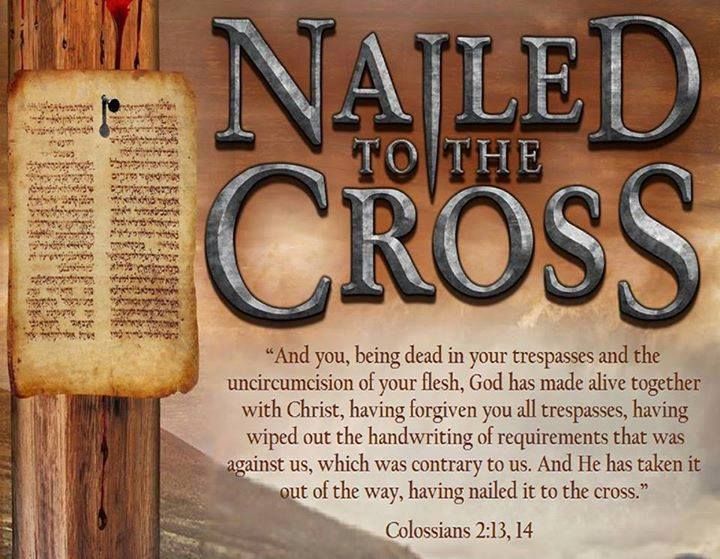
Was the Torah Blotted out and Nailed to the Cross? (Col. 2:14) By James Scott Trimm
Often when I share with Christians that the Torah is everlasting, for all generations, they respond by saying, “But the law was blotted out .” By this they allude to Colosians 2:14 which reads in the the KJV:
Blotting out the handwriting of ordinances that was against us, which was contrary to us, and took it out of the way, nailing it to his cross. (Col. 2:14 KJV)
This very poor translation in the King James Version has given rise to a false theology that the Torah was blotted out and nailed to the cross. The KJV has a very poor translation here. The Greek phrase translated “handwriting of ordinances” is χειρόγραφον τοῖς δόγμασιν the Greek word χειρόγραφον is better translated “certificate of debt” rather than “handwriting” and δόγμασιν is better translated “decrees” rather than “ordinances” as the KJV renders it. The Greek is better translated as it appears in the New American Standard translation:
having cancelled out the certificate of debt consisting of decrees against us and which was hostile to us; and he has taken it out of the way, having nailed it to the cross. (Col. 2:14 NAS)
The reading of the KJV “the handwriting of ordinances that was against us” is interpreted by many to refer to the Torah, however the Greek actualy means “the certificate of debt consisting of decrees against us” which is actually referring not to the Torah, but to the record of our sins.
The original Aramaic is clearer:
ועטא בפוקדנוהי שטר חובין הו דאיתוהי הוא סקובלן ושקלה מן מצעתא וקבעה בזקיפה
He has blotted out, by His commandments, the handwriting of our debts which were against us, and He took from the midst and fastened it on His gallows. (Col. 2:14 HRV)
In the original Aramaic Paul is actually saying that it is by the Torah that “the handwriting of our debts which were against us” were blotted out. In both the Aramaic and the Greek it is not the Torah which was blotted out in Col. 2:14, but the record of our sins.
We need your help today! Our rent is due in just five days!
I want to thank our supporters from the bottom of my heart. We are living in an exciting age! Elohim is going to bless us with even more knowledge and understanding regarding His plan. Elohim has called us not only to know “who we are”? and “where we are going” but also to realize the responsibilities that God has placed on us. We are His people and Elohim has a plan for us all to have a partnership with Him in bringing Torah and Messiah to the world. I am doing my part, and I believe that Elohim is pleased with our efforts (yours and mine).
We cannot do this work alone, but if we work together we can accomplish so much. So don’t forget to support this work with your contributions, tithes and offerings.
You make this work possible. Please help us bring the message of Torah and Messiah to a lost world and create Scripture study materials for believers.
Now is time to step up to the plate!
Donations can be sent by Paypal to donations@wnae.org, Zelle, Go Fund Me, Bitcoin or Ethereum.
Each of our four Gospels are written upon each of the four levels of understanding as understood in Judaism. The first letter from each of these four levels spells PaRDeS (paradise). These four levels of understanding are:
[P]ashat – The plain and literal [R]emez – The hinted or implied [D]rash – The allegorical of homiletical [S]od – The hidden, secret, or mystical
As I have laid out in the past, each of the four Gospels are written on one of these four levels of understanding. Mark gives the pashat; Luke the remez; Matthew with drash and Yochanan (John) gives the Sod, the hidden secret and mystical account.
Yochanan opens his account saying:
1 In the beginning was the Word, and the Word was with Eloah, and the Word wasEloah. 2 This was in the beginning, with Eloah. 3 Everything existed through Him, and without Him, not even one thing existed ofthat which existed. 4 In Him was life, and the life was the light of men. 5 And the Light brought light into the darkness, and the darkness did not over take it. 6 There was a man sent from Eloah, whose name was Yochanan. 7 This man came for a witness, that he might bear witness to the Light: that every manmight believe through him. 8 He was not the Light, but came that he might bear witness to the Light. 9 For He was the light of truth, that which lights every man who comes into theworld. 10 He was in the world, and the world was by His hand: and the world did not knowHim. 11 He came to His, and His did not receive Him. 12 But those who did receive Him, those who believed in His Name, He gave power thatthey should be sons of Eloah: 13 Those who, neither by blood, nor by the will of flesh, nor by the will of man, werebegotten, but by Eloah. 14 And the Word became flesh and dwelt with us, and we saw His glory: as theglory of the only begotten who is from the father, who is full of grace and truth. (John 1:1-14 HRV)
In a previous series of articles I have explored the significance of Messiah as “the Word” but today I will explore the significance of Messiah as the “light” and as the “only begotten”.
The Zohar sheds light on this section of Yochanan:
Concerning this, too, it is written: “Let there be light, and there was light” (Gen. I, 3). Why, it may be asked, was it necessary to repeat the word “light” in this verse? The answer is that the first “light” refers to the primordial light which is of the Right Hand, and is destined for the “end of days”; while the second “light” refers to the Left Hand, which issues from the Right. The next words, “And God saw the light that it was good” (Gen. 1, 4), refer to the pillar which, standing midway between them, unites both sides, and therefore when the unity of the three, right, left, and middle, was complete, “it was good”, since there could be no completion until the third had appeared to remove the strife between Right and Left, as it is written, “And Elohim separated between the light and between the darkness” (Ibid.). (Zohar 2:167a)
This is the Middle Pillar: Ki Tov (that it was good) threw light above and below and on all other sides, in virtue of YHWH, the name which embraces all sides. (Zohar 1:16b)
According to the Zohar the Middle Pillar of the Godhead is the Son of Yah:
Better is a neighbor that is near, than a brother far off. This neighbor is the Middle Pillar in the Godhead, which is the Son of Yah. (Zohar 2:115)
The Middle Pillar is the Ki Tov (That which is good), the light, and the Son of Yah.
The fact that the Son of Yah is the Middle Pillar, the light that is called in Genesis “Ki Tov” (That which is good) helps us to understand Yeshua’s exchange with the man who called him “Good Rabbi”, as we read:
16 And behold, one came near, and said to Him, Good Rabbi, and what good thing shallI do, that I may acquire the life of the world to come? 17 And He said to him: Why ask you me concerning what is good? There is none goodbut one: there is a good, and that is El. And if you desire to enter into the life of the worldto come: keep the commandments of El. (Matthew 19:16-17 HRV)
Messiah was acknowledging that this man was identifying him rightly as the Ki Tov, the Middle Pillar of the Godhead, the Son of Yah, the only begotten.
Now let us seek to understand the process whereby the light was “begotten”. The Zohar tells us much more:
(1) And Elohim said Let there be light, and there was light (Gen 1:3). (2) From here is the beginning for finding treasures, how the world was created in particular. (3) For until now, it was general, and it then returns to speaking in general terms so that it will be general, specific, general. (4) Until now everything was suspended in the air by the secret of Ayn Sof. (5) Once its power spread into the upper temple, the secret of Elohim, ‘utterance’ is written, “And Elohim said,” for above utterance is not written in particular, even though “In the beginning” is an utterance, it does not say, “and He said.” (Zohar 1:16b)
The Zohar is saying that up until this point the Torah has given only generalities but not specifics as to how the world was created. In addition there is a double meaning in the actual Aramaic, that up until this point the universe had only a general existence without specific parts. The text points out that the first statement in the Torah “In the beginning Elohim created the heavens and the earth…” although it is not preceded by the words “And Elohim said” is still regarded as a creative utterance. (The tradition of the Zohar is that the universe was created by ten utterances, each corresponding to the ten sefirot. While the phrase “He said” appears only nine times in the creation account, the first phrase of Torah is said to be an utterance as well).
The Zohar continues:
(6) This, “and He said,” establishes questions and knowledge. (7) “And He said,” a power that was raised and lifted up silently, from the mystery of Ayn Sof, in the mystery of thought. (8) “And he said,” now the temple begat, of that which she conceived from the holy seed, and she begat silently, and that which was begotten was heard from without, and the one giving birth gave birth silently and was not heard at all; once that which went forth from it went forth, a voice was made that was heard from without. (9) “Let there be light.” Everything that emerged went forth by this mystery. (Zohar 1:16b)
Here we are told just how the light was begotten. A power was raised and lifted up silently from within the very mind of Ayn Sof (the Infinite One) as a “holy seed” into the heavenly Temple from which it was begotten.
Like Yochanan, the Zohar tells us that everything (all creation) came into existence through this “light” which was begotten.
The Zohar continues:
(10) Yehi (יהי) (let there be) concerns the mystery of the Father and Mother symbolized by the letters Yod He became now a starting-point (symbolized by the second Yod) for further extension. (Zohar 1:16b)
Here we are told that the Hebrew word Yehi (יהי) “let there be” points to the mystery of the begetting of the light. The first two letters spell YAH יה and consist of the letters yud י and heh ה. We are told that these two letters represent the Father and the Mother, and that the second yud י represents the light which was the starting point of creation.
So now when you read the first fourteen verses of Yochanan you will understand what it means when it identifies the Messiah as the “light” and as the “only begotten” and says that “Everything existed through Him, and without Him, not even one thing existed of that which existed.” Just as the Zohar tells us that “Everything that emerged went forth by this mystery.”
Messiah is the Son of Yah, the only begotten, the Ki Tov, the light, the Middle Pillar of the Godhead, and everything which emerged in creation went forth through Him.
Such is the testimony, not only of Yochanan, but of the Zohar as well.
Red Alert: We need your help today! We still need to raise at least $1,116 by the end of the day tomorrow (1/21/25) to cover our bills!
I want to thank our supporters from the bottom of my heart. We are living in an exciting age! Elohim is going to bless us with even more knowledge and understanding regarding His plan. Elohim has called us not only to know “who we are”? and “where we are going” but also to realize the responsibilities that God has placed on us. We are His people and Elohim has a plan for us all to have a partnership with Him in bringing Torah and Messiah to the world. I am doing my part, and I believe that Elohim is pleased with our efforts (yours and mine).
We cannot do this work alone, but if we work together we can accomplish so much. So don’t forget to support this work with your contributions, tithes and offerings.
You make this work possible. Please help us bring the message of Torah and Messiah to a lost world and create Scripture study materials for believers.
Now is time to step up to the plate!
Donations can be sent by Paypal to donations@wnae.org or by Zelle, Go Fund Me, Bitcoin or Ethereum.
This website uses cookies to improve your experience. We'll assume you're ok with this, but you can opt-out if you wish. Cookie settingsACCEPT
Privacy & Cookies Policy
Privacy Overview
This website uses cookies to improve your experience while you navigate through the website. Out of these cookies, the cookies that are categorized as necessary are stored on your browser as they are essential for the working of basic functionalities of the website. We also use third-party cookies that help us analyze and understand how you use this website. These cookies will be stored in your browser only with your consent. You also have the option to opt-out of these cookies. But opting out of some of these cookies may have an effect on your browsing experience.
Necessary cookies are absolutely essential for the website to function properly. This category only includes cookies that ensures basic functionalities and security features of the website. These cookies do not store any personal information.
Any cookies that may not be particularly necessary for the website to function and is used specifically to collect user personal data via analytics, ads, other embedded contents are termed as non-necessary cookies. It is mandatory to procure user consent prior to running these cookies on your website.