The rent is due soon, and right now we do not have it. We need your support!
I want to thank all of you supporting this work. I literally could not do it without you!
This work takes hours of my time. As many of you know, my wife is very ill, and I spend most of my time at home as her caretaker. I work at a desk less than six feet from her bed. So I am in a position to dedicate many hours to this important work that I have been directed to do.
But I also realize that it is not the activity of James Trimm alone who is responsible to do this work, it is all of us together who are charged with the responsibility of accomplishing this work. I very much look on the efforts of this restoration work as a cooperative one with each one of you. We are all joint heirs with Messiah and should always be about our Father’s business. I am honored to be able to be partnered with truth seekers as this restoration of Scripture moves forward in fulfillment of prophecy.
Donations can be sent by Paypal to donations@wnae.org.
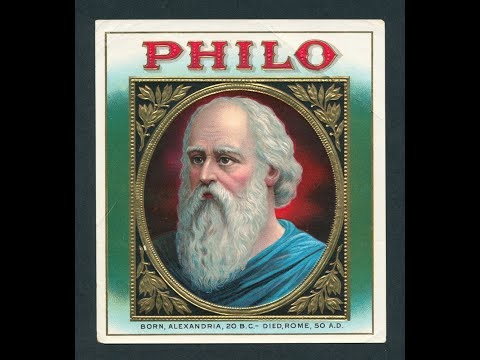
Philo of Alexandria on Torah Observance By James Scott Trimm
Many Christians teach a false doctrine that since the commandments of the Torah are symbolic of certain deep truths concerning Messiah, and since the Torah is a tutor leading us to Messiah and since the Messiah “fulfilled” the Torah, we no longer need to actually observe the commandments once we have come to the truth of Messiah.
Interestingly Philo of Alexandria encountered a similar false teaching. Philo was an Alexandrian Jew who was born nearly 20 years before Yeshua and died around 20 years after his death. Philo was a “Hellenist Jew”. Not like the Hellenists of the Maccabean period who abandoned Torah for Paganism, but like Stephen (Acts 7) and the Hellenists in Acts 6. These Hellenists were Greek speaking Jews who remained Torah Observant (at least in there own understanding) while accepting Greek culture.
Philo wrote commentary, primarily on the Torah, which was highly midrashic. Philo interpreted the texts in an allegorical manner, finding in them philosophic symbolism. Philo saw the commandments of the Torah as pregnant with deep symbolic truths which he sought to express in his commentaries.
Philo had encountered others in his day who taught that observing the actual commandments was not necessary at all, that all that was really important was to understand the deep truths which they, through symbolism and allegory, teach us. Philo responded to this false teaching as follows:
(89) For there are some men, who, looking upon written laws as symbols of things appreciable by the intellect, have studied some things with superfluous accuracy, and have treated others with neglectful indifference; whom I should blame for their levity; for they ought to attend to both classes of things, applying themselves both to an accurate investigation of invisible things, and also to an irreproachable observance of those laws which are notorious. (90) But now men living solitarily by themselves as if they were in a desert, or else as if they were mere souls unconnected with the body, and as if they had no knowledge of any city, or village, or house, or in short of any company of men whatever, overlook what appears to the many to be true, and seek for plain naked truth by itself, whom the sacred scripture teaches not to neglect a good reputation, and not to break through any established customs which divine men of greater wisdom than any in our time have enacted or established. (91) For although the seventh day is a lesson to teach us the power which exists in the uncreated God, and also that the creature is entitled to rest from his labours, it does not follow that on that account we may abrogate the laws which are established respecting it, so as to light a fire, or till land, or carry burdens, or bring accusations, or conduct suits at law, or demand a restoration of a deposit, or exact the repayment of a debt, or do any other of the things which are usually permitted at times which are not days of festival. (92) Nor does it follow, because the feast is the symbol of the joy of the soul and of its gratitude towards God, that we are to repudiate the assemblies ordained at the periodical seasons of the year;nor because the rite of circumcision is an emblem of the excision of pleasures and of all the passions, and of the destruction of that impious opinion, according to which the mind has imagined itself to be by itself competent to produce offspring, does it follow that we are to annul the lawwhich has been enacted about circumcision. Since we shall neglect the laws about the due observance of the ceremonies in the temple, and numbers of others too, if we exclude all figurative interpretation and attend only to those things which are expressly ordained in plain words. (93) But it is right to think that this class of things resembles the body, and the other class the soul; therefore, just as we take care of the body because it is the abode of the soul, so also must we take care of the laws that are enacted in plain terms: for while they are regarded, those other things also will be more clearly understood, of which these laws are the symbols, and in the same way one will escape blame and accusation from men in general. (Philo; On the Migration of Abraham)
Philo pointed out that the literal meaning of the commandments was like a body and the symbolic meaning was like a soul. Since the soul inhabits the body, the soul depends upon the care of the body. Likewise the symbolic truths of the Torah depend upon the observance of the commandments to have any real meaning. As we read in the Talmud that no passage loses its PASHAT (literal meaning) (b.Shab. 63a; b.Yeb. 24a)
For example the Passover was a shadow which Messiah fulfilled, yet rather than abolish the observance of Passover as a result, Paul says “therefore let us keep the feast” (1Cor. 5:7-8).
The rent is due in just over a week (10/1/24), and right now we do not have it. We need your support today!
I want to thank all of you supporting this work. I literally could not do it without you!
This work takes hours of my time. As many of you know, my wife is very ill, and I spend most of my time at home as her caretaker. I work at a desk less than six feet from her bed. So I am in a position to dedicate many hours to this important work that I have been directed to do.
But I also realize that it is not the activity of James Trimm alone who is responsible to do this work, it is all of us together who are charged with the responsibility of accomplishing this work. I very much look on the efforts of this restoration work as a cooperative one with each one of you. We are all joint heirs with Messiah and should always be about our Father’s business. I am honored to be able to be partnered with truth seekers as this restoration of Scripture moves forward in fulfillment of prophecy.
Donations can be sent by Paypal to donations@wnae.org or by Zelle or Go Fund Me!
I continue to expand my commentary on the Scriptures. So far I have only posted material on Genesis Chapter 1. In the 1980’s, when I was studying under my mentor Rabbi Armand Daniel (“Danny”) Moyal, he spent a great deal of time with me on the first few verses of Genesis. There is just so much wisdom, knowledge and understanding packed into these verses.
In my commentary on this material, I am making use of the great Rabbinic Commentators, including Rashbam, Rashi, Kimhi, Nachmanides, Ibn Ezra, Eliezer Hakkalir, Barachiah and others, as well as Philo of Alexandria.
I am also making use of some unique sources, such as The 17th Century Rabbi Shlomo Meir Ben Moshe, who became a believer in Yeshua as the Messiah based on insights he discovered in the Hebrew text of the Torah. I also have credited some of the teachings of my old mentor Rabbi Moyal, an Orthodox Rabbi from Israel who had become a believer in Yeshua as the Messiah based on insights he found in the Talmud, Midrashim and Zohar.
I am making use, not only of the great Rabbinic Commentators, but of the Talmud, Midrashim, Sefer Yetzirah, Bahir, and Zohar and I also have made use of the Hebrew text of the openning verses of Yochanan from an old Hebrew manuscript.
Today I made the following additional comments:
About the Hebrew letters for “in the beginning” being an anagram for “On Tishri 1”
Expansion about the material concerning the creation of “light” (Important added material here
Added material about why we read “one day” not “first day”
The rent is due soon, and right now we do not have it. We need your support!
I want to thank all of you supporting this work. I literally could not do it without you!
This work takes hours of my time. As many of you know, my wife is very ill, and I spend most of my time at home as her caretaker. I work at a desk less than six feet from her bed. So I am in a position to dedicate many hours to this important work that I have been directed to do.
But I also realize that it is not the activity of James Trimm alone who is responsible to do this work, it is all of us together who are charged with the responsibility of accomplishing this work. I very much look on the efforts of this restoration work as a cooperative one with each one of you. We are all joint heirs with Messiah and should always be about our Father’s business. I am honored to be able to be partnered with truth seekers as this restoration of Scripture moves forward in fulfillment of prophecy.
Donations can be sent by Paypal to donations@wnae.org.
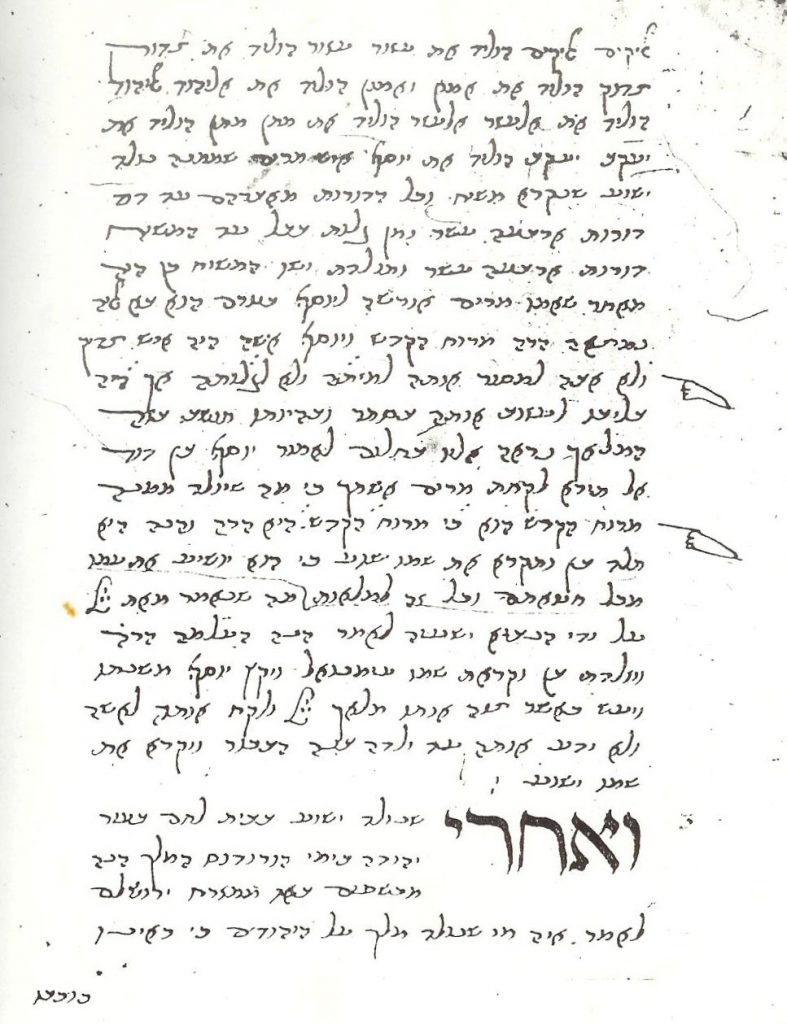
In a recent blog I told you I was working on a project to restore five fragments of an ancient Nazarene Commentary on Isaiah, from five Latin fragments preserved in quotations in Jerome’s Commentary on Isaiah.
Here is the second of the five fragments (On Isaiah 9:1-4) restored to Hebrew with an English translation:
פשרו בא משיח ונבואתו נגה. ארצה זבלון וארצה נפתלי הם היו הראשונים משוחררים מן התועים של הסופרים והפרושים. והוא נער את שכמיהם עול של גזרות חומרות. והאחרון כל נעשה גדול יותר ביד הבשורה של פולוס השליח אשר אחרון השליחים. הפרש הוא הנבואה ירבה. ולקצה הגוים ובדרך כל הים נגה את בשורה המשיח. בכן כל העולם אשר קודם הלך או ישב בחשך ואשר נשבה באסורים אשר לתרפים ולמוות הוא ראה את האור הצלול של בשורה
8:23 (9:1) For is there no gloom to her that was steadfast? Now the former has lightly afflicted the land of Z’vulun, and the land of Naftali, but the latter has dealt a more grievous blow by the way of the sea, beyond the Yarden, in the district of the nations. 9:1 (9:2) The people that walked in darkness have seen a great light; they that dwelt in the land of the shadow of death, upon them has the light shined. 9:2 (9:3) You have multiplied the nation [Gentiles], You have increased their joy; they joy before You according to the joy in harvest, as men rejoice when they divide the spoil. 9:3 (9:4) For the yoke of his burden, and the staff of his shoulder; the rod of his oppressor, You have broken as in the day of Midian. (Isaiah 8:23-9:3 (9:1-4) HRV)
Its interpretation: Messiah came and his prophecy shined out, the Land of Zebulon and the Land of Naphtali were the first to be freed from the errors of the Scribes and Pharisees. And he shook off from their shoulders, the yoke of heavy decrees. Later everything was made much greater through the goodnews of the emissary Paul, who was last of the emissaries. Its interpretation is that the prophecy multiplied. And to the most distant nations/gentiles and to the way of the whole sea, the goodnews of Messiah shined. Finally, the whole world, which before walked or dwelt in darkness, and which was imprisoned in bonds of idolatry and death, saw the clear light of the goodnews.
— My Comments
There is much we can learn about the Nazarenes from this ancient Nazarene Commentary.
To begin with the verb נער (shaken off) (as I have shown in a recent blog) points to a direct connection to a unique reading found only in DuTillet Hebrew Matthew 11:29.
The author clearly had Matthew 4:13-16 and 11:28-30 in mind, which sheds some light on the overall concept here. The author is not rejecting the idea of halacha in general, but only of the Rabbinic halacha. He does not reject the idea of a yoke, but opposes the “heavy” Rabbinic yoke (halacha), with its “errors” in favor of Yeshua’s “light” yoke (halacha).
Another important thing that we learn is that, unlike the ancient Ebionites, who rejected Paul, the ancient Nazarenes accepted Paul, and even saw his mission in the prophecy of Isaiah 9:1-4. To the ancient Nazarenes Paul’s mission to the “gentiles” multiplication of the Gentiles and increase of their joy in Isaiah 9:1-4.
Another thing we can derive, is that to the Nazarenes, Paul’s “Gentiles” were the “Gentiles” of Isaiah 9:1-4 which were the lost tribes which had become identified as gentiles which Isaiah is speaking on in Isaiah 9:1-4 (Zebulon and Naphtali).
Finally, the 3rd Century Nazarenes saw Paul as the “last” of the Emissaries.
Watch for the next fragment covering Isaiah 29:20-21 coming soon!
The rent is due soon, and right now we do not have it. We need your support!
I want to thank all of you supporting this work. I literally could not do it without you!
This work takes hours of my time. As many of you know, my wife is very ill, and I spend most of my time at home as her caretaker. I work at a desk less than six feet from her bed. So I am in a position to dedicate many hours to this important work that I have been directed to do.
But I also realize that it is not the activity of James Trimm alone who is responsible to do this work, it is all of us together who are charged with the responsibility of accomplishing this work. I very much look on the efforts of this restoration work as a cooperative one with each one of you. We are all joint heirs with Messiah and should always be about our Father’s business. I am honored to be able to be partnered with truth seekers as this restoration of Scripture moves forward in fulfillment of prophecy.
Donations can be sent by Paypal to donations@wnae.org.
We now have definitive evidence that the Hebrew Matthew once held by the ancient Nazarene Jews was directly related to the DuTillet Hebrew manuscript of Hebrew Matthew we have today!
We have always known that the ancient Jewish sect of the Nazarenes used a Hebrew Matthew. For example the fourth century “church father” Epiphanius writes:
They [the Nazarenes] have the Gospel according to Matthew quite complete in Hebrew, for this Gospel is certainly still preserved among them as it was first written, in Hebrew letters. – Epiphanius (370 C.E.) (Panarion 29:9:4)
And for many decades I have been making the case that the DuTillet Hebrew version of Matthew descends from that original Hebrew version, based primarily upon internal evidence of originality. I have shown several places where DuTillet contains variant readings which appear to have been misread or misunderstood by the Greek translator, as well as many unique parallels with the Old Syriac Aramaic Matthew which was lost from the fourth century until the 19th Century.
In fact the main vulnerability of DuTillet Hebrew Matthew has been its age. The manuscript itself only dates back to the 16th Century.
And while there are some readings that show some agreement with the Gospel according to the Hebrews, we have yet to find a smoking gun that would definitively tie DuTillet Hebrew Matthew to the ancient Nazarenes… until today!
This morning, I was working on my reconstruction of the original Hebrew behind the five fragments of the lost Nazarene Commentary on Isaiah. These are five quotations of a third century Nazarene Commentary on Isaiah which have been preserved only in Latin translation, quoted by Jerome in his Commentary on Isaiah. Jerome is a fourth century Latin church father, who often referenced the Nazarenes in his writings, and who famously created the Latin Vulgate, standard Latin Bible.
In this Isaiah Commentary project, I have sought to reconstruct the Hebrew using all tools available to me. One of the most obvious guides, is the Hebrew text of Isaiah itself. Another is Jerome’s Latin Vulgate translation of these same passages of Isaiah.
So I came upon a passage in the Commentary to Isaiah 9:1-4 which reads in Latin that when Yeshua came to the Land of Zebulon an the Land of Naphtali that he “scribarum et pharisaeorum est erroribus liberata, et gravissimum traditionum Iudaicarum iugum excussit de cervicibus suis.” or in English that he “He shook off of their shoulders the yoke of the heavy decrees of the Scribes and Pharisees” (I have rendered “traditionum” as “decrees” based on Jerome’s use of that Latin word in the Latin Vulgate in Matthew 15 where the DuTillet Hebrew has גזרתכם “your decrees, judgements, sentences”.)
As I looked to Isaiah 9:1-4 I saw the Hebrew words for “yoke” and “shoulder” but the verb there is החתת “broken” not “shaken off”. And, in fact, in Biblical Hebrew the idiom is always that a yoke is “broken”. But here the Latin verb is excussit “to shake off”. This pointed strongly the Hebrew verb נער
Suddenly I had a flash of insight! I had seen this somewhere else before! I quickly whipped out DuTillet’s Hebrew Matthew, and there it was, Yeshua, a yoke, and the verb נער!
לכו אלי כל היעפים ואשר עליכם משא ואני אשביעכם שאו את עולי עליכם ולמדו ממני כי נער אני ושפל רוח ותמצאו מדגוע לנפשותיכם כי עולי מתוק הוא ומשאי קל
28 Come to me, all you that labor and are heavy laden, and I will satisfy you. 29 Take my yoke upon you, and learn of me, for I shake [that burden] offand am downcast of spirit, and you will find rest for your souls (Jer. 6:16; Ps. 23:3). 30 For my yoke is gentle, and my burden easy. (Matthew 11:28-30 DuTillet)
(In the past I translated as “driven out” based on its use in Zech. 11:16, but in light of this new information, I now see it is better translated “shake off” in implied reference to the yoke that Yeshua offers to replace with his “light” yoke.)
The Greek translator must have misread נער as נעם “to be pleasant”. At any rate, the DuTillet Hebrew version of Matthew is the only extant text of Matthew with this reading.
No doubt the Nazarene Commentator on Isaiah saw Isaiah 9:1-4 and it brought to mind Matthew 3:14-16 & Matthew 11:28-30. And seeing the verb נער in his Hebrew text of Matthew 11:29 commented that Yeshua “shook off of their shoulders the yoke of the heavy decrees of the Scribes and Pharisees”.
This cannot be a coincidence. The Ancient Nazarene Commentator on Isaiah clearly had a Hebrew Matthew before him that agreed with this unique reading found only in the DuTillet Hebrew Matthew. We can now make a definite connection between DuTillet Hebrew Matthew, and the original Hebrew Matthew which was in the hands of the Ancient Nazarene Jews!
I want to thank all of you supporting this work. I literally could not do it without you!
We need your help today! Donations have been down, costs have been up. Bills are due!
This work takes hours of my time. As many of you know, my wife is very ill, and I spend most of my time at home as her caretaker. In doing this work I am in a position to dedicate many hours to this important work that I have been directed to do.
But I also realize that it is not the activity of James Trimm alone who is responsible to do this work, it is all of us together who are charged with the responsibility of accomplishing this work. I very much look on the efforts of this restoration work as a cooperative one with each one of you. We are all joint heirs with Messiah and should always be about our Father’s business. I am honored to be able to be partnered with truth seekers as this restoration of Scripture moves forward in fulfillment of prophecy.
Donations can be sent by Paypal to donations@wnae.org or by Zelle or Go Fund Me.
In the early 19th Century Rebbe Shneur Zalman of Liadi (founder of the Chabad movement) wrote the Tanya in order to give an intellectual basis for Hasidic Judaism. One of the major topics of the Tanya is that of the conflict within the beinoni (the average man) between the animal soul, influenced by the evil inclination (yetzer ra) and the divine soul, influenced by the good inclination (yetzer tov). The Tanya summarizes this conflict well when it says: Just as two kings wage war over a town, which each wishes to capture and rule, that is to say, to dominate its inhabitants according to his will, so that they obey him in all that he decrees for them, so do the two souls— the Divine and the vitalizing animal soul… wage war against each other over the body and all its limbs. (Tanya Chapter 9)
Cain and Abel
The first century Jewish writer Philo of Alexandria understood this concept well. He saw the very principle of this conflict in the Torah, as being revealed through allegory in the Torah. In his commentary to the story of the offerings made by Cain and Abel he gives is a very good illustration of this conflict between the two souls:
(2) It happens then, that there are two opinions contrary to and at variance with one another; the one of which commits everything to the mind as the leader of all reasoning, or feeling, or moving, or being stationary; and the other, attributing to God all the consequent work of creation as his own. Now the symbol of the former of these is Cain, which name, being interpreted means, “possession,” from his appearing to possess all things; and the symbol of the other is Abel; for this name, being interpreted, means “referring to God.” (3) Now both these opinions were brought forth by one soul. But it follows of necessity that as soon as they were born they must have been separated; for it was impossible for enemies to dwell together for ever. Until then the soul brought forth the God-loving doctrine Abel, the self-loving Cain dwelt with her. But when she brought forth Abel, or unanimity with God, she abandoned unanimity with that mind which was wise in its own conceit. (On the Birth of Abel and the Sacrifices Offered by Him and His Brother Cain 2-3)
Philio (whose Bible was the Greek Septuagint) interprets “Cain” to mean “possession,” which is in keeping with the Hebrew verb KANA “to own, to possess, to acquire”. He interprets Abel to mean “referring to God” probably understanding Abel (Havel in Hebrew) to be derived from HAV EL “to give [to] El”.
Philo sees Cain as representing the animal soul and the evil inclination which is completely self-centered and only desires to acquire, own and possess for self the pleasures of this world. On the other hand Abel represents the divine soul and the good inclination, which only wishes to serve YHWH.
Philo also saw this conflict between the two souls as symbolized by the conflict between Esau and Jacob:
(4) And this will be more evidently shown by the oracle which was given to Perseverance, that is to Rebecca; for she also, having conceived the two inconsistent natures of good and evil, and having considered each of them very deeply according to the injunctions of prudence, beholding them both exulting, and making a sort of skirmish as a prelude to the war which was to exist between them; she, I say, besought God to explain to her what this calamity meant, and what was the remedy for it. And he answered her inquiry, and told her, “Two nations are in thy womb.” This calamity is the birth of good and evil. “But two peoples shall be divided in thy bowels.” And the remedy is, for these two to be parted and separated from one another, and no longer to abide in the same place. (ibid 4)
And Philo also understood this concept of the conflict of the two souls as being symbolized by the commandment in the Torah concerning the rights of sons of two rival wives (Deut. 21:15). Philo writes:
(19) And concerning this doctrine Moses also records a law, which he makes with great beauty and suitableness. And it runs thus, “If a man have two wives, the one of them beloved and the other hated; and if both the one who is beloved and the one who is hated have borne him children, and if the child of her who is hated is the firstborn, then it shall be in the day in which he divides the inheritance of his possessions among his sons that he shall not be able to give the inheritance of the first-born to the son of the wife that is beloved, overlooking his first-born son, the son of her who is hated; but he shall recognise the son of her who is hated as his first-born, to give him a double share of all the property that he has acquired; because he is the beginning of his children, and the right of the first-born is His.” (Ibid 19)
Philo goes on to show how these two women parallel the two inclinations, and their rivalry parallels the conflict of the two souls within each of us:
(20) Consider, O my soul, and know who it is who is hated, and who is the son of her who is hated, and immediately you shall perceive that the chief rights and chief honours belong to no one else but to him alone; for there are two wives cohabiting with each individual of us, hostile and inimical to one another, filling the abode of the soul with the contentions which arise from jealousy. Of these we love one, which is gentle and tractable, and which we think very affectionate and akin to ourselves, and its name is pleasure; but the other we hate, looking upon it as untameable, ungentle, fierce, and very hostile to us, and the name of this one is virtue. Now what mortal is ignorant of the great mysteries of that exceedingly beautiful and greatly contended for pleasure? And who could worthily describe the multitude or the greatness of the good things which are treasured up by Virtue? (21) For two women live with each individual among us, both unfriendly and hostile to one another, filling the whole abode of the soul with envy, and jealousy, and contention; of these we love the one looking upon her as being mild and tractable, and very dear to and very closely connected with ourselves, and she is called pleasure; but the other we detest, deeming her unmanageable, savage, fierce, and most completely hostile, and her name is virtue. Accordingly, the one comes to us luxuriously dressed in the guise of a harlot and prostitute, with mincing steps, rolling her eyes about with excessive licentiousness and desire, by which baits she entraps the souls of the young, looking about with a mixture of boldness and impudence, holding up her head, and raising herself above her natural height, fawning and giggling, having the hair of her head dressed with most superfluous elaborateness, having her eyes pencilled, her eyebrows covered over, using incessant warm baths, painted with a fictitious colour, exquisitely dressed with costly garments, richly embroidered, adorned with armlets, and bracelets, and necklaces, and all other ornaments which can be made of gold, and precious stones, and all kinds of female decorations; loosely girdled, breathing of most fragrant perfumes, thinking the whole market her home; a marvel to be seen in the public roads, out of the scarcity of any genuine beauty, pursuing a bastard elegance. (ibid 20-21)
Philo goes on to describe the conflict between these two rivals within us, relating the enticing words of pleasure seeking to seduce us. He then relates the words of virtue as follows:
(26) When the other woman heard these words (for she was standing in a place where she was out of sight but still within hearing), fearing lest the mind, without being aware of it, might be led captive and be enslaved, and so be carried away by so many gifts and promises, yielding also to the tempter in that she was arrayed so as to win over the sight, and was equipped with great variety of ingenuity for the purposes of deceit; for by all her necklaces and other appendages, and by her different allurements, she spurred on and charmed her beholders, and excited a wonderful desire within them; she in her turn came forward, and appeared on a sudden, displaying all the qualities of a native, free-born, and lady-like woman, such as a firm step, a very gentle look, the native colour of modesty and nature without any alloy or disguise, an honest disposition, a genuine and sincere way of life, a plain, honest opinion, an language removed from all insincerity, the truest possible image of a sound and honest heart, a disposition averse to pretence, a quiet unobtrusive gait, a moderate style of dress, and the ornaments of prudence and virtue, more precious than any gold. (27) And she was attended by piety, and holiness, and truth, and right, and purity, and an honest regard for an oath, and justice, and equality, and adherence to one’s engagements and communion, and prudent silence, and temperance, and orderliness, and meekness, and abstemiousness, and contentment, and good-temper, and modesty, and an absence of curiosity about the concerns of others, and manly courage, and a noble disposition and wisdom in counsel, and prudence, and forethought, and attention, and correctness, and cheerfulness, and humanity, and gentleness, and courtesy, and love of one’s kind, and magnanimity, and happiness, and goodness. One day would fail me if I were to enumerate all the names of the particular virtues. (28) And these all standing on each side of her, were her bodyguards, while she was in the middle of them.
And she, having assumed an appearance familiar to her, began to speak as follows: “I have seen pleasure, that worker of wonderous tricks, that conjuror and teller of fables, dressed in a somewhat tragic style, and constantly approaching you in a delicate manner; so that (for I myself do by nature detest everything that is evil) I feared lest, without being aware of it, you might be deceived, and might consent to the very greatest of evils as if they were exceeding good; and therefore I have thought fit to declare to you with all sincerity what really belongs to that woman, in order that you might not reject anything advantageous to you out of ignorance, and so proceed unintentionally on the road of transgression and unhappiness. (29) “Know, then, that the very dress in which she appear to you wholly belongs to some one else; for of ten things which contribute to genuine beauty, not one is ever brought forward as being derived from or as belonging to her. But she is hung round with nets and snares with which to catch you with a bastard and adulterated beauty, which you, beholding beforehand, will, if you are wise, take care that her pursuit shall be unprofitable to her; for when she appears she conciliates your eyes, and when she speaks she wins over your ears; and by these, and by all other parts of her conduct, she is well calculated by nature to injure your soul, which is the most valuable of all your possessions; and all the different circumstances belonging to her, which were likely to be attractive to you if you heard of them, she enumerated; but all those which would not have been alluring she suppressed and made no mention of, but, meaning mischief to you, concealed utterly, as she very naturally expected that no one would readily agree with them.” (30) But I, stripping off all her disguises, will reveal her to you; and I will not myself imitate the ways of pleasure, so as to show you nothing in me but what is alluring, and to conceal and to keep out of sight everything that has any unpleasantness or harshness in it; but, on the contrary, I will say nothing about those matters which do of themselves give delight and pleasure, well knowing that such things will of themselves find a voice by their effects; but I will fully detail to you all that is painful and difficult to be borne about me, putting them plainly forward with their naked appellation, so that their nature may be visible and plain even to those whose sight is somewhat dim. For the things which, when offered by me, appear to be the greatest of my evils, will in effect be found to be more honourable and more beneficial to the users than the greatest blessings bestowed by pleasure. But, before I begin to speak of what I myself have to give, I will mention all that may be mentioned of those things which are kept in the back ground by her. (31) For she, when she spoke of what she had stored up in her magazines, such as colours, sounds, flavours, smells, distinctive qualities, powers relating to touch and to every one of the outward senses, and having softened them all by the allurements which she offered to the hearing, made no mention at all of those other qualities which are her misfortunes and diseases; which, however, you will of necessity experience if you choose those pleasures which she offers; that so, being borne aloft by the breeze of some advantage, you may be taken in her toils. (ibid 26-31)
Back to Cain and Abel
Philo finds two major faults with Cain and his offering. The first is that Cain was sluggish in making his offering:
(52) And it came to pass after some days that Cain brought of the fruits of the earth as an offering to the Lord. Here are two accusations against the self-loving man; one that he showed his gratitude to God after some days, and not at once, the other that he made his offering from the fruits, and not from the first fruits, which have a name in one word, the first fruits. Let us now examine into each of these subjects of reproach, and first into that which is first in order, (53) we must do good works, hastening with all speed, and labouring to outstrip others, casting away all slowness and delay. And the best of all good works is the pleasing the first good without any postponement of energy, on which account it is also enjoined, “If thou vowest a vow, thou shalt not delay to perform It.” (Deut. 23:21). A vow now is a request for good things addressed to God, and the injunction is, that when one has attained the object of one’s hopes, one must offer offerings of gratitude to God, and not to one’s self, and to offer them if possible without any loss of time, and without any delay; (54) and of those who do not act rightly in this particular, some through forgetfulness of the benefits which they have received, have failed in that great and beautiful virtue of thankfulness, and others form an excessive conceit, have looked upon themselves as the authors of the good things which have befallen them, and have not attributed them to him, who is really the cause of them. A third class are they who commit an offence slighter indeed than the fault of these latter, but more serious than that of the first mentioned, for though they confess that the supreme Ruler is the cause of the good that has befallen them, they still say that they deserved to receive it, for that they are prudent, and courageous, and temperate, and just, so that they may well on these accounts be esteemed by God to be worthy of his favours. (ibid 52-54)
Philo’s second accusation against Philo is that Cain did not give the firstfruits in his offering, as did Abel:
(72) We have now adequately gone through the first article of our accusation against Cain. And the second is of this nature, Why does he bring the first fruits of the fruits of the earth, but not of the first produce? May it not be for the same reason, that he may give the pre-eminence in honour to creation, and may requite God himself with what is the second best? For as there are some persons who place the body before the soul, the slave before the mistress, so also there are persons who honour the creation more than God, though the lawgiver delivered this injunction, that “we should bring the first fruits of the first produce of the earth into the house of God,”{36}{exodus 23:19.} and not assign them to ourselves. For it is just to refer all the first motions of the soul, whether in point of order or of power, to God. (73) Now the first things in point of order are such as these, in which we participated from the first moment of our original birth: nourishment, growth, sight, hearing, taste, smell, touch, speech, the mind, the parts of the soul, the parts of the body, the energies of these parts, and in short all the motions and conditions which are in accordance with nature. But those things which are first in consideration and in power are good actions, the virtues, and conduct in accordance with the virtues. (74) It is right therefore to offer the first fruits of these things: and the first fruits are the language of gratitude sent up from sincere truth of mind. And this language divides itself according to appropriate divisions in the same manner as the lyre and the other musical instruments are divided. For in each of those instruments each sound is by itself harmonious, and also exceedingly adapted to making a symphony with the rest. As in grammar also those of the elements which are called vowels are both capable of being uttered by themselves, and they also make a complete sound in conjunction with other letters. (75) But nature which has created many powers in ourselves, some consisting of the outward senses, some reasoning and intellectual and which has directed each to some appropriate work, and which again has adapted all in due proportion by a union and harmony with one another, may be most properly pronounced happy both in each particular and in all of them. (ibid 72-75)
What we Can Learn
Just as the offerings of Cain and Abel represent the two souls and two inclinations within us, so does Abel’s offering represent the Messiah within us. The divine soul within us is the Torah within us. When we learn Torah the wisdom of Torah enters our hearts and gestates in our understanding and gives birth to a knowledge of Torah. This Torah is the Son of Yah, who is the Word within us.
Why should a Nazarene study the Tanya and the writings of Philo of Alexandria? Because these help us to understand the teachings of Paul who wrote:
14 For we know that the Torah is of the spirit, but I am of the flesh and I am sold to sin…. 22 For I rejoice in the Torah of Eloah in the inward son of man. (Romans 7:14, 22 HRV)
Because of this, we are not weary, for even if our outer man is corrupted, yet that which [is] inside is renewed day by day. (2Cor. 4:16 HRV)
…for the flesh desires a thing which is opposed to the Spirit and the Spirit desires a thing that is opposed to the flesh and the two of these are opposed to each other, that you do not do the thing which you desire. (Gal. 5:17 HRV)
The Tanya and the writings of Philo help us to understand the words of Paul in the same Jewish continuity with which they were written.
I want to thank all of you supporting this work. I literally could not do it without you!
This work takes hours of my time. As many of you know, my wife is very ill, and I spend most of my time at home as her caretaker. I work at a desk less than six feet from her bed. So I am in a position to dedicate many hours to this important work that I have been directed to do.
But I also realize that it is not the activity of James Trimm alone who is responsible to do this work, it is all of us together who are charged with the responsibility of accomplishing this work. I very much look on the efforts of this restoration work as a cooperative one with each one of you. We are all joint heirs with Messiah and should always be about our Father’s business. I am honored to be able to be partnered with truth seekers as this restoration of Scripture moves forward in fulfillment of prophecy.
Donations can be sent by Paypal to donations@wnae.org.
These commentaries will be populated over time. I may spend the rest of my life populating them. They will not be populated in chronological order, but as the Ruach leads me, though I have started with Bereshit chapter 1.
I have also been making weekly video teachings going through the Book of Enoch. I plan to post Lesson 8 this week.
I have also been posting my restorations of the original Hebrew behind Jerome’s Latin quotations (along with fresh English renderings) from an ancient Nazarene Commentary on Isaiah. Five of these quotations survive. I have already posted the first two restorations (On Isaiah 8:14 and 8:19-23) and in the near future I will be posting the Commentary on Isaiah 9:1-2. Restoring the original Hebrew behind this commentary (with an English translation) is an important element in the ultimate restoration of the ancient sect of Nazarene Judaism. It is also material I will want to quote and use in my own Commentary on Isaiah, as I continue posting my Scripture Commentaries to the Scripture Commentaries page.
I want to thank all of you supporting this work. I literally could not do it without you!
This work takes hours of my time. As many of you know, my wife is very ill, and I spend most of my time at home as her caretaker. I work at a desk less than six feet from her bed. So I am in a position to dedicate many hours to this important work that I have been directed to do.
But I also realize that it is not the activity of James Trimm alone who is responsible to do this work, it is all of us together who are charged with the responsibility of accomplishing this work. I very much look on the efforts of this restoration work as a cooperative one with each one of you. We are all joint heirs with Messiah and should always be about our Father’s business. I am honored to be able to be partnered with truth seekers as this restoration of Scripture moves forward in fulfillment of prophecy.
Donations can be sent by Paypal to donations@wnae.org.
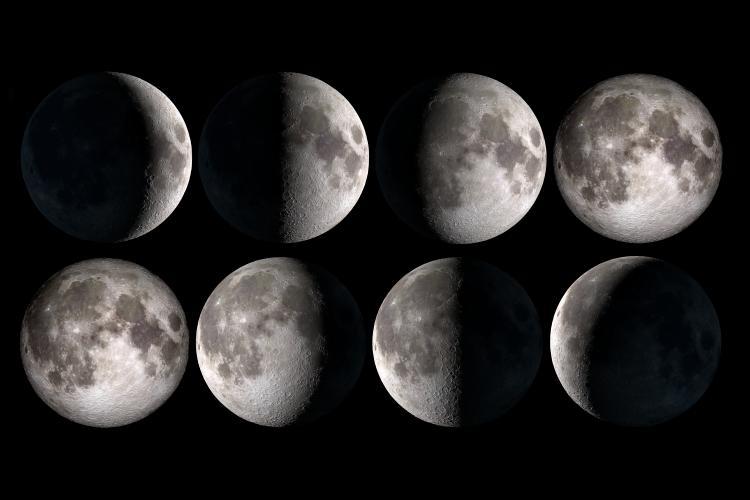
There is some confusion in the Torah Observant community today as to just when the Rosh Chodesh is? Is Rosh Chodesh the invisible dark “New Moon” or is it the first appearance of the crescent?
One clue is the fact that a two day banquet was held in celebration of the New Moon, as we see in Chapter 20 of 1st Samuel:
[18] Then Jonathan said to David, To morrow is the new moon: and thou shalt be missed, because thy seat will be empty. [19] And when thou hast stayed three days, then thou shalt go down quickly, and come to the place where thou didst hide thyself when the business was in hand, and shalt remain by the stone Ezel. [20] And I will shoot three arrows on the side thereof, as though I shot at a mark. [21] And, behold, I will send a lad, saying, Go, find out the arrows. If I expressly say unto the lad, Behold, the arrows are on this side of thee, take them; then come thou: for there is peace to thee, and no hurt; as the LORD liveth. [22] But if I say thus unto the young man, Behold, the arrows are beyond thee; go thy way: for the LORD hath sent thee away. [23] And as touching the matter which thou and I have spoken of, behold, the LORD be between thee and me for ever. [24] So David hid himself in the field: and when the new moon was come, the king sat him down to eat meat. [25] And the king sat upon his seat, as at other times, even upon a seat by the wall: and Jonathan arose, and Abner sat by Saul’s side, and David’s place was empty. [26] Nevertheless Saul spake not any thing that day: for he thought, Something hath befallen him, he is not clean; surely he is not clean. [27] And it came to pass on the morrow, which was the second day of the month, that David’s place was empty: and Saul said unto Jonathan his son, Wherefore cometh not the son of Jesse to meat, neither yesterday, nor to day? [28] And Jonathan answered Saul, David earnestly asked leave of me to go to Bethlehem: [29] And he said, Let me go, I pray thee; for our family hath a sacrifice in the city; and my brother, he hath commanded me to be there: and now, if I have found favour in thine eyes, let me get away, I pray thee, and see my brethren. Therefore he cometh not unto the king’s table. [30] Then Saul’s anger was kindled against Jonathan, and he said unto him, Thou son of the perverse rebellious woman, do not I know that thou hast chosen the son of Jesse to thine own confusion, and unto the confusion of thy mother’s nakedness? [31] For as long as the son of Jesse liveth upon the ground, thou shalt not be established, nor thy kingdom. Wherefore now send and fetch him unto me, for he shall surely die. [32] And Jonathan answered Saul his father, and said unto him, Wherefore shall he be slain? what hath he done? [33] And Saul cast a javelin at him to smite him: whereby Jonathan knew that it was determined of his father to slay David. [34] So Jonathan arose from the table in fierce anger, and did eat no meat the second day of the month: for he was grieved for David, because his father had done him shame. (1Samuel 20:18-34 KJV)
Let us examine the phrase translated “the second day of the month” (vs. 27 & 34) which is in the Hebrew החדש השני
There is some debate as to the meaning of this phrase. Although the LXX translates itμηνος ημερα τη δευτερα meaning “on the second day of the month” (vs. 27) and τη δευτερα του μηνος meaning “on the second [day] of the month]”, this is not the normal Hebrew structure for that phrase which would place the modifier “second” before the word “month”.
The Aramaic Peshitta renders the phrase in verse 27 as “And it came to pass on the other day of the new moon” and in verse 34 as “the second day of the new moon”.
The understanding of the Peshitta agrees with that of the first century Jewish writer Josephus, who refers to this second day in his account of these events as “But on the next day, which was the new moon…” (Ant. 6:11:9).
So why was the New Moon banquet being held on two consecutive days? The reason is that the New Moon was not a calculated invisible dark new moon, but was determined by observation. They could not determine in advance when the new moon crescent would be visible, and thus the banquet was scheduled for two days.
The Testimony of Philo of Alexandria
The First Century Jewish writer Philo of Alexandria gives a very specific explanation of the New Moon as it was understood in the First Century. He writes:
(140) Following the order which we have adopted, we proceed to speak of the third festival, that of the new moon. First of all, because it is the beginning of the month, and the beginning, whether of number or of time, is honourable. Secondly, because at this time there is nothing in the whole of heaven destitute of light. (141) Thirdly, because at that period the more powerful and important body gives a portion of necessary assistance to the less important and weaker body; for, at the time of the new moon, the sun begins to illuminate the moon with a light which is visible to the outward senses, and then she displays her own beauty to the beholders. And this is, as it seems, an evident lesson of kindness and humanity to men, to teach them that they should never grudge to impart their own good things to others, but, imitating the heavenly bodies, should drive envy away and banish it from the Soul (Special Laws 2, 140-141)
Notice Philo says of the time of the New Moon “time there is nothing in the whole of heaven destitute of light” (140) and “, at the time of the new moon, the sun begins to illuminate the moon with a light which is visible to the outward senses” (141) eliminating any doubt whatsoever. Philo did not recognize the invisible dark moon as Rosh Chodesh, but the crescent moon as it first begins tie reflect the sun’s light again as Rosh Chodesh.
The Testimony of the Mishnah
The Mishnah discusses the sighting of the New Moon by witnesses in detail (m.Rosh HaShanna 1:3-3:1). This portion of the Mishnah discusses when messengers would be sent to the diaspera to notify them of the siting of the New Moon (1:3) when the Sabbath is loosed for the witnesses to testify (1:4) questions at to how clearly the new moon appeared (1:5) whether a father and son could both serve as witnesses (1:7) who could serve as a valid witness (1:8) what to do when a witness was unable to walk (1:9) a system of flare signals once used to send a signal of the siting to the diaspera (2:1-4) where the witnesses would be gathered (2:5) how the witnesses were questioned (2:6) and how they were shown a chart of moon phases for comparison (2:8). All of this makes it clear that witnesses were seeing the new moon and giving testimony of what they saw to the Sanhedrin which would then officially designate the day of the New Moon.
Of particular interest are two particular passages from this portion of Mishnah. The first discusses the orientation of the new moon:
How do they test the witnesses? The pair who arrive first are tested first. The senior of them is brought in and they say to him, tell us how you saw the moon in front of the sun or behind the sun? To the North of it or the South? How big was it, and in which direction was it inclined? And how broad was it? If he says [He saw it] in front of the sun, his evidence is rejected. After that they would bring in the second and test him. If their accounts tallied, their evidence was accepted, and the other pairs were only questioned briefly, not because they were required at all, but so that they should not be disappointed, [and] so that they should not be dissuaded from coming. (m.Rosh HaShanna 2:6)
The second speaks of a chart showing moon phases that the witnesses were shown for comparison:
Rabban Gamliel had diagrams of the shapes of the moon on a tablet and on the wall of the upper chamber. These he sued to show the ordinary people asking, “Did you see the moon like this or like that?” It once happened that two came and said, “We saw it in the east in the morning and in the west in the evening”. Rabbi Yochannen ben Nuri said, “they are false witnesses.” But, when they arrived in Yavneh, Rabban Gamliel accepted them. And on another occasion, two came and said, “We saw it at its proper time, but on the following night, we did not see it”; and Rabban Gamliel accepted them. Rabbi Dose ben Hyrcanus said, “They are false witnesses”, and Rabbi Yehoshua ben Chananya replied, “I agree with you.” (m.Rosh HaShanna 2:8)
These passages make it clear that the Rosh Chodesh was not an invisible dark new moon.
The Re-Established Sanhedrin
As many of you know, within Rabbinic Judaism in Israel today, a modern Sanhedrin has been re-established. So you might ask, “what is the Re-Established Rabbinic Sanhedrin doing about the new moon?” They have been taking testimony from witnesses but have not yet taken the step of restoring the original sighted crescent system. Their official statement on the issue is as follows:
A special court has been established to accept evidence concerning the sighting of the New Moon, as required by Jewish Law. This court is made up of various justices who are assembled to hear evidence as the opportunity permits. The purpose of the court is to increase awareness, develop skills, and resolve halachic issues that arise when determining the Jewish Calendar according to testimony by witnesses. At this point there is no intention to supercede the mathematical calendar currently in use and fix the calendar on the basis of the testimony, such a step should be unacceptable to the public and spiritual leadership. Nevertheless, witnesses appear before the court and are investigated with precision according to what they saw. Sometimes the witnesses may also bring photographic evidence to support their testimony. Evidence is already being collected by the yiresh shomaim volunteers throughout the Land of Israel, with the intention that testimony can be presented before the court in a full legal fashion when the peoples’ hearts are ready for it. (http://www.thesanhedrin.org/en/index.php?title=Committee_concerning…)
Conclusion
The original system for determining the new moon in ancient Israel was that of the first siting of the New Moon crescent in the Land of Israel. When the Sanhedrin was disbanded by the Roman Empire in 358 CE, their last act under Gamliel II was to establish a calculated calendar that could function without the need for witnesses to testify to the Sanhedrin. The modern Rabbinic Sanhedrin does not feel that restoring the original system would be widely accepted at this time, and so they have made no attempt to do so.
We must still raise at least $280 by the end of the day today or our account will go into the negative.
Donations in April were very, very low. This is common each year with tax time taking a bite out of people’s pocket books. Unfortunately, our expenses have not decreased during the tax season.
This work takes hours of my time. As many of you know, my wife is very ill, and I spend most of my time at home as her caretaker. I work at a desk less than six feet from her bed. So I am in a position to dedicate many hours to this important work that I have been directed to do.
But I also realize that it is not the activity of James Trimm alone who is responsible to do this work, it is all of us together who are charged with the responsibility of accomplishing this work. I very much look on the efforts of this restoration work as a cooperative one with each one of you. We are all joint heirs with Messiah and should always be about our Father’s business. I am honored to be able to be partnered with truth seekers as this restoration of Scripture moves forward in fulfillment of prophecy.
Donations can be sent by Paypal to donations@wnae.org.
In a previous blog, I wrote about the Lunar Sabbath Error. The Lunar Sabbatarians have looked far and wide for ancient support for their theory. The problem is that there is none. However in their zealousness they have misappropriated certain quotations from Philo of Alexandria which they wrongly claim support a Lunar Sabbath. The fact is that not only does Philo not teach a Lunar Sabbath, but Philo makes statements that plainly conflict with the Lunar Sabbath Theory, and makes one of the oldest, clearest description of the Sabbath as the seventh day of a continuous repeating seven day week.
The first quotation Lunar Sabbatarians appropriate from Philo is as follows:
“For it is said in the Scripture: On the tenth day of this month let each of them take a sheep according to his house; in order that from the tenth, there may be consecrated to the tenth, that is to God, the sacrifices which have been preserved in the soul, which is illuminated in two portions out of the three, until it is entirely changed in every part, and becomes a heavenly brilliancy like a full moon, at the height of its increase at the end of the second “week”… (ON MATING WITH THE PRELIMINARY STUDIES, X1X (102))
The fact is that this passage simply refers to a fourteen day period as “two weeks” just as we do today. A fourteen day period may be called “two weeks” regardless of which day it begins and ends, even if it actually is made up of one complete week and parts of two other weeks.
The next quote often used is as follows:
“9. (Ex. xii. 6a) Why does He command (them) to keep the sacrifice until the fourteenth (day of the month)? (Consisting of) two Sabbaths, it has in its nature a (special) honour because in this time the moon is adorned. For when it has become full on the fourteenth (day), it becomes full of light in the perception of the people. And again through (another) fourteen (days) it recedes from its fullness of light to its conjunction, and it wanes as much in comparison with the preceding Sabbath as the second (waxes) in comparison with the first. For this reason the fourteenth (day) is pre-festive, as though (it were) a road leading to festive rejoicings, during which it is incumbent upon us to meditate”. (On page 17 of Ralph Marcus’ translation of Philo’s work entitled “Questions and Answers, Exodus, Book 1”)
This parallels Younge’s translation in The Decalogue:
“The fourth commandment has reference to the sacred seventh day, that it may be passed in a sacred and holy manner. Now some states keep the holy festival only once in the month, counting from the new moon, as a day sacred to God; but the nation of the Jews keep every seventh day regularly, after each interval of six days; and there is an account of events recorded in the history of the creation of the world, comprising a sufficient relation of the cause of this ordinance; for the sacred historian says, that the world was created in six days, and that on the seventh day God desisted from his works, and began to contemplate what he had so beautifully created; therefore, he commanded the beings also who were destined to live in this state, to imitate God in this particular also, as well as in all others, applying themselves to their works for six days, but desisting from them and philosophising on the seventh day,” (The Decalogue ch. 26)
The wording here is obscure. Philo may referring to the fact that any fourteen day period will contain two Sabbaths, or he may be referring to the fact that the first and last days of Unleavened Bread are annual Sabbaths.
The final two passages Lunar Sabbatarians cite from Philo is as follows:
(161) But to the seventh day of the week he has assigned the greatest festivals, those of the longest duration, at the periods of the equinox both vernal and autumnal in each year; appointing two festivals for these two epochs, each lasting seven days; the one which takes place in the spring being for the perfection of what is being sown, and the one which falls in autumn being a feast of thanksgiving for the bringing home of all the fruits which the trees have produced. And seven days have very appropriately been appointed to the seventh month of each equinox, so that each month might receive an especial honour of one sacred day of festival, for the purpose of refreshing and cheering the mind with its holiday. (Philo; Decalogue 30, 161)
And the next refers back to this one:
“Again the beginning of this feast is appointed for the fifteenth day of the month on account of the reason which has already been mentioned respecting the Spring season might receive special honor of one sacred day of festival.” (THE TENTH FESTIVAL XXXIII. (210))
Now while some have tried to use this to support the Lunar Sabbath, to the contrary this statement conflicts with the Lunar Sabbath Theory. Philo here says that the two longest Torah feasts (Unleavened Bread and Tabernacles) differ from all other festivals because, being seven days long, they always include a weekly sabbath (any seven day period will include a weekly Sabbath). However if one follows the Lunar Sabbath theory, virtually all annual Feasts coincide with Sabbaths, which would render Philo’s statement meaningless. Philo makes the nature of the Sabbath clear when he writes:
(56) But after this continued and uninterrupted festival which thus lasts through all time, there is another celebrated, namely, that of the sacred seventh day after each recurring interval of six days, which some have denominated the virgin, looking at its exceeding sanctity and purity… (Special Laws 2, 56)
Philo clearly did not teach the so-called Lunar Sabbath Theory, but instead taught the repeating weekly Sabbath based on a continuous count of seven day “weeks” going back to the first Sabbath at creation.
If you can donate, please donate today. Right now (9/18/24) our account is “pending” $725.81 in the negative! We must cover that with a deposit by the end of the day today or our account will plunge into the negative and create a cascade of returned items and fees.
This work takes hours of my time. As many of you know, my wife is very ill, and I spend most of my time at home as her caretaker. I work at a desk less than six feet from her bed. So I am in a position to dedicate many hours to this important work that I have been directed to do.
But I also realize that it is not the activity of James Trimm alone who is responsible to do this work, it is all of us together who are charged with the responsibility of accomplishing this work. I very much look on the efforts of this restoration work as a cooperative one with each one of you. We are all joint heirs with Messiah and should always be about our Father’s business. I am honored to be able to be partnered with truth seekers as this restoration of Scripture moves forward in fulfillment of prophecy.
Donations can be sent by Paypal to donations@wnae.org or below by Zelle or Go Fund Me.
(Go Fund Me donations take a couple of days to reach us, but Paypal and Zelle are virtually instantaneous)
In a recent blog I told you I was working on a project to restore five fragments of an ancient Nazarene Commentary on Isaiah, from five Latin fragments preserved in quotations in Jerome’s Commentary on Isaiah.
Here is the second of the five fragments (On Isaiah 8:19-22) restored to Hebrew with an English translation:
וכי־יאמרו אליכם דרשו אל־האבות ואל־הידענים המצפצפים והמהגים הלוא־עם אל־אלהיו ידרש בעד החיים אל־המתים׃ לתורה ולתעודה אם־לא יאמרו כדבר הזה אשר אין־לו שחר׃ ועבר בה נקשה ורעב והיה כי־ירעב והתקצף וקלל במלכו ובאלהיו ופנה למעלה׃ ואל־ארץ יביט והנה צרה וחשכה מעוף צוקה ואפלה מנדח׃
פשרו וכי הסופרים והפרושים יאמרו אליכם לשמוע אותם, אנשים שעושים הכל למען אהבת הבטן, ואשר המצפצפים והמהגים כדרך הידענים לרמות אותך. תאמרכם להם לא מפתיע אם אתה ממלא אחר גזרתכם כי כל עם שאל עצביהם. לכן אסור לנו שאל המתיכם על החיים. אלוהים נתן לנו את התורה ואת עדות הכתובים. אם לא תמלא אותם ולא יהיה לך אור. והחושך תעוק אותך עד עולם. יעבור דרך אדמתך ולמידתך. כאשר הם רואים שטעתם אותם בטעות וכאשר הם רעבים לאמת הם יהיו עצובים או התקצפים. והם יקללו אתכם החושבים שאתם אלים ומלכים. ולשווא הם מסתכלים אל השמים והארץ כי הם תמיד בחושך והם לא יכולים לברוח למוקשיכם
19 And because they shall say unto you: ‘Seek unto the mediums and to the wizards, of whisperings and mutterings; should not a people seek unto their Elohim? [not] about the living to the dead. 20 For Torah and for testimony? If they speak not according to this word, there is no light in them. 21 And they shall pass this way that are sore bestead and hungry; and it shall come to pass that, when they shall be hungry, they shall fret themselves, and curse by their king and by their Elohim, and, when they turn their faces upward, 22 or look unto the earth, behold distress and darkness, the gloom of anguish, and outspread thick darkness. (Isaiah 8:19-22 HRV)
Its interpretation (pesher): And when the Scribes and Pharisees tell you to listen to them, men who do everything for the love of the belly and who chirp and mutter in the way of wizards in order to deceive you, you must answer them like this: “It is not strange if you follow your decrees since every nation consults its own idols. We must not, therefore, consult your dead about the living ones. God has given us the Torah and the testimonies of the scriptures. If you are not willing to follow them you shall not have light, and the darkness will always oppress you. It will pass over your land and your teaching so that, when they see that you have deceived them with error and they are hungry for the truth, they will then be sad or enraged. And they shall curse you who think you are gods and kings. And in vain they look to the heavens and the earth, And let them look at the heaven and the earth in vain since they are always in darkness and they cannot flee away from your snares.
Notes:
“who chirp and mutter” prior English versions have had “hiss in their incantations” based on the Latin stridunt in incantationibus, but this is actually Jerome’s translation of הַֽמְצַפְצְפִ֖ים וְהַמַּהְגִּ֑ים as shown by comparing Jerome’s Latin Vulgate in Isaiah 8:19.
We must still raise at least $786 by Tuesday night, or our account will go into the negative.
Donations in April were very, very low. This is common each year with tax time taking a bite out of people’s pocket books. Unfortunately, our expenses have not decreased during the tax season.
This work takes hours of my time. As many of you know, my wife is very ill, and I spend most of my time at home as her caretaker. I work at a desk less than six feet from her bed. So I am in a position to dedicate many hours to this important work that I have been directed to do.
But I also realize that it is not the activity of James Trimm alone who is responsible to do this work, it is all of us together who are charged with the responsibility of accomplishing this work. I very much look on the efforts of this restoration work as a cooperative one with each one of you. We are all joint heirs with Messiah and should always be about our Father’s business. I am honored to be able to be partnered with truth seekers as this restoration of Scripture moves forward in fulfillment of prophecy.
Donations can be sent by Paypal to donations@wnae.org.
This website uses cookies to improve your experience. We'll assume you're ok with this, but you can opt-out if you wish. Cookie settingsACCEPT
Privacy & Cookies Policy
Privacy Overview
This website uses cookies to improve your experience while you navigate through the website. Out of these cookies, the cookies that are categorized as necessary are stored on your browser as they are essential for the working of basic functionalities of the website. We also use third-party cookies that help us analyze and understand how you use this website. These cookies will be stored in your browser only with your consent. You also have the option to opt-out of these cookies. But opting out of some of these cookies may have an effect on your browsing experience.
Necessary cookies are absolutely essential for the website to function properly. This category only includes cookies that ensures basic functionalities and security features of the website. These cookies do not store any personal information.
Any cookies that may not be particularly necessary for the website to function and is used specifically to collect user personal data via analytics, ads, other embedded contents are termed as non-necessary cookies. It is mandatory to procure user consent prior to running these cookies on your website.