Tzitzit: Taking Hold of the Covenant

In this prophetic age, a great restoration is underway. Across the world, hearts are stirring—not toward a new religion, but toward the original, Torah-rooted faith of Yeshua and his disciples: Nazarene Judaism. This movement, once nearly erased from history, is being reborn. As part of this restoration, we are recovering not only the ancient texts but also the mitzvot (commandments) that defined the walk of Yeshua.

Among these mitzvot is the commandment of Tzitzit—fringes worn on the four corners (kanafot) of our garments, including a thread of tekhelet, the blue dye of royalty and priesthood. The Torah gives this commandment twice:

“Speak unto the children of Yisra’el and bid them, that they make them throughout their generations, tzitzit in the corners of their garments, and that they put with the tzitzit of each corner, a thread of tekhelet…” (Numbers 15:38)

“You shall make twisted cords upon the four corners of your covering, with which you cover yourself.” (Deuteronomy 22:12)

This commandment is not optional. It is a sign of our identity as a covenant people—a reminder to keep the commandments of YHWH and not stray after our own eyes and hearts.


Tekhelet: Not Just “Blue”

One critical element of this mitzvah is often misunderstood or neglected: the command to include a thread of tekhelet in each fringe. Tekhelet is not merely “blue.” It is a specific dye, historically obtained from a sea creature known in tradition as the hillazon. According to the Talmud:

“The hillazon resembles the sea in its color and a fish in its shape. It appears once in seventy years, and with its blood one dyes the blue thread.” (b.Menahot 44a)

Though the exact identity of the hillazon was lost for centuries, many now believe it has been rediscovered, often identified with the Murex trunculus. Some disagree. And that’s okay. Within Nazarene Judaism, we recognize room for conscience and conviction. But we must be clear: wearing tzitzit without tekhelet is not the fullness of the commandment.


Yeshua and the Halacha of Tzitzit

The importance of Tzitzit is evident in the life of the Messiah himself. Consider this passage from the Gospel according to the Hebrews:

“And behold, a woman, which had an issue of blood twelve years, approached behind Him, and touched the tzitzit of His garment…” (Matthew 9:20–22, HRV)

This woman—identified in the Nazarene Gospel as Miriam—was not merely seeking a touch. She was acting on prophecy:

“But unto you that fear My Name, shall the Sun of Righteousness arise with healing in his wings (kanfot).” (Malachi 4:2)

The Hebrew word kanfot can mean both wings and corners. She reached for the corner of his garment—the tzitzit—believing it carried the healing power prophesied for the righteous Messiah. And she was healed.


A Restoration in Our Time

This same imagery appears in Zechariah:

“In those days… ten men… shall take hold of the kanaf of him that is a Jew, saying, We will go with you, for we have heard that Elohim is with you.” (Zechariah 8:23)

The kanaf—the corner with tzitzit—is a sign of spiritual authority and identity. This prophecy speaks of the Ten Tribes of Ephraim, reaching out to reconnect with their covenant heritage—not by adopting later traditions, but by grasping hold of Torah, and the Messiah who embodies it.


Intersecting Restoration Projects

As I’ve labored to restore both Nazarene Halacha and the original Hebrew text of the so-called “New Testament,” I’ve been struck by how deeply these projects intertwine. Take Matthew 23:5, where Yeshua criticizes certain hypocrites:

In the KJV, it reads:

“They enlarge the borders of their garments to be seen of men.”

But what did the original Hebrew or Aramaic actually say?

  • DuTillet Hebrew Matthew:
    וגדילו כנפות כסויותיהם
    “And they enlarge the corners of their garments.”
  • Shem Tob Hebrew Matthew:
    ולובשים מלבושים יקרים וציציות
    “And they wear expensive clothes and tzitzit.”
  • Old Syriac & Peshitta Aramaic:
    ומורכין תכלתא דמרטוטיהון
    “And they lengthen the tekhelet of their mantles.”

These are not minor differences—they are radical departures. The Aramaic version offers remarkable insight. It suggests Yeshua wasn’t condemning tzitzit, or even long tzitzit per se, but the exaggerated lengthening of the tekhelet thread—the expensive dyed thread used to signal wealth or prestige.

In ancient times, tekhelet was costly and often worn by the elite. Making the tekhelet visibly longer than the white threads could have been a display of self-righteousness or social superiority.


Halachic Clarifications

  • Tzitzit must be attached to a four-cornered garment (not belt loops).
  • The mitzvah is to include both white threads and a thread of tekhelet.
  • The tekhelet should not be longer than the other threads (Matthew 23:5).
  • All-white tzitzit are not “complete”. They are a compromise due to historical loss. If a reliable tekhelet source is available, it should be used.
  • Tzitzit must be visible (Num. 15:39). But this visibility is subject to pikuach nefesh (preservation of life). If visibility creates danger, one may conceal them.
  • Women may wear tzitzit if done modestly and not “as a man’s garment.” They are not obligated, but may voluntarily fulfill the mitzvah.

See the compete Nazarene Halacha concerning Tzitzit by clicking here.


Be Like Miriam—Take Hold of the Tzitzit

We live in days of prophetic fulfillment. As hearts awaken across the nations, as the House of Ephraim is grafted back into the Olive Tree of Israel, the ancient commandment of tzitzit becomes newly relevant. This is not about legalism—it’s about identity. It’s about remembering to walk in the commandments of YHWH and to follow Yeshua, the Torah-observant Messiah.

“That you may look upon it and remember all My commandments, and do them…” (Numbers 15:39)

Miriam understood. She reached for the fringe. Take hold. Return to the covenant. Let the tzitzit remind you who you are—and whose you are.

🙏 Help Us Keep This Work Going – We Need Your Support Today

Friend,

If this teaching has blessed you—if the restoration of the commandments, the words of Yeshua in their original context, and the reviving of Nazarene Judaism has stirred your heart—we need your help right now.

Our rent was due yesterday, and we simply do not have it.

This ministry is not backed by institutions or wealthy sponsors. It continues only through the faithful support of those who believe in what we’re doing—restoring the original faith once delivered to the saints, publishing critical halachic teachings, preserving ancient texts, and bringing light to scattered Nazarene believers across the world.

Your gift today will not only help us meet our immediate need for rent—it will help us continue the Scripture Restoration Project, the Nazarene Halacha Codification, and the sharing of deep truths like the one you just read.

💠 Please give what you can right now:

👉 Click here to donate
Every donation makes a difference

We are trusting YHWH to provide through those whose hearts are stirred. If this ministry has helped you draw closer to Him, would you take a moment now to help us keep the lights on, the rent paid, and the work going?

With heartfelt thanks,
James Trimm
For the Restoration of Nazarene Judaism
👉 http://nazarenespace.com/blog/donate/

Returning to the Way: Rebuilding the Lost Altar of Nazarene Judaism

For generations, countless believers have longed to “get back to the New Testament Church.” They’ve yearned for something more authentic than denominational traditions, more rooted than modern religiosity—a return to the simplicity and power of the early faith. But what if that early faith wasn’t Christianity as we know it today? What if the real answer isn’t to go back to the Church… but to go back to the Way?

This is the bold and vital message of Returning to the Way: The Rebirth of Nazarene Judaism, the groundbreaking book by James Scott Trimm. In this work, Trimm calls believers—Jew and Gentile alike—to rediscover the ancient, original faith of Yeshua and his disciples: not a religion called Christianity, but a Torah-observant Jewish movement known as the Nazarenes.

The Nazarene Revival: More Than a Movement—A Prophetic Restoration

The Nazarenes were the earliest followers of Yeshua (Jesus), and they were not Christians. They were Jews who accepted Yeshua as the promised Messiah but remained fully committed to the Torah, the Hebrew Scriptures, and the traditions of Israel. They did not see themselves as forming a new religion, but as continuing the covenant path of their fathers, fulfilled in Messiah.

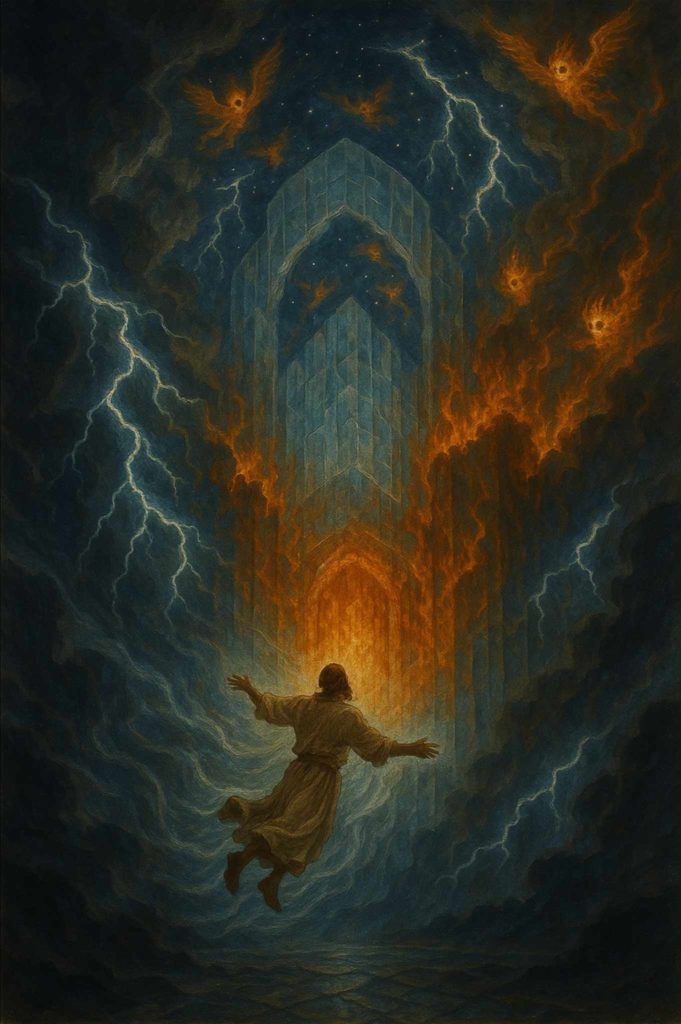
James Trimm opens his book with a personal, prophetic dream he had at the age of eighteen—one he now recognizes as a divine call. In the dream, he stood among the shattered stones of a broken altar and began rebuilding it, stone by stone. When he placed the final stone, it shone with heavenly light, and shafts of blue light descended from the sky. But when he called others to witness it, most remained indifferent. Only a few came out to see.

That altar, Trimm explains, is Nazarene Judaism.

The altar was broken by history, scattered by persecution, and buried under centuries of theological distortion. But now, the altar is being rebuilt—and the light is shining again. The call is going forth to restore the true faith of Yeshua and his disciples.

Who Were the Nazarenes?

Trimm meticulously documents the identity of the original Nazarenes through historical records, especially the testimonies of early Church Fathers like Jerome and Epiphanius. These men—though ultimately opponents of the Nazarene movement—unwittingly preserved important details about it.

“They did not call themselves Christians—but ‘Nazarenes’… They are simply complete Jews… They use not only the New Testament but the Old Testament as well, as the Jews do… They have the Good News according to Matthew in its entirety in Hebrew…”
Epiphanius, Panarion 29

These were Jews who believed in Yeshua, practiced circumcision, observed the Sabbath, read from the Torah in Hebrew, and upheld the resurrection and the divine Messiahship of Yeshua. They were different from both Rabbinic Jews and Greco-Roman Christians—and eventually rejected by both.

Church or Assembly?

One of the most powerful chapters in Returning to the Way is the dismantling of the very word “church.” Trimm traces its etymology back to pagan roots—kirke—and shows that the Greek word it replaces in our Bibles is not a religious term at all, but simply ekklesia, meaning “assembly.”

In Scripture, “ekklesia” often refers to the Assembly of Israel. Trimm shows that what people call “the Church” was, in fact, nothing less than a continuation of the Kahal Yisrael—the Assembly of Israel—restored and renewed under the Messiah. The so-called “birth of the Church” in Acts 2 was actually the reawakening of the prophetic remnant of Israel.

Yeshua did not start a new religion. He came to fulfill the promises made to the fathers. And His followers were not Gentile Christians—they were Jewish Nazarenes.

A Movement Rooted in Jewish Sectarian History

Trimm also places Nazarene Judaism in its historical context, identifying how it emerged not in a vacuum, but out of the fractured sectarian world of Second Temple Judaism. The Nazarenes were deeply influenced by both Pharisees and Essenes:

  • Like the Pharisees, they respected the Torah and engaged with halachic interpretation. In fact, Yeshua’s teachings often align with those of Hillel the Elder.
  • Like the Essenes, they had apocalyptic expectations, rejected Temple corruption, and emphasized repentance, immersion, and the Spirit.

John the Baptist, for instance, likely had an Essene upbringing and taught immersion and repentance near Qumran, where the Essenes lived. Yeshua Himself used Essene terminology (“the Way,” “sons of light”) while also criticizing their excessive legalism. The early Nazarene community became a fusion of the best of both worlds, bridging Essene holiness with Pharisaic accessibility.

The New Covenant: Renewed, Not Replaced

One of the central themes of Returning to the Way is the true meaning of the “New Covenant.” According to Jeremiah 31, the New Covenant is not a replacement of the Torah, but a renewal—a covenant where the Torah is written on the heart.

Trimm explains how this covenant was understood by the Nazarenes, the Essenes, and even by rabbinic commentators. Far from abolishing the Torah, the New Covenant intensifies it—internalizing it. Yeshua’s own words make this clear: He did not come to abolish the Torah but to fulfill it (Matthew 5:17-19).

The Nazarene view of the New Covenant stands in sharp contrast with Christian supersessionism, which wrongly teaches that the Torah is obsolete. Nazarene Judaism sees the Torah as eternal—and Yeshua as its living embodiment.

From Apostasy to Restoration

As Trimm documents, the early Nazarene movement was slowly eclipsed by a rising Gentile Christianity that became increasingly hostile to Judaism. Church councils outlawed Torah observance. The Birkat haMinim, a synagogue curse, was added to expel Nazarenes. The original faith was all but erased.

But prophecy foretold a restoration.

“But in the land of their captivities they shall remember themselves… and return from their stiff neck… for they shall remember the way of their fathers…”
Baruch 2:30–35

We are living in that time. The Nazarene movement is being restored. The altar is being rebuilt. And the remnant is awakening.

Will You Be Part of the Restoration?

This book is not just a theological treatise. It’s a prophetic summons. It’s a voice crying in the wilderness, calling us to return to the ancient paths—calling us to rediscover the Jewish Messiah in His original context, within His own people, language, and Torah.

Yeshua said the gates of hell would not prevail against His assembly. That assembly was—and is—the Nazarene movement. It was buried. But it is not lost. It lives again.


📘 Read the Book That Is Sparking the Restoration

Returning to the Way: The Rebirth of Nazarene Judaism is a must-read for anyone who wants to understand the true, original faith of Yeshua and His disciples. It is a rich, scripturally grounded, and historically documented exploration of what it means to follow the Messiah as part of the Assembly of Israel.

👉 Get your copy on Amazon now


🙏 Support the Restoration – We Need Your Help Today

Dear friends and supporters,

Today, I must write with deep urgency. Our rent is due today, and we simply do not have it.

Many of you already know that my beloved wife, Inga “Kitty” Trimm, suffers from multiple disabling conditions and lives in chronic pain. Medical expenses are constant. Our teaching ministry continues by faith, sustained entirely by the generosity of supporters like you.

If this blog, or our books, or our online teachings have ever helped you grow, please consider standing with us today. Every dollar makes a difference.

🔗 Click here to donate

Let us not only return to the ancient Way together—but help keep the lights on for those rebuilding the altar.

With gratitude and shalom,
James Scott Trimm
Founder, Worldwide Nazarene Assembly of Elohim (WNAE)

Moses and the Lamb: Why Revelation’s End-Time Remnant Still Looks Like the First Nazarenes

Shalom, friends! If you’ve ever wondered what the faithful remnant looks like in the last days, the Book of Revelation paints the picture in stereo. It describes a people who—

  1. “Keep the commandments of Elohim” (that’s Torah), and
  2. “Hold the testimony / faith of Yeshua.”

That two-part identity shows up again and again (Rev 1 : 2, 9; 6 : 9; 12 : 17; 14 : 12; 15 : 3; 20 : 4). John even hears the overcomers burst into a mash-up worship set—“the Song of Moses and the Song of the Lamb” (15 : 3). Think about it: Sinai and Golgotha in the same chorus!

PassageTorah ElementMessiah Element
Rev 1:2“Word of Elohim”“Testimony of Yeshua”
Rev 1:9“Word of Elohim”“Testimony of Yeshua”
Rev 6:9“Word of Elohim”“Testimony they held”
Rev 12:17Keep the commandments of ElohimHave the testimony of Yeshua
Rev 14:12Keep the commandments of ElohimFaith of Yeshua
Rev 15:3Song of MosesSong of the Lamb
Rev 20:4“Word of Elohim”“Witness of Yeshua”

John repeatedly defines the faithful not by either/or but by both/and: covenant obedience and Messianic faith.

A Flashback to the First Few Centuries

This combo isn’t new. Fourth-century Church writers—who weren’t exactly fans of Torah-keeping believers—still recorded that a community called the Nazarenes looked just like Revelation’s remnant:

Jerome (c. 398 CE) says they were “those… who accept Messiah in such a way that they do not cease to observe the old Law” (Commentary on Isaiah 8 : 14).

Epiphanius (c. 375 CE) grumbles that the Nazarenes “are simply complete Jews… They read the Law, Prophets, and Writings in Hebrew, yet believe Yeshua is the Messiah” (Panarion 29).

They worshipped Yeshua and kept Shabbat, ate kosher, circumcised their sons, and read Matthew in Hebrew. Epiphanius thought that was a problem; John the Revelator calls it “perseverance.”

Why It Matters Now

  • Torah-only isn’t enough—Messiah is the goal.
  • “Jesus-only, no Law” isn’t enough—Torah is the walk.
  • The Spirit is restoring what history tried to split apart.

If Revelation’s final overcomers blend Moses and the Lamb, then practicing Torah and trusting Yeshua isn’t legalism or heresy; it’s prophetic destiny.

Keep Walking—And Help Us Keep the Lights On

Dear friends and supporters,

Our family’s rent is due tomorrow—and right now we simply don’t have it. If this teaching ministry has blessed you, would you prayerfully consider helping us meet this urgent need?

Every gift—large or small—keeps our roof overhead and lets us continue producing studies like this one.

👉 Donate securely here: Donate Now

Thank you for standing with us as we stand for Torah and Messiah. May the One who owns the cattle on a thousand hills bless you abundantly!

B’rachot (blessings) in Yeshua,
James Scott Trimm

Real Life Imitates Fiction: How One “Quantum Ocean” Could Explain Space, Time, Gravity — and the Whole Dark-Matter Mystery

The following is a layman’s version of my New Theoretical Physics Paper:

A Grand Unified Field Theory of Asymmetry:
Spacetime and Gravity as Emergent Phases of the Dark Energy
Quantum Field

By James Scott Trimm

Have you ever tried to mash together two jigsaw-puzzle pieces that just don’t fit?
For more than a century, physicists have been forcing two beautiful—but stubborn—pictures of the universe to snap together:

  • Quantum Field Theory (QFT) – our best description of the tiny world of particles and forces.
  • General Relativity (GR) – Einstein’s grand picture of how mass bends spacetime and creates gravity.

They work perfectly in their own arenas, but put them side by side and the edges refuse to line up. Black-hole cores “blow up” to infinities, quantum math needs awkward Band-Aids, and nobody knows what dark matter even is.

My new paper, A Grand Unified Field Theory of Asymmetry (GUFT), offers a radically simple fix: throw away the idea that space and time are the stage. Make them part of the cast.

Below is the friendly, coffee-table tour—no calculus required.


1  The Cosmic “Quantum Ocean”

Imagine an invisible ocean that fills absolutely everything. I call it the Dark Energy Quantum Field (DEQF):

  • It’s not inside space; space is a pattern on its surface.
  • It’s stable and everywhere—like the sea level around the globe.
  • When it sloshes in the right way, you get the stuff we call particles, energy, even empty vacuum.

Think of DEQF as the underlying “raw fabric” of reality. All else—space, time, matter—are ripples or frozen patterns in that fabric.


2  How Spacetime Freezes Out

Water turns into ice when it gets cold enough, forming an orderly crystal.
Likewise, spacetime “condenses” out of the DEQF:

  1. The field cools below a certain energy.
  2. A stable, four-dimensional grid (our familiar spacetime) locks in place.
  3. The smooth geometry Einstein described is just the average of countless microscopic ripples.

In short, spacetime is not the arena—it’s a phase, like ice is a phase of water.


3  Gravity Is a Ripple—Not a Pull

Enter the graviton, the quantum ripple that shapes spacetime curvature.

In ordinary physics, gravitons are particles in space.
In GUFT, gravitons are space:

  • Their average effect ⇒ the smooth gravitational field you feel standing on Earth.
  • Their random popping in and out ⇒ tiny “pressure” that looks like extra mass in galaxies.

That last point is huge: virtual gravitons can mimic dark matter. No invisible WIMPs needed—just busy ripples crowding the cosmic ocean.


4  Dark Energy Is the Field’s Calm Surface

We already measure a slow, mysterious push making the universe expand faster. That’s labeled dark energy.

In GUFT, it’s simply the resting energy of the DEQF itself. When the ocean is calm, it exerts a gentle outward pressure. Nothing mystical—just the baseline of the field.


5  Why the Math Stays Finite

Many quantum-gravity attempts crash into “infinities” at ultra-high energies. GUFT dodges that because:

  • There’s a smallest possible ripple—the Planck length.
  • Try to pump in more energy, and instead of a tinier wave you just heat the DEQF locally.
  • No bottomless hole of infinite curvature—black-hole cores become hot, finite “droplets” of the field.

6  Superasymmetry: Why Imbalance Builds the Universe

In supersymmetry theories, every particle has a neat opposite.
Gravity ruins that peace: gravitons only attract; they never repel. That unipolar pull is an imbalance. GUFT embraces it and coins a new word:

Superasymmetry – the beautiful order that arises because some forces don’t have mirror images.

Without that asymmetry, galaxies, stars—even you—couldn’t exist.


7  Five Clear Predictions You Can Check

  1. No dark-matter particles will ever turn up in underground detectors.
  2. Gravitational-wave data should show a damped pattern at the tiniest scales.
  3. Cosmic-microwave-background (CMB) maps should reveal a slight drop-off in certain “B-mode” ripples beyond a specific multipole.
  4. Ultra-high-energy cosmic-ray events won’t create micro black holes past a fixed cross-section area (the “Planck disc”).
  5. Large-scale-structure simulations that swap cold dark matter for “graviton pressure” should match galaxy clustering just as well.

If observations reject even one of these, GUFT gets tossed back into the ocean of discarded ideas. That’s how science works.


8  Why This Matters

  • Unifies: Puts gravity and quantum physics under one roof.
  • Demystifies: Turns dark matter/energy into natural outcomes, not add-ons.
  • Regularizes: Stops black holes and early-universe models from blowing up.
  • Simplifies: One field, one mechanism, many puzzles solved.

9  Where Fiction Meets Fact

On The Big Bang Theory, Sheldon Cooper wins a (fictional) Nobel Prize for “superasymmetry.”
GUFT brings that playful idea into serious theoretical physics: imbalance, not perfect symmetry, is the key to a living universe.


✨ Takeaway

Space, time, gravity—even the dark stuff—may all be different moods of a single cosmic quantum ocean.

If GUFT is right, we’re surfing those waves every second.

Stay tuned: the data will judge whether this ocean theory floats—or sinks.

A Personal Appeal from James Scott Trimm

Dear friends and supporters,

Today I write with an even heavier heart and a deeper sense of urgency.

Many of you already know that my wife, Inga “Kitty” Trimm, has lived for years with chronic and disabling pain. Multiple abdominal surgeries left her with numerous hernias that cannot be repaired. Each day is a battle, and strong pain medications are the only thing that make life remotely tolerable—though even then, she is never truly free from pain.

Recently, test results confirmed what we feared: signs of an autoimmune disease—likely lupus—yet another lifelong, incurable condition. And now, her symptoms are worsening. She has begun to experience unexplained fevers, a serious complication of lupus.

Recently I had to take her in for a medical test we couldn’t afford, but we had no choice.

We are still waiting for her to be seen by a specialist, but the Social Security Administration continues to mishandle her case, delaying the benefits she needs now more than ever.

Meanwhile, my own secular income ended a month ago, our rent is due on the first, and right now we do not have it.

We are holding on by sheer faith.

And still—I press forward in the work I have been called to do:

  • The restoration of the original Hebrew and Aramaic Scriptures
  • The recent completion of my Magnum Opus on the Semitic origins of the New Testament
  • The full reconstruction of the Book of Revelation in Hebrew

These are not just academic works—they are my life’s mission. But right now, I cannot do this alone.

There’s an old Jewish parable about a wedding where each guest was to bring a jug of wine for a communal vat. But each villager assumed others would bring enough. On the wedding day, they opened the tap—only to find a vat full of water.

Please—don’t assume someone else will do your part.

If this work has blessed you—if the teachings, translations, or research have helped you grow in your walk—please consider giving today.

🔗 Donate online: https://nazarenespace.com/blog/donate/
💳 Or via PayPal: donations@wnae.org

Ask yourself:
Is this work worthy of your support?
Where else is this level of dedication being poured into restoring the true Jewish roots of the New Testament—in its original languages?

As I’ve said before: this is a cooperative mission—you and I, shoulder to shoulder, laboring to restore the voice of the Messiah in the language of His people.

🙏 Thank you, from the bottom of my heart, for standing with us—in prayer, in giving, and in faith.

With deepest gratitude,
James Scott Trimm

“In the Shape of Τ (Tau)” Why Nazarenes Re-think the Cross as Both Gallows and Icon

1 ▪ Older Than the Gospel—Pagan pedigrees of the cross

Long before the Roman executioners of the first century, cross-shaped emblems were already sacred to Egypt (ankh ☥, “sign of life”) and to Mesopotamia (the “mystic Tau” of the god Tammuz) Pre-Columbian temples at Palenque, Buddhist pagodas, even Cuma Indian charms in Mexico all employed variations of the same form. Torah warns Israel not to import such cultic symbols (Deut 12:30–31), a principle the earliest disciples took seriously.


2 ▪ What Romans Actually Built: the crux commissa

The Greek σταυρός (staurós) just means an upright stake. Yet by the first century the Romans normally added a cross-beam (patibulum) and produced a T-shaped gallows called the crux commissa or tau cross

Early writers confirm the shape:

WriterCenturyTestimony
Epistle of Barnabaslate 1st/early 2nd“Grace was to come by the Τ.” Barn. 9.7
Clement of Alexandria2ndCalls the letter Τ “the Lord’s sign.”
Tertullianearly 3rdNotes that Greek Τ and Latin T “have the very appearance of a cross.” Ad Nationes 1.12

Archaeology agrees: the victim usually carried only the cross-beam to the site, where it was hoisted onto a permanent upright. Add the gospel detail that the inscription was fixed “above His head” (Matt 27:37) and the most natural reconstruction is a Τ, not the later † shape.


3 ▪ When the Cross Became a Badge

Believers of the first three centuries left no evidence of wearing or venerating the cross. That changed after Emperor Constantine’s vision of a radiant cross in 312 CE and the slogan “In this sign, conquer”. From that moment the cross moved from a Roman gibbet to imperial banners, church façades, and finally personal jewelry.


4 ▪ From Banner to Bludgeon

Medieval crusaders etched or even carved crosses onto the backs of Jewish and Muslim captives; later mobs compelled Jews to kiss the crucifix on pain of death. For many descendants of Israel the cross evokes persecution rather than redemption.


5 ▪ Halakhic Reflection for Nazarene Jews

  • Idolatry risk — Because the cross functioned as a pagan talisman long before it marked Yeshua’s death, public veneration courts the prohibition of Ex 20:4-5.
  • Misplaced focus — Heb 12:2 calls us to fix our eyes on Messiah Himself, “despising the shame,” not on the lumber that executed Him.
  • Historical honesty — Recognising the Τ-shape reminds us that our Master’s sacrifice was a brutal Roman sentence, not the sanitized emblem of later art.

6 ▪ A Better Sign to Bear

If one desires a visible reminder of the atonement, Scripture already supplies the מֵאוֹת / σημεῖον—the blood-marked door-posts of the first Passover (Ex 12:13) and the תָּו (tav) mark set on the foreheads of the righteous in Ezek 9:4. Both prefigure redemption without importing foreign icons.


7 ▪ Putting It All Together

As Nazarenes we rejoice that Yeshua was willing to stretch out His arms on a Τ-shaped gallows for our deliverance, yet we refuse to baptize the cross itself—pagan, political, and painful to our Jewish people—as a holy symbol. Our boast is in the Resurrected One, not in the timbers of Rome. Let the world see our allegiance not in metal trinkets but in covenant faithfulness, Torah obedience, and the fruits of the Ruach ha-Qodesh.

“May I never boast except in the gallows of our Master Yeshua the Messiah.”
(adapted from Gal 6:14)

A Personal Appeal from James Scott Trimm

Dear friends and supporters,

Today I write with an even heavier heart and a deeper sense of urgency.

Many of you already know that my wife, Inga “Kitty” Trimm, has lived for years with chronic and disabling pain. Multiple abdominal surgeries left her with numerous hernias that cannot be repaired. Each day is a battle, and strong pain medications are the only thing that make life remotely tolerable—though even then, she is never truly free from pain.

Recently, test results confirmed what we feared: signs of an autoimmune disease—likely lupus—yet another lifelong, incurable condition. And now, her symptoms are worsening. She has begun to experience unexplained fevers, a serious complication of lupus.

Recently I had to take her in for a medical test we couldn’t afford, but we had no choice.

We are still waiting for her to be seen by a specialist, but the Social Security Administration continues to mishandle her case, delaying the benefits she needs now more than ever.

Meanwhile, my own secular income ended a month ago, our rent is due on the first, and right now we do not have it.

We are holding on by sheer faith.

And still—I press forward in the work I have been called to do:

  • The restoration of the original Hebrew and Aramaic Scriptures
  • The recent completion of my Magnum Opus on the Semitic origins of the New Testament
  • The full reconstruction of the Book of Revelation in Hebrew

These are not just academic works—they are my life’s mission. But right now, I cannot do this alone.

There’s an old Jewish parable about a wedding where each guest was to bring a jug of wine for a communal vat. But each villager assumed others would bring enough. On the wedding day, they opened the tap—only to find a vat full of water.

Please—don’t assume someone else will do your part.

If this work has blessed you—if the teachings, translations, or research have helped you grow in your walk—please consider giving today.

🔗 Donate online: https://nazarenespace.com/blog/donate/
💳 Or via PayPal: donations@wnae.org

Ask yourself:
Is this work worthy of your support?
Where else is this level of dedication being poured into restoring the true Jewish roots of the New Testament—in its original languages?

As I’ve said before: this is a cooperative mission—you and I, shoulder to shoulder, laboring to restore the voice of the Messiah in the language of His people.

🙏 Thank you, from the bottom of my heart, for standing with us—in prayer, in giving, and in faith.

With deepest gratitude,
James Scott Trimm

Dispensing with Dispensationalism: A Nazarene Jewish Response

By James Scott Trimm

Modern Dispensationalism has shaped much of evangelical Christianity for the last 150 years. Yet its foundational assumptions are foreign to both the Hebrew Scriptures and the teachings of the original followers of Yeshua. Nazarene Judaism—rooted in the Torah, the Prophets, and the faith once delivered to the set-apart ones (Jude 1:3)—rejects Dispensationalism in its entirety.

Dispensationalism rests on three interdependent pillars, like a three-legged stool:

  1. The Torah (Law) is not for today.
  2. There is a permanent dichotomy between Israel and the Church.
  3. The righteous will escape the Great Tribulation in a Pre-Trib Rapture.

If one leg is broken, the entire stool collapses. Nazarene Judaism exposes the flaws in all three.


What Is Dispensationalism?

Dispensationalism was developed in the 1830s by John Nelson Darby and later popularized by the Scofield Reference Bible. It divides human history into distinct “dispensations,” in which God allegedly relates to humanity in different ways. Most significant for our discussion, Dispensationalism teaches:

  • The Torah was only for ancient Israel and has been set aside.
  • The Church is a new, separate body that replaces or is forever distinct from Israel.
  • The Church will be raptured before a future seven-year Tribulation.

These teachings are not found in the Bible, and certainly not in the teachings of Yeshua or the original Emissaries. They arise from an alien hermeneutic rooted in 19th-century Christian eschatology—not in the ancient faith of Israel.


Pillar 1: The Law Is Not for Today?

Dispensationalists claim that believers in Yeshua are no longer under the Torah. This contradicts the plain words of Yeshua:

“Do not think that I came to destroy the Torah or the Prophets. I did not come to destroy but to fulfill… until heaven and earth pass away, not one yod or stroke shall pass from the Torah until all comes to pass.” (Matt. 5:17–18)

In Returning to the Way, I document how Yeshua and His followers—including Paul—remained Torah observant:

  • Paul kept the Feasts (Acts 20:6, 16)
  • He kept the Sabbath and taught in synagogues on that day (Acts 17:2; 18:4)
  • He underwent Nazarite purification at the Temple (Acts 21:24–26)
  • He said, “I believe all things written in the Torah and the Prophets” (Acts 24:14)

Paul warned against those who taught that grace nullifies Torah:

“Do we then nullify the Torah through trust? Elohim forbid! We establish the Torah.” (Rom. 3:31)

The Torah is not abolished; it remains the eternal standard of righteousness and the constitution of the Kingdom of Elohim.

For more on this see my blog: https://nazarenespace.com/blog/2021/10/31/for-all-of-your-generations-forever/


Pillar 2: A Church/Israel Dichotomy?

Dispensationalism separates “the Church” from Israel, claiming two distinct peoples of God. This false dichotomy leads some to Replacement Theology, while others cling to the illusion of a “Gentile Church” with a separate mission and destiny.

But Scripture reveals only one people of God—the commonwealth of Israel—with both native-born and grafted-in members:

“You were at that time without Messiah, alienated from the commonwealth of Israel and strangers to the covenants of promise… But now, in Messiah Yeshua, you who once were far off have been brought near.” (Eph. 2:12–13)

Gentiles do not form a new Church—they are grafted into the existing remnant of Israel (Rom. 11:17–24). Paul compares this union to marriage:

“If the root is holy, so are the branches… You do not support the root, the root supports you.” (Rom. 11:16,18)

Yeshua came only for the “lost sheep of the House of Israel” (Matt. 15:24). His mission was to restore and renew Israel, not to replace her with a new entity.

The so-called “Church” in the Apostolic Writings is simply the assembly (qahal/ekklesia) of believers—native Israelites and grafted-in sojourners alike—united in Torah observance and faith in Messiah.

In Nazarene Theology, I demonstrate that Yeshua’s followers considered themselves a sect of Judaism (Acts 24:5,14; 28:22). They did not see themselves as a “new religion,” and certainly not as a replacement for Israel.

For more on this see my blog here: https://nazarenespace.com/blog/2020/03/26/what-do-you-mean-church/


Pillar 3: The Pre-Trib Rapture?

Dispensationalists teach that the “Church” will be raptured to heaven before the Tribulation, leaving Israel behind. But the Pre-Trib Rapture is a modern invention, first appearing in the 1830s via Darby and a vision reported by Margaret MacDonald.

Yeshua taught the exact opposite:

“Immediately after the tribulation… they will see the Son of Man coming on the clouds of heaven… and He will send His angels… and they will gather His elect.” (Matt. 24:29–31)

The “elect” are not evacuated before the Tribulation—they endure it, as Daniel and Revelation both show. The promise is not escape, but protection and endurance.

Paul’s famous “rapture” verse in 1 Thess. 4:16–17 speaks of the resurrection at Yeshua’s return—not of a secret disappearance. As shown in Returning to the Way, early believers expected a post-tribulation resurrection, consistent with Daniel 12:1–2.

There is not a single verse in all of Scripture that clearly teaches a Pre-Trib Rapture. The doctrine exists only by inference—and faulty inference at that.

For more on this see my blog https://nazarenespace.com/blog/2020/09/09/the-premature-pre-trib-rapture/


Dispensationalism Collapses

Each of the three pillars of Dispensationalism is flawed on its own. Together, they form a theological system that is entirely incompatible with Nazarene Judaism.

  • The Torah stands—and it is for all who are part of Israel.
  • There is one people of Elohim—Israel, with no separate “Church.”
  • There is one return of Messiah—at the end of the age, not before the Tribulation.

These three truths destroy the foundation of Dispensationalism and call believers to return to the faith once delivered—a Torah-observant faith centered on Yeshua the Messiah.


Support the Restoration of Nazarene Judaism

If this blog has blessed you, informed you, or challenged you to rethink tradition in favor of truth, please consider supporting this work.

I am committed to restoring Nazarene Judaism—the original, Torah-rooted faith of Yeshua and His Emissaries. Your financial support helps me produce books, teachings, translations, and more.

👉 Support this mission: [Click Here to Donate]

Together, we can rebuild the ancient paths and call others back to the Way.

The Goodnews of the Kingdom: A Nazarene Jewish Perspective on Matthew 24

In a world increasingly saturated with spiritual confusion, false messiahs, and doctrines of men, many sincere seekers of truth are turning their hearts back to the authentic teachings of Yeshua the Messiah—the Jewish Rabbi from Nazareth. As Nazarenes, we reject the distortions of Roman Christianity and return instead to the ancient, covenant-rooted faith of the first-century Jewish followers of the Way (הַדֶּרֶךְ, haDerekh). One of the most urgent and prophetic teachings given by Yeshua is found in Matityahu (Matthew) chapter 24. It is not a generic “Christian end-times prophecy”—it is a direct, covenantal warning to Israel and those grafted into her through faith and obedience.

Beware of the Deception of False Messiahs

Yeshua warned, “Take heed that no man deceive you. For many shall come in my name, saying, ‘I am Messiah,’ and shall deceive many” (Matt. 24:4–5). This is not just about individual impostors—it is a warning about entire theological systems that falsely claim the name of Messiah while rejecting His Torah and reinterpreting His words through Greco-Roman filters.

From the Council of Nicaea to modern evangelical movements, many who claim to follow the “Christ” of their system have abandoned the actual Yeshua of history—our Torah-observant Teacher and the promised King of Israel.

This Is the Beginning of Sorrows… Not the End

The Master explained that wars, famines, pestilence, and earthquakes are not signs of the end, but rather the beginning of birth pains (Matt. 24:6–8). These are labor contractions of the Olam HaZeh (this present age) giving way to the Olam HaBa (the Age to Come). But this delivery will be painful. The world, and even much of what calls itself the “church,” will betray those who walk the narrow path of Torah and testimony. “Then shall they deliver you up to be afflicted, and shall kill you… And then shall many be offended, and shall betray one another…” (Matt. 24:9–10).

Let us not be among those who “wax cold” (v. 12) when lawlessness (Torah-lessness) increases. The Greek word translated “iniquity” is anomia—literally “without Torah.” The Old Hebrew version has here, not רשע (lawlessness) but פשע (apostasy). It is not the world alone that will fall prey to this; Yeshua’s warning was primarily directed at the covenant community. The great falling away (apostasia) begins when the people of Yah forsake His commandments under the illusion of grace without obedience.

He That Shall Endure to the End

“But he that shall endure unto the end, the same shall be saved” (Matt. 24:13). Salvation is not a moment of mental assent or a sinner’s prayer. It is a life of covenant faithfulness—clinging to Yeshua, walking in His mitzvot (commandments), and enduring suffering for righteousness’ sake.

This flies in the face of the doctrine so prevalent in Western Christianity. That doctrine is alien to the Scriptures and was unknown to the early Jewish followers of Yeshua. James (Yaakov), the brother of the Master, taught that faith without works is dead (Yaakov 2:17), and John (Yochanan) declared that “he that says, ‘I know Him,’ and keeps not His commandments, is a liar” (1 John 2:4). The Gospel of the Kingdom demands a life of fidelity to the Torah, not just belief.

The True Gospel of the Kingdom

Yeshua said, “And this Gospel of the Kingdom shall be preached in all the world for a witness unto all nations; and then shall the end come” (Matt. 24:14). What is this Gospel? It is not the diluted, de-Judaized gospel of Rome. It is not a prosperity message or a ticket to heaven detached from Israel’s covenants. It is the besorah (good news) of the restoration of the Kingdom of Elohim on earth, with the Son of David ruling from Jerusalem and the Torah going forth to all nations (Isaiah 2:2–3; Zechariah 14:9).

In fact, as shown in a previous blog, the Torah is the Gospel.

This message calls all people—Jew and Gentile alike—to repent, return to the covenant, and submit to Yeshua as the rightful King and High Priest. It is a call to live righteously, keeping the commandments of Elohim and the faith of Yeshua (Revelation 14:12). This Gospel will not be popular. It will not be welcomed by empires or apostate religion. But it is the truth.

The Bride Must Awaken

Many religious systems today offer emotionalism without repentance, assurance without obedience, and comfort without sanctification. But the Bride of Messiah must be different. She must awaken from slumber, cleanse her garments, and return to the commandments. She must forsake the false peace of compromise and prepare for the cost of truth.

The remnant of the remnant will be refined through trial. But the promise remains: “Those who are wise shall shine like the brightness of the sky, and those who turn many to righteousness like the stars forever and ever.” (Daniel 12:3)

The Call to Endure and Proclaim

Now is the time to endure. Now is the time to proclaim this Gospel of the Kingdom—not the Roman gospel of escape, but the prophetic gospel of Torah restoration. The fig tree is putting forth leaves. The time of Jacob’s trouble is near. But so is the redemption of Israel.

Let us heed the words of our Master: “When these things begin to come to pass, then look up, and lift up your heads; for your redemption draws near” (Luke 21:28).

Stand firm. Be faithful. Obey the Torah of our King. The Kingdom is coming.

Support the Work of the Kingdom

If this message stirred your spirit—if you believe, as we do, that the time is short and the need is great—then we ask you to stand with us.

We are committed to proclaiming the true Gospel of the Kingdom—rooted in Torah, centered on Yeshua the Messiah, and calling the remnant of Israel to awaken and endure. This work is not sponsored by religious institutions or mega-churches. It is sustained by the faithful remnant—those who hear the Shepherd’s voice and say, “Hineni” (Here I am).

Your support enables us to:

  • Publish and distribute teaching materials grounded in the original Hebrew faith of the Nazarenes
  • Translate and restore the Hebrew and Aramaic foundations of the Apostolic Writings
  • Equip others through blogs, videos, discipleship programs, and printed booklets
  • Train leaders who will teach and guide others in righteousness
  • Sound the shofar of warning and hope to a generation on the brink

The world is growing darker. Apostasy is increasing. But the light of the Torah and the testimony of Yeshua must not go out.

If you cannot go, send. If you cannot speak, empower those who do. Every offering, large or small, is an act of resistance against the dominion of lies and a step toward the restoration of Zion.

✡ “And those who turn many to righteousness shall shine like the stars forever and ever.” (Daniel 12:3)

📬 Give now and become part of this prophetic work.
🕊️ Partner with us to proclaim the true Gospel of the Kingdom—until He comes.

[Donate by Clicking Here]

The Lie of Replacement Theology — A Call to Return to the Way

One of the most dangerous theological deceptions in history is Replacement Theology—the belief that the “Church” has replaced Israel in the plan of God. This false doctrine asserts that the covenants, promises, and identity of Israel have been transferred to a new, gentile entity called “the Church,” leaving physical Israel cast off and irrelevant.

But this is not what the Scriptures teach.

The original followers of Yeshua were not Christians, nor did they consider themselves members of a new religion. They were Nazarenes, a sect within Judaism (Acts 24:5), who believed Yeshua was the promised Messiah and lived in full observance of the Torah. They never abandoned their Jewish identity—and neither did Yeshua.

There Was Never a “Church” in the Biblical Sense

The English word “church” comes from the Old English kirke, a term originally used for pagan temples. It was retroactively inserted into English Bibles to translate the Greek word ekklesia, which simply means “assembly.”

Ekklesia was the same Greek word used throughout the Septuagint to refer to the assembly of Israel. It never meant a gentile body that replaced Israel. When the Greek New Testament uses ekklesia, it refers to the community of believers in Messiah Yeshua, which was understood to be the righteous remnant of Israel—not a new entity.

Even in Acts 7:38, Moses is said to have been with the ekklesia in the wilderness. Clearly, this “assembly” is not something new but is deeply rooted in the history of Israel.

Paul Refuted Replacement Theology

Far from replacing Israel, Paul taught that the gentiles were being grafted into the olive tree of Israel—not the other way around:

“And if some of the branches were broken off, and you, being a wild olive tree, were grafted in among them… do not boast against the branches… For if God did not spare the natural branches, He may not spare you either.”
(Romans 11:17–21)

Paul warned gentile believers not to become arrogant against Israel. He envisioned a restoration—not a rejection—of both Houses of Israel.

“If their casting away is the reconciling of the world, what shall the receiving of them be, but life from the dead?”
(Romans 11:15)

And:

“And so all Israel shall be saved…”
(Romans 11:26)

Scripture Speaks: God Has Not Rejected Israel

If you believe that God has cast off Israel and replaced her with the “Church,” then you must also believe that the sun, moon, and stars have vanished, and the heavens and earth have been measured.

“Thus says YHWH, who gives the sun for a light by day,
and the ordinances of the moon and of the stars for a light by night…
‘If these ordinances depart from before Me,’ says YHWH,
‘then the seed of Israel also shall cease from being a nation before Me forever.’
Thus says YHWH:
‘If heaven above can be measured,
and the foundations of the earth searched out beneath,
then I will also cast off all the seed of Israel
for all that they have done,’ says YHWH.”
(Jeremiah 31:35–37)

This is an oath from the Almighty. If the sun, moon, stars, and oceans still obey their Creator, then Israel still stands as His covenant people.

Replacement Theology contradicts the plain Word of God.

Restoration, Not Replacement

What happened was not replacement—but corruption and exile. The original Nazarene faith was shattered—scattered by Roman persecution, cursed in the synagogues, and later buried under layers of gentile reinterpretation. But now, the ancient stones are being gathered once again. The altar is being rebuilt.

The restoration of Nazarene Judaism is not a new religion—it is the rebirth of the ancient faith of Yeshua and his Jewish disciples. It is a return to the original Torah-based, Hebrew-speaking, Israel-centered faith that never left covenant with YHWH.

You Are Being Called to Return

The prophet Jeremiah declared:

“Stand at the crossroads and look. Ask for the ancient paths,
where the good way is, and walk in it, and you will find rest for your souls.”
(Jeremiah 6:16)

This is the calling of our generation—to reject the false doctrines of Rome, to stand against the lie of Replacement Theology, and to return to the faith once delivered to the saints (Jude 1:3).

📖 Discover the Book That Is Changing Lives

Returning to the Way: The Rebirth of Nazarene Judaism
This groundbreaking book unveils the ancient, original faith of Yeshua and His disciples—a Torah-observant, Hebrew-speaking, Israel-centered movement known as Nazarene Judaism.
It is a call to awaken, to return, and to rebuild what was lost.

If you’ve ever felt that something was missing in modern religious traditions—if you long to understand the roots of your faith and reclaim the ancient paths—this book is your roadmap.

📘 Available now on Amazon and at:
🔗https://www.amazon.com/dp/B0F4L4ZWZS

🙏 Join Us in the Work of Restoration

We are not just publishing books—we are rebuilding a movement.

For too long, the original Hebrew and Aramaic voice of the New Testament has been silenced. The authentic faith of Yeshua—Nazarene Judaism—has been buried under centuries of distortion. Now, we are restoring the lost Scriptures, the forgotten books, and the ancient halacha of the Nazarenes.

But we cannot do this without your help.

Every donation supports:

  • The translation and restoration of the original Hebrew and Aramaic Scriptures
  • Publishing new research and teaching materials on Nazarene Judaism
  • Outreach to seekers across the world who are awakening to the truth
  • Preserving rare manuscripts and releasing them to the public

This is not just a project. It is prophecy in motion. Be part of it.

🕎 Stand with us. Support the restoration.
💝 Donate today: http://nazarenespace.com/blog/donate/

The Quran Admits the Bible is Inspired—So Why Not Believe It?

One of the most profound internal contradictions in Islamic thought lies in the Quran’s own affirmation of the Hebrew Scriptures and the Gospel. For those of us in the movement of Nazarene Judaism—who follow Yeshua as the promised Messiah of Israel and uphold the Torah as eternal—we see a striking irony: the Quran repeatedly appeals to the Torah, the Psalms, and the Gospel as sources of truth, while modern Islamic theology simultaneously undermines them as “corrupted.”

But the Quran itself will not support such a view. Let’s examine the evidence.


📖 The Quran Affirms the Inspiration of the Torah, the Psalms, and the Gospel

Over and over again, the Quran appeals to earlier Scriptures as divinely inspired revelations:

  • Torah:
    “Lo! We did reveal the Torah, wherein is guidance and a light…”Surah 5:44
    “And verily We gave unto Moses the Scripture…”Surah 2:87
  • Psalms (Zabur):
    “And as We imparted unto David the Psalms.”Surah 4:163
    “And unto David We gave the Psalms.”Surah 17:55
  • Gospel (Injil):
    “And We bestowed on him the Gospel wherein is guidance and light, confirming that which was (revealed) before it in the Torah.”Surah 5:46

And the Quran commands the People of the Book—Jews and Christians—to judge by what God has revealed to them:

“Let the People of the Gospel judge by that which Allah hath revealed therein. Whoso judgeth not by that which Allah hath revealed: such are evil-livers.”Surah 5:47

This is not marginal. It is central to the Quran’s message: that Muhammad’s message confirms the previous scriptures.


❓What About the Claim of Corruption?

Some Muslims today respond by claiming that the Bible has been “corrupted.” But this leads to a fatal dilemma:

Option 1: The Corruption Happened Before Muhammad

If this were true, then it makes no sense for the Quran to instruct the Jews and Christians of Muhammad’s time to consult their Scriptures for guidance and confirmation.

If the Torah and Gospel were already corrupted, why would the Quran command:

“Say (O Muhammad): O People of the Scripture! Ye have naught (of guidance) till ye observe the Torah and the Gospel…”Surah 5:68

This would be like sending someone to a poisoned well and telling them to drink deeply. It simply doesn’t add up.

Option 2: The Corruption Happened After Muhammad

This is even more problematic, because our oldest manuscripts of the Torah, Psalms, and Gospels predate Muhammad by centuries:

  • Dead Sea Scrolls: Date from 2nd century BCE – 1st century CE.
  • Codex Vaticanus and Codex Sinaiticus: 4th century CE New Testament manuscripts.
  • Cairo Genizah and Septuagint: Testify to the unbroken preservation of the Tanakh.

In other words, the Bible we have today is the same as the one known in Muhammad’s time—if not earlier. If Muslims say the Bible was changed after Muhammad, history disproves them.


🕎 Nazarene Judaism and the Unchanging Word of God

As a Nazarene Jew, I accept the Hebrew Bible (Tanakh) and the Gospel accounts of Yeshua (Jesus) as part of one continuous revelation. The Quran claims to confirm this revelation—but then denies the very truths it affirms.

It denies the Sonship of Messiah (Surah 4:171, 19:35), even after affirming his virgin birth.
It denies the crucifixion (Surah 4:157), even though history and the Gospels are united on this point.
It calls Yeshua the Messiah (Surah 3:45, 4:171), and admits he performed miracles and was born of a virgin—yet insists he was “only a messenger.”

How can one be the Messiah, raise the dead, and be born of a virgin, yet still be “only” a messenger?


✅ Conclusion: The Quran Cannot Refute What It Confirms

The Quran appeals to the Torah, the Psalms, and the Gospel. It affirms their divine origin. It even commands us to judge by their contents.

If we follow that command—if we do what the Quran tells us to do—we are led not to Islam, but to the truth of the Hebrew Scriptures and the Messiah Yeshua revealed in the Gospel.

That is why Nazarene Judaism stands firm: we do not need to invent a new religion. We return to the ancient one. To the Torah. To the Prophets. To the Messiah promised by both.

And if the Quran truly confirms what came before, then it unwittingly confirms the truth of our faith.

Enoch’s Last Days Prophecies Are Unfolding Now: Iran, Abortion, and the Restoration of the Sacred Scrolls

The War Between Iran and Israel: Foretold by Enoch

The headlines coming out of the Middle East may be new—but the prophecy is ancient.

“In those days the [fallen] angels shall assemble together, and turn their heads toward the East among the Parthians and Medes [Iran], to stir up the kings, so that a spirit of unrest shall come upon them…
And they shall go up and trample the land of My chosen ones, and the land of My chosen ones shall become before them a threshing-floor and a trampled ground.”

—1 Enoch 56:5–6 (restored translation)

This prophecy is no longer theory. It is current events.

  • On October 7, 2023, Iran-backed Hamas launched a brutal invasion into southern Israel, killing over a thousand civilians.
  • Israel responded with a full-scale war in Gaza and strikes in Syria and Lebanon—then in April 2024, Iran itself launched missiles directly at Israel for the first time in history.
  • Today, Israel and Iran are at war, and the surrounding region is convulsed by proxy armies and spiritual chaos.

The Book of Enoch foresaw this war. It foresaw Iran (the Medes and Parthians of old) being stirred up by demonic forces. It foresaw the leaders being agitated and removed. It foresaw the trampling of Eretz Yisrael, the Land of the Chosen Ones.

Enoch warned that the final conflicts of this world would be driven by unseen principalities—the very same fallen angels who corrupted mankind before the flood.

We are not merely living in history. We are living in prophecy.

Enoch and the Prophecy of Abortion

War is not the only sign of apostasy in the last days. The Book of Enoch also gives a haunting picture of modern abortion culture, describing it with disturbing precision:

“And in those days, women shall abort their children and cast them away;
And their offspring shall slip from them, and they shall cast their infants out while still suckling,
And they shall not return to them nor have compassion on them.”

—1 Enoch 99:5 (restored translation)

This is one of the clearest prophetic descriptions of abortion in ancient literature.

  • “Abort their children” — a direct reference to intentional termination of pregnancy
  • “Cast them away while still suckling” — a chilling foreshadowing of late-term abortion and infanticide
  • “They shall neither return to them nor pity them” — the normalization of emotional detachment and legal justification

This prophecy was written more than thousands of years ago, yet it describes our generation more accurately than most contemporary pundits ever could.

YHWH is not silent. The blood of millions cries out from the ground, just as the cries of the earth cried out in Enoch’s day before the flood (1 Enoch 8:4).

“Woe to those who commit iniquity and write it down:
They shall be cast into the furnace of fire…
For they destroy the seed of men,
And by their lies they lead many to ruin.”
—1 Enoch 99:2, 7

We must call this what it is: a sign of the times. And we must respond with the restoration of truth, Torah, and Scripture.

The Restoration of Scripture: The Scrolls Are Speaking Again

Enoch prophesied not only judgment, but restoration—a time when books long hidden would once again be brought to light:

“Then books will be given to the righteous and the wise…
And they shall believe in them and rejoice in them…
And all the righteous who have learned from them shall be rewarded.”

—1 Enoch 104:12–13

We are in that time now.

The scrolls have been unsealed, and their restoration is part of the greater prophetic awakening happening in these last days.

You’ve likely heard the lie that the New Testament was written in Greek. But that’s only part of the story. In truth:

  • The original followers of Yeshua spoke Hebrew and Aramaic.
  • The Old Syriac Gospels and DuTillet Hebrew Matthew preserve traces of that original Semitic text.
  • The suppression of the Book of Enoch parallels the suppression of the original Hebrew New Testament, the Gospel according to the Hebrews, and other early Jewish writings.

Today, we are working to restore the original:

  • The Hebrew and Aramaic New Testament, including literal reconstructions of Semitic originals behind the Greek Gospels, Acts, Epistles, and Revelation (See my new book Unveiling the Hebrew and Aramaic Origins of the New Testament)
  • Lost Books like Enoch, The Gospel according to the Hebrews and the Apocrypha—texts read and respected by the early Nazarenes and quoted in the New Testament itself

This is not simply about ancient texts. This is about recovering the authentic voice of Yeshua and the Prophets.

🔍 Two Essential Resources to Help You Study Enoch

If you are ready to understand Enoch’s prophetic voice, these two volumes are essential:

📘 The Revised Book of Enoch: Study Edition

  • Based on Aramaic and Greek fragments
  • Includes hundreds of footnotes.
  • Perfect for individual or group study

📕 The Complete Commentary to the Book of Enoch

  • Over 40 years of research
  • Verse-by-verse explanations and theological insights
  • Demonstrates how Enoch connects to Messianic prophecy, Torah, and the end-time remnant

🙏 Support the Restoration. Join the Remnant.

This work matters. And we can’t do it without your help.

We are restoring:

  • The original Hebrew and Aramaic voice of the New Testament
  • The sacred books used by the early Nazarene believers
  • The prophetic scrolls that were sealed for the end time

If the voice of Enoch has stirred your heart…
If the war in Israel and the tragedy of abortion has awakened your spirit…
If you see the need to restore the ancient paths…

👉 Please support this work today:
http://nazarenespace.com/blog/donate/

Every donation helps publish sacred texts, fund full-time restoration efforts, and equip the faithful for the days ahead.


The scrolls have been unsealed. The signs have been given. The voice of Enoch is crying out once more. Will you answer?

—James Scott Trimm
Director, Nazarene Space
Scholar • Translator • Servant in the Scrolls