The Apostasy Has Deepened

Back in 1993 I wrote an article which i distributed on the very early Internet (years before the Worldwide Web, with email and Usenet) and on “Fidonet” about the Torah being for all generations forever. This article evolved into a booklet titled “Freedom in Torah” and my “Truth about Torah” tape set by the late 1990’s and parts of it have been expanded into many of the blogs I have published on the Worldwide Web in the years since. One of the points I made in this blog was that if we follow the logic of Christendom, that “Jesus” did away with the law, to its fullest conclusion, then not only was it ok to eat pork and work on Saturday, homosexuality would be OK. I proved my point by quoting such arguments being made at the time in pamphlets put out by the Metropolitan Community Church (the gay church). At that time I wrote:

Now you may be saying to yourself: “Ok, so they teach Torah-lessness, but don’t the Torah-less teachers of 2Peter & Jude go so far as to teach sexual immorality? Surely the Torah-less teachers of within the church would never use their “the Torah is not for today” teaching to promote sexual immorality.” Wrong! Some of Christendom’s teachers have already carried the “the Torah is not for today” reasoning to its fullest and logical conclusion. A sect of Christendom known as “The Universal Fellowship of Metropolitan Community Churches” (MCC) has published a tract which does just that. The nameless author of the tract writes:

“Another Scripture verse that is used to show that the Bible condemns the gay lifestyle is found in the Old Testament Book of Leviticus, 18:22, “Thou shalt not lie with a man as thou would with a woman.” Anyone who is concerned about this prohibition should read the whole chapter or the whole Book of Leviticus: No pork, no lobster, no shrimp, no oysters, no intercourse during the menstrual period, no rare meats, no eating blood, no inter-breeding of cattle, and a whole host of other laws, including the Law to kill all divorced people who remarry.
“As Christians, our Law is from Christ. St. Paul clearly taught that Christians are no longer under the Old Law (for example in Galatians 3:23-24); that the Old Law is brought to an end in Christ (Romans 10:4); and its fulfillment is in love (Romans 13:8-10, Galatians 5:14). The New Law of Christ is the Law of Love. Neither Jesus, nor Paul, nor any of the New Testament Scriptures implies that Christians are held to the cultic or ethical laws of the Mosaic Law.”

(Homosexuality; What the Bible Does and Does not Say; Universal Fellowship press, 1984, p. 3)

Thus Christendom’s teaching that “the Torah is not for today” is already being used to “turn the grace of our Elohim into perversion.” (Jude 1:4; see also 2 Peter 2:18-21)

At the time I wrote these words (1993) my point was that normative Christians would find such an argument repugnant, and that an argument that proves too much (that Homosexuality is acceptable) proves nothing at all (and therefore cannot be used to argue for eating pork, working on Saturday, etc.). I had no idea that when I presented this argument in 1993, that it would become obsolete in my own lifetime! I never imagined that in the following decades, mainline Christian denominations would actually embrace this very argument, and begin to excuse homosexuality and even ordain homosexual priests and pastors!

Yet the Scriptures foretold this very apostate extreme saying that they would “turn the grace of our Elohim into perversion.” (Jude 1:4; see also 2 Peter 2:18-21)

Now in 2021 we are seeing this level of apostasy in mainline Christian denominations, not just the MCC!

But as the apostasy of Christendom is seeking its lowest low, Elohim has also begun to do a marvelous work and a wonder with the restoration of the ancient sect of Nazarene Judaism, the original Jewish followers of Yeshua as the Messiah!

There is indeed a spiritual battle taking place. It is a battle between the truth and a lie. It is a battle between light and darkness. It is a battle led by the one who came to bear witness to the Torah, and the one who comes to bear witness to Torah-lessness.

It has been my honor to have spearheaded that restoration since the late 1980’s But there is so much more work to be done in this restoration, and I need your help to get it done.

I want to thank each of you from the bottom of my heart for your financial support. I do not know why this should be, but donations for November and December are way down from what they normally should be. Some of you may have had extra expenses for this period. That’s fine, and I in no way want you to take away from your own welfare or that of your family to support this work, but I do feel it is proper to inform you of this problem of being behind budget and that we need your help to make ends meet. May the blessings of Elohim be with each of you. With deep appreciation for your help,

James Scott Trimm

In these uncertain times, we need your support more than ever. The time is short, and there is much work to be done. This is no time to pull back from the great work in front of us!

As I have said to you many times, I look on this work as a co-operative one with me, and all of you combining our resources together in order to get the job done of helping to teach this great truth to all in the world who will listen. Thank you so much from the bottom of my heart for your continued support, you are the ones who make it all possible by your contributions and your prayers for our work. I truly appreciate your help in every way.

If you can make a one time donation of $500 or $1,000 dollars to support this work.

Now is time to step up to the plate!

Donations can be sent by Paypal to donations@wnae.org.


Or click HERE to donate

The Season of Reason

The Season of Reason
By
Robert O. Miller

The more you begin to investigate history, culture and Scripture, the more you begin to see we’ve been lied to down through the ages. We’ve been lied to by every institution – the school, the politicians and the philosophers, what makes you think that the religious institution is the only one that’s never been compromised? The religious of this world are at the bottom of the mind games and manipulations. The religious in this world are put there by the same entities who manipulating governments, your corrupt universities, and the international banking system – the Sitre HaRa (Dark Forces). They hate mankind; they hate you and your family. All they care about is what they have always cared about and that’s controlling the whole of creation and placing HaSatan on the Throne of Yahweh.

Mankind has been misled away from the true and divine presence in the universe – the Heavenly Father Yahweh. Since he is Ayn Sof – the Incomprehensible one – I don’t know everything Elohim is but I know what He isn’t, and unless and until you are prepared to look at the whole truth, and wherever it may go, whoever it may lead to, if you want to look the other way or if you want to play favorites, then when you come to the judgment seat of Heaven you’re going to find out you’ve been messing with divine justice. The more you educate yourself the more you understand what truth is the more obvious things become and you begin to see lies everywhere.

                It wasn’t very long after the Great Flood of Noah’s Day, that mankind began a great Apostasy away from Yahweh. Nimrod was the Ring-Leader in this opposition. 

“…Nimrod….He displayed himself a mighty hunter in opposition to Yahweh….” (Genesis 10:8, 9)

In his book “Nimrod,” Horatius Bonar, the great Scottish theologian, says: “His name is Nimrod, It means ‘the rebel,’ and is evidently meant to designate the nature of the man. He was the first specimen of giant tyranny after the flood. His Defiance of [Yahweh] was perpetrated in wickedness and ambition under the very eye of [Yahweh]. Nimrod’s assumptions were religious as well as political. Nimrod presented himself not only for obedience but also for worship. His awful greatness was of ambitious rebellion,   apostasy and defiance of [Yahweh]. And as it was Babel that was the beginning of his empire, so is ‘Babylon the great’ its consummation and close.”

And Harry Lancaster wrote in his article, “Narrow is the Way,” in the “Ensign Trust,” June 1999: “As the people increased in number, the Way of [Yahweh] was corrupted and a principal figure in those days was Nimrod, the grandson of Ham described as a mighty hunter before [Yahweh]. The word ‘before’ used in this sense means, ‘totally antagonistic to [Yahweh].’ We celebrate Christmas on a date which coincides with the birthday of Nimrod – the villainous king of ancient Babylon.”

Shinar is the land where Nimrod built his five city states, with Babel as the capital. Babel which became Babylon continued to be the seat of pagan opposition against Yahweh from Nimrod onward.

“Now the whole world had one language and a common speech. As people moved eastward,they found a plain in Shinarand settled there.” (Genesis 11:1, 2)

Nimrod headed up a great confederacy in open revolt against Yahweh. This confederacy is described in Genesis 11 and it is clear from Scripture that this was an organized rebellion against Yahweh.

 “They said to each other, ‘Come, let’s make bricks and bake them thoroughly.” They used brick instead of stone, and tar for mortar. Then they said, “Come, let us build ourselves a city, with a tower that reaches to the heavens, so that we may make a name for ourselves; otherwise we will be scattered over the face of the whole earth.’” (Genesis 11:3-4)

“…King Nimrod reigned securely, and all the earth was under his control, and all the earth was of one tongue and words of union. And all the princes of Nimrod and his great men took counsel together; Phut, Mitzraim, Cush and Canaan with their families, and they said to each other, Come let us build ourselves a city and in it a strong tower, and its top reaching heaven, and we will make ourselves famed, so that we may reign upon the whole world, in order that the evil of our enemies may cease from us, that we may reign mightily over them, and that we may not become scattered over the earth on account of their wars. And they all went before the king, and they told the king these words, and the king agreed with them in this affair, and he did so.” (Jasher 9:20-22)

In Babel temples called Ziggurats were erected for idol worship. Through these means many pagan customs were nurtured and promoted far and wide.

“…Yahweh came down to see the city and the tower the people were building. Yahweh said, ‘If as one people speaking the same language they have begun to do this, then nothing they plan to do will be impossible for them. Come, let us go down and confuse their language so they will not understand each other.’

So Yahweh scattered them from there over all the earth, and they stopped building the city. 9 That is why it was called Babel—because there Yahweh confused the language of the whole world. From there Yahweh scattered them over the face of the whole earth.” (Genesis 11:3-9)

“And many of the sons of men died in that tower, a people without number.” (Jasher 9:39)

“Nimrod, who began to prevail in wickedness, for he shed innocent blood, and rebelled against [Yahweh].”  (“The Companion Bible,” by E.W. Bullinger; Appendix 28, pg. 29)

“Nimrod did not return to Yahweh, and he continued in wickedness and teaching wickedness to the sons of men…” (Jasher 11:7)

Here Comes the Sun

                Nimrod based his new religion of the basics of life. He understood, if you’re going to seduce a people you must keep it simple and inclusive. He centered everything on the sun and it is simple to understand why as every morning the sun would rise, bringing vision, warmth, and security, saving man from the cold, blind, predator-filled darkness of night. Without it, people could understand, the crops would not grow, and life on the planet would not survive. These realities made the sun the most revered physical object in man’s limited existence.

                Nimrod began associating himself with the sun. The people could see that as Nimrod went to retire in his palace, the sun went down, and as he emerged from his palace the sun rose. So, it was logical to the pagan’s mind, to believe Nimrod and the sun were one.

                Nimrod, had a wife by the name of Semiramis. Semiramis was a beautiful woman, but she was very vile and evil-minded like her husband Nimrod. The influence of these two people – Nimrod and Semiramis – led many to turn away from the good example of Shem (one of the three sons of Noah). Thus many people fell into great apostasy.

                HaSatan rewarded Nimrod by spreading his self-exaltation around the world.  Most gods of many countries were fashioned after Nimrod, and most goddesses of the world were fashioned after his wife – Semiramis.

                Ralph Woodrow in his book, “Babylon, Mystery Religion,” says: “Thus from Babylon emerged the entire complex of human “religion”.  The various gods and goddesses of Rome, Greece, India, Egypt, and other nations can be identified with corresponding gods from Babel.”

                And David Terrell in his book, “World Religions,” agrees: “In his deified form, Nimrod the Sun god is known as Ba’al. Mythology reveals the fact that the god Ba’al, and the goddess, the Queen of Heaven, were universally worshiped under various names and titles. History confirms, that Nimrod, and his wife, Semiramis, were the prototypes for all gods and goddesses that permeated all subsequent cultures and societies.”

Rev. Alexander Hislop, a Free Church of Scotland minister and outspoken critic of Christendom exposed in his masterpiece, “The Two Babylons,”: “Nimrod of Ancient Babylon became both the husband and son of Semiramis, and was worshiped as – both god the father – and god the incarnate son. In the Bible, Nimrod was called … Molech…  In Assyria, Nimrod was called Ba’al, Bal or Belus meaning ‘lord.’”

                Mankind in general and Christianity in particular have gone to great lengths to eliminate any mention of the name of Yahweh from the earth. Bible translators have removed Yahweh’s Name  almost seven thousand times (7,000) and have replaced  it with the generic title of Lord.  There is nothing wrong with the title of “Lord” but when it is used not to designate the sovereignty of Yahweh but to replace the name then we bare the sin of Jeroboam who merged the religion of Yahweh with the religion of Nimrod.

                “Esau … after the death of Abraham, frequently went in the field to hunt…Nimrod, King of Babel … also frequently went with his mighty men to hunt in the field…in the cool of the day…Nimrod and two of his men that were with him came to the place where they were, when Esau started suddenly from his lurking place, and drew his sword, and hastened and ran to Nimrod and cut off his head…And Esau fought a desperate fight with the two men that were with Nimrod, and when they called out to him, Esau turned to them and smote them to death with his sword.” (Jasher 27:1-8)

                 When Nimrod, the founder of Babylon, died, Semiramis told the people that her husband’s spirit had taken possession of the sun. She encouraged the people to pay homage to her husband by worshipping the sun. Thus began the evil practice of sun worship. Later on when Semiramis gave birth to a son she named him Tammuz.

                Dr. Bullinger, in the Companion Bible, appx. 162, states, “crosses were used as symbols of the Babylonian Sun-god … It should be stated that Constantine was a Sun-god worshiper … The evidence is thus complete, that the Lord was put to death upon an upright stake, and not on two pieces of timber placed at any angle.”

Rev. Alexander Hislop, The Two Babylons, pp. 197-205, frankly calls the cross “this Pagan symbol … the Tau, the sign of the cross, the indisputable sign of Tammuz, the false Messiah … the mystic Tau of the Cladeans (Babylonians) and Egyptians – the true original form of the letter T the initial of the name of Tammuz … the Babylonian cross was the recognized emblem of Tammuz.”

                In Egypt Nimrod was known as Horus the Sun God of Egypt. He is the sun, anthropomorphized, and his life is a series of allegorical myths involving the sun’s movement in the sky. From the ancient hieroglyphics in Egypt, we know much about this reinterpretation of Nimrod. For instance, Horus, being the sun, or the light, had an enemy known as Set and Set was the personification of the darkness or night. And metaphorically speaking, every morning Horus would win the battle against Set- while in the evening, Set would conquer Horus and send him into the underworld

It is important to note that “dark vs. light” or “good vs. evil” is one of the most ubiquitous mythological dualities ever known and is still expressed on many levels to this day.

The myth of Horus was born on December 25th of the virgin Isis-Meri. His birth was accompanied by a star in the east, which in turn, three kings followed to locate and adorn the god-man. After being betrayed by Typhon, Horus was murdered, his body scattered in pieces. When his mother and wife finds out she gathers the scattered pieces and puts them in a box, buries them and laments. Out of the ground springs up an evergreen tree and thus, Horus is resurrected. Isis-Meri gives birth to Osiris, the son, in the Spring and she declares him to be Horus reincarnated so the cycle begins all over again.

Seeing Stars

First of all, the birth sequence is completely astrological. The star in the east is Sirius, the brightest star in the night sky, which, on December 24, aligns with the 3 brightest stars in Orion’s Belt. These 3 bright stars are called today what they were called in ancient times: The Three Kings. The Three Kings and the brightest star, Sirius, all point to the place of the sunrise on December 25th. This is why the Three Kings “follow” the star in the east, in order to locate the sunrise — the birth of the sun.

Why December the 25th? It is because from the summer solstice to the winter solstice, the days become shorter and colder. From the perspective of the northern hemisphere, the sun appears to move south and get smaller and scarcer. The shortening of the days and the expiration of the crops when approaching the winter solstice symbolized the process of death to the ancients. It was the death of the Sun. By December 22nd, the Sun’s demise was fully realized, for the Sun, having moved south continually for 6 months, makes it to its lowest point in the sky. Here a curious thing occurs: the Sun stops moving south, at least perceivably. During this pause, the Sun mainly resides in the vicinity of the Southern constellations. And after this time on December 25th, the Sun moves 1 degree, this time north, foreshadowing longer days, warmth, and Spring. And thus it was said: the Sun died, only to be resurrected or born again. It is the Sun’s transition period before it shifts its direction back into the Northern Hemisphere, bringing Spring, and thus salvation.

However, they did not celebrate the resurrection of the Sun until the spring equinox, the Feast of Ishtar (Semiramis) or Easter because at the spring equinox, the Sun officially overpowers the evil darkness, as daytime thereafter becomes longer in duration than night, and the revitalizing conditions of spring emerge.

The Greatest Story Ever Retold

These attributes of Horus or Nimrod permeate every pagan culture in the world, for many other gods are found to have the same general mythological structure.

Attis, of Phyrigia, born of the virgin Nana on December 25th.

Krishna, of India, born of the virgin Devaki with a star in the east signaling his coming.

Dionysus of Greece, born of a virgin on December 25th.

Mithra, of Persia, born of a virgin on December 25th and the sacred day of worship of Mithra was Sunday. We know that Constantine was a devotee of Mithra and incorporated this myth system into Christianity. His Jesus Christ was born of the virgin Mary on December 25th in Bethlehem, his birth was announced by a star in the east, which three kings followed to locate and adorn the new baby savior. We are all familiar with this story but it’s not the story of Scripture.

Justin Martyr, one of the first Christian historians and defenders, wrote: “When we say that he, Jesus Christ, our teacher, was produced without sexual union, was crucified and died, and rose again, and ascended into Heaven, we propound nothing different from what you believe regarding those who you esteem Sons of Jupiter.” In a different writing, Justin Martyr said “He was born of a virgin, accept this in common with what you believe of Perseus.” It’s obvious that Justin and other early Christians knew how similar Christianity was to the Pagan religions.

The Christian religion is a parody on the worship of the sun, in which they put a man called Christ in the place of the sun, and pay him the adoration originally paid to the sun which Constantine worshipped as God.

We don’t want to be unkind, but we want to be truthful. We don’t want to cause hurt feelings, but we want to be biblically correct, in what we understand and know to be true. Christianity just is not based on the truth. We find that Christianity was in fact nothing more than a Roman story, developed politically.

The reality is, the Jesus of Romanism is a Solar Deity of the Gnostic Christian sect, and like all other Pagan gods, and he was a mythical figure. It was the political establishment that sought to historize this Jesus figure away from the historical YahShua, crown prince of Israel, for social control of the Roman Empire. By 325 CE in Rome, emperor Constantine convened the Council of Nicea. It was during this meeting that the politically motivated Christian Doctrines were established and thus began a long history of Christian bloodshed in which most of YahShua’s immediate family was hunted down and executed, and spiritual fraud. And for the next 1600 years, the Vatican maintained a political stranglehold on all of Europe, leading to such joyous occasions as the celebrated Dark Ages, along with enlightening events such as the Crusades in which the battle cry was “Kill a Jew for Jesus!”, and the Inquisition that killed most of the Jewish converts to Christianity which was the real reason Christopher Columbus, a Jew, sailed the ocean blue looking for a new homeland for the European Jews.

Christianity, is the fraud of the age. It served to detach the mankind from the one true Creator – Yahweh, the Elohim of Israel, the priest of mankind – the House of Israel and likewise, each other. It supports blind submission to authority.

What Is the Truth?

“Now a great sign appeared in Heaven: a woman clothed with the sun, with the moon under her feet, and on her head a garland of twelve stars.Then being with child, she cried out in labor and in pain to give birth. (Revelation 12:1-2)”

“Therefore the Sovereign Himself will give you a sign: Behold, the virgin shall conceive and bear a Son, and shall call His name Immanuel. (Isaiah 7:14)”which is translated, “El with us.” (Matthew 1:23)”

From two Hebrew words,amamעָמַם meaning “to gather” and אֵל El, “the Mighty One” – Yahweh meaning the child would be the gathering together of all that is Yahweh, in other words “the image of the invisible Elohim,” the Son of Yahweh called in the Hebrew the “Adam Kadmon.”

“He is the expressed image (Adam Kadmon) of the invisible Elohim (Ayn Sof), the firstborn over all creation (Son of Yahweh). For through Him all things were created that are in heaven and that are on earth, visible and invisible, whether thrones or dominions or principalities or powers. All things were created through Him and for Him.  And He is before all things, and in Him all things consist.And He is the head of the body, the Assembly, who is the beginning, the firstborn from the dead, that in all things He may have the preeminence (Messiah). (Colossians 1:15-18)”

                YahShua is the image of Yahweh living in the midst of his people.

“…the Word became flesh and dwelt among us, and we beheld His glory, the glory as of the only begotten of the Father, full of grace and truth…of His fullness we have all received, and grace for grace.For the Torah was given through Moses, but grace and truth came through Messiah YahShua.No one has seen Yahweh at any time. The only begotten Son,Who is in the bosom of the Father, He has revealed Him. (John 1:14,16-18)”

Concerning the Messiah’s birth, the Scriptures do tell us the date but you must study it out. However, no amount of study will help you if your sight is clouded. You cannot approach the Scriptures with a western mindset. It is an Israelite book you must come to Scripture through the eyes of an Israelite – Hebrew eyes.

Since Sukkot or the Feast of Tabernaclesis called the Feast of Joy: “Celebrate the Feast of Tabernacles for seven days after you have gathered the produce of your threshing floor and your winepress. Be joyful at your Feast–you, your sons and daughters, your menservants and maidservants, and the Levites, the aliens, the fatherless and the widows who live in your towns. For seven days celebrate the Feast to Yahweh your Elohim at the place Yahweh will choose. For Yahweh your Elohim will bless you in all your harvest and in all the work of your hands, and your joy will be complete. Three times a year all your men must appear before Yahweh your Elohim at the place he will choose: at the Feast of Unleavened Bread, the Feast of Weeks and the Feast of Tabernacles. No man should appear before Yahweh empty-handed: Each of you must bring a gift in proportion to the way Yahweh your Elohim has blessed you. (Deuteronomy 16:13-17)”

Since Sukkot is our Feast of Joy, Yahweh sent “Joy” in the form of a love package: “For Yahweh so loved the world that He gave His only begotten Son, that whoever believes in Him should not perish but have everlasting life.For Yahweh did not send His Son into the world to condemn the world, but that the world through Him might be saved. (John 3:16, 17)”

“For unto us a Child is born, unto us a Son is given; and the government will be upon His shoulder. And His name will be called Wonderful, Counselor, Mighty El, Everlasting Father, and Prince of Peace. Of the increase of His government and peace there will be no end, upon the throne of David and over His kingdom, To order it and establish it with judgment and justice from that time forward, even forever. The zeal of Yahweh of hosts will perform this. (Isaiah 9:5, 7)”

How do we know it was at theFeast of Tabernacles? Well, for one Yahweh gave us a hint: “…the Word became flesh and “Tabernacled” among us, and we beheld His glory, the glory as of the only begotten of the Father…”  (John 1:14)

                The Torah commands us “Each of you must bring a gift in proportion to the way Yahweh your Elohim has blessed you,” so we must bring with us a rededication to give our lives back to Yahweh – life for a life.  “YahShua said to His disciples, ‘If anyone desires to come after Me, let him deny himself, and take up his crossbeam (or exposure to death), and follow Me.For whoever desires to save his life will lose it, but whoever loses his life for My sake will find it.For what profit is it to a man if he gains the whole world, and loses his own soul? Or what will a man give in exchange for his soul? (Matthew 16:24-26)”

The Annunciation of Yochannan haMetbil (John the Baptist)

In Rabbi Silas’ Messianic account (Luke 1:5) he states that Zechariah is a priest of the course of Abijah. If you will remember King David, according to I Chronicles 24:1-19, had divided the priestly families into twenty-four groups. Each group was a course, and named after the Elder of that particular family. Each course served for one week in the first half of the year, and for another week the second half of the year. This was in addition to the weeks of Pesach, Shavuot, and Sukkot, when all the courses were required to be present (Deuteronomy 16.16). Therefore, “the first …to Jehoiarib, the second to Jedaiah,the third to Harim, the fourth to Seorim,the fifth to Malchijah, the sixth to Mijamin,  the seventh to Hakkoz, the eighth to Abijah. (1 Chronicles 24:7-10)” The family of Abijah would serve the tenth week of the first half of the year, having allowed two weeks for Pesach and Shavuot. It is at this time that Zechariah receives the prophecy of Yochanan’s birth.

“So it was, that while he was serving as priest before Elohim in the order of his division,according to the custom of the priesthood, his lot fell to burn incense when he went into the Temple of Yahweh.And the whole multitude of the people was praying outside at the hour of incense.Then an angel of Yahweh appeared to him, standing on the right side of the altar of incense.  And when Zacharias saw him, he was troubled, and fear fell upon him.  But the angel said to him, “Do not be afraid, Zacharias, for your prayer is heard; and your wife Elizabeth will bear you a son, and you shall call his name Yochannan. (Luke 1:8-13)”

            Allowing for the “time of separation,”  “Then Yahweh spoke to Moses, saying,”Speak to the children of Israel, saying: “If a woman has conceived, and borne a male child, then she shall be unclean seven days; as in the days of her customary impurity she shall be unclean.And on the eighth day the flesh of his foreskin shall be circumcised.She shall then continue in the blood of her purification thirty-three days. She shall not touch any hallowed thing, nor come into the Sanctuary until the days of her purification are fulfilled. (Leviticus 12:1-4)” an additional 11 days have to be counted. Allowing for this and going forward a normal pregnancy, the time of Yochanan’s birth (if this is the first half of the year) would be approximately Pesach, when it is expected that Elijah will appear.

                Six months following Elizabeth’s conception, the angel Gabriel is sent to Miriam (Mary), the cousin of Elizabeth.

“Now in the sixth month the angel Gabriel was sent by Yahweh to a city of Galilee named Nazareth,to a virgin betrothed to a man whose name was Joseph, of the House of David. The virgin’s name was Miriam.And having come in, the angel said to her, “Rejoice, highly favored one, Yahweh is with you; blessed are you among women!”  But when she saw him,she was troubled at his saying, and considered what manner of greeting this was.Then the angel said to her, “Do not be afraid, Miriam, for you have found favor with Yahweh. And behold, you will conceive in your womb and bring forth a Son, and shall call His name YahShua.He will be great, and will be called Ben Elyon (Son of the Highest); and the Sovereign Yahweh will give Him the throne of His father David.And He will reign over the house of Jacob forever, and of His kingdom there will be no end.” (Luke 1:26-33)”

                Starting at Chanukah, which begins on Kislev 25 and continues for eight days, and counting through the nine months of Miriam’s pregnancy brings one to the approximate time of Sukkot.

A Sign In the Heavens

“And Elohim said, Let there be lights in the firmament of the heaven to divide the day from the night; and let them be for signs, and for seasons, and for days, and years. (Genesis 1:14)”

“Now after YahShua was born in Bethlehem of Judea in the days of Herod the king, behold, wise men from the East came to Jerusalem, saying, “Where is He who has been born King of the Jews? For we have seen His star in the East and have come to worship Him.” (Matthew 2:1,2)”

                The wise men were skilled astronomers studying the heavens from atop of ziggurats awaiting the sign that Messiah was born so all of Israel could be gathered.  To them the מַזָּרוֹת “Mazzarot” which is the constellations was just another Book of Scripture to be read. 

                The best modern books on this are “The Gospel in the Stars” by Joseph A Seiss, “A Voice Crying in the Heavens” by B. Wadsworth, and “The Witness of the Stars” by E.W. Bullinger.

                In the early evening of June 17, 2 BCEspectacular astronomical events were being witnessed in the western sky. The wise men of the Diaspora had been monitoring for several weeks the planet Venus moving eastward among the stars on what appeared to be a collision course with the planet Jupiter. The celestial events told the wise men that the time of King Messiah was at hand:

  1. August 12, 3 BCE – They saw צַדִּיק Tzadeq, the Righteous One (Jupiter) and ט בֶּ לְ קֹ Kokebet (Venus), the mother called מְלֶכֶת הַשָּׁמַיִם “Meleket ha-Shamayim,” “the queen of heaven,” in Jeremiah 7:18, rise in conjunction. (A conjunction is when celestial bodies line up so closely that they appear to us as a single super bright light.) Tzadeq (Jupiter) The Righteous One – Yahweh is over shadowing Kokebet (Venus), the mother – Israel occurring in the constellation of אֲרִי Arieh (Leo), which is the symbol of the Hebrew royal tribe Judah. Since the wise men were studying in the Holy Scriptures, they knew from Genesis 49:10 that the Messiah would come from the royal tribe of Judah. The message this would have sent the “wise men from the East” was that Yahweh is causing some important royal event is to happen in Israel.
  2. 31 August 3 BCE. כ וֹ כָּ בּ Kokab (Mercury), the heavenly messenger now arrives at Kokebet (Venus), the mother.  The Sun is now in the constellation בְּתוּלָה Betulah (Virgo), the virgin.  Kokab (Mercury) and Kokebet (Venus) are in the constellation of  Arieh (Leo) and Tzadeq (Jupiter) is just entering the same, meaning Yahweh’s messenger, Gabriel is sent to the royal mother Israel personalized by Miriam.
  3. September 3 BCE – They saw Tzadeq (Jupiter) rise in conjunction withמֶלֶךְ  Melek (Regulus – King). Regulus is the brightest star in the constellation of  Arieh (Leo)- a symbol of sovereignty signifying that Yahweh is handing the scepter to Judah.
  4. February 2 BC – a Second time they saw Tzadeq (Jupiter) rise in conjunction withMelek (Regulus – King). If the woman in Revelation is taken to be the constellation Betulah (Virgo), the virgin, then the Sun clothes her body for one month a year.  The moon will pass through that region in the course of its monthly cycle so that it is (just) under her feet on one particular period – Sukkot.
  5. May 2 BCE – a Third time they saw Tzadeq (Jupiter) rise in conjunction with Melek (Regulus – King).
  6. June 2 BCE – a Second time they saw Tzadeq (Jupiter) andKokebet (Venus) rise in conjunction.
  7. September 2 BCE – a Third time they saw Tzadeq (Jupiter) and Kokebet (Venus) rise in conjunction. This occurred again in the constellation of Arieh, which again is the symbol of the Hebrew tribe Judah.
  8. 26 August 2 BCE A close conjunction of Tzadeq (Jupiter) and אָ דִים מָ Ma’adim (Mars) the warrior, in the constellation Arieh (Leo), with Kokebet (Venus), the mother and Kokab (Mercury), the heavenly messenger, and the Sun in the constellation Betulah (Virgo) which suggests these events will lead to war.
  9. 3 and 2 BCE – On these two occasions, Tzadeq (Jupiter) was located directly in the womb area of the constellation of Betulah (Virgo) the virgin. Jupiter’s Hebrew name is “ Tzadeq,” was throughout the period of YahShua and the apostles a term used for the Messiah.
  10. 14 Sept 3 BCE, 17 Feb 2 BCE, and 8 May 2 BCE. Three conjunctions of Tzadeq (Jupiter) with Melek (Regulus – King)., the brightest star in the constellation Arieh (Leo), the lion, and located between the lion’s feet. The message is Tzadeq (Jupiter) the Righteous One, circles above Melek (Regulus – King), the king, placing a crown on the king’s head.
  11. 17 June, 2 BCE. A very rare close conjunction of Tzadeq (Jupiter), the Righteous One and Kokebet (Venus), the mother is what sends the wise men on their way to Jerusalem.
  12. Then on September 25, 3 BCE (Tishri 15) with the sun mid-body along the ecliptic in Betulah

(Virgo) and the moon at her feet, the twelve stars of the constellation known as “Coma Bernice’s hair” is at her head.  A triple conjunction of Tzadeq (Jupiter) Kokebet (Venus) and Melek (Regulus – King) occurred between the constellation and Betulah’s (Virgo) feet.  Higher and above her legs, we find תַּנִין Tanēn’  (Draco, the Dragon – that ancient serpent called the devil, or haSatan, who leads the whole world astray), poised to devour the child. Then between 6:15 to 7:49 pm a comet coming out of the heavens went right through her entering her head and just as it came from between her legs and aligned with Tzadeq (Jupiter) Kokebet (Venus) and Melek (Regulus) a flash of light burst forth and Messiah was born.

“A great and wondrous sign appeared in heaven: a woman clothed with the sun, with the moon under her feet and a crown of twelve stars on her head. She was pregnant and cried out in pain as she was about to give birth. Then another sign appeared in heaven: an enormous red dragon with seven heads and ten horns and seven crowns on his heads. (Revelation 12:1-3).”

Conclusion:

                “A myth is an idea that, while widely believed, is false. In a deeper sense, in the religious sense, a myth serves as an orienting and mobilizing story for people. The focus is not on the story’s relation to reality, but on it’s function. A story cannot function unless it is believed to be true in the community or the nation. It is not a matter of debate that some people have the bad taste to raise the question of the truth of the sacred story. The keepers of the faith won’t enter into debate with them. They ignore them or denounce them as blasphemers.”

                As we have seen, there are two ideas on a collision course – truth and a lie. We have seen that it was Nimrod that started all the apostasy of Babylon. We’re told to not have anything to do with this lie and embrace the truth. We have laid out the facts. They are undeniable. So, you’ve got some decisions to make.

                “I have set before you life and death, blessings and curses. Now choose life, so that you and your children may live and that you may love Yahweh your Elohim, listen to His voice, and hold fast to Him.” (Deuteronomy 30:19, 20)

                It’s up to you. I’d choose life.

“‘Fallen! Fallen is Babylon the Great!’She has become a dwelling for demons and a haunt for every impure spirit…Come out of her, my people,’so that you will not share in her sins, so that you will not receive any of her plagues; for her sins are piled up to heaven, and Yahweh has remembered her crimes.’” (Revelation 18:2, 4, 5)

Originally written by Rabbi Robert O. Miller on Dec. 20th, 2010
(Robert Owen Miller 1957-2021)

Donations this time of year are generally lower than normal, and this year has been no exception. In these uncertain times, we need your support more than ever. The time is short, and there is much work to be done. This is no time to pull back from the great work in front of us!

As I have said to you many times, I look on this work as a co-operative one with me, and all of you combining our resources together in order to get the job done of helping to teach this great truth to all in the world who will listen. Thank you so much from the bottom of my heart for your continued support, you are the ones who make it all possible by your contributions and your prayers for our work. I truly appreciate your help in every way.

If you can make a one time donation of $500 or $1,000 dollars to support this work.

Now is time to step up to the plate!

Donations can be sent by Paypal to donations@wnae.org.


Or click HERE to donate

O Tannenbaum

O Tannenbaum
By
Robert O. Miller

O Tannenbaum, O Tannenbaum
du bist ein edler Zweig!
Du grünest uns den Winter,
die liebe Sommerzeit.

O fir tree, o fir tree,
You are a noble branch.
You become green to us in the winter
As to the summer time.
(By Ernst Anschütz
Leipzig organist and teacher
penned in 1824)

A Tannenbaum is an evergreen fir tree (German die Tanne) or Christmas tree (der Weihnachtsbaum). The modern use of evergreen fir trees in connection with celebrating the Christ-mass at the winter solstice is believed to have originated in Germany in the 1500’s. In reality, pre-Christian Germanic people practiced Norse mythology and pagan rituals took place outdoors under guardian trees. Nordic tradition venerated the evergreen as a tree of life because it remained green year round. Germans and Scandinavians as pagans placed evergreen trees inside their homes or just outside their doors to show their hope in the forthcoming spring. They were called “Paradeisbaum” (Paradise Trees). Germanic families, whether rich or poor, celebrated Christ-mass by decorating fir trees with apples, silver and gold tinsel and candles. It had been an ancient German custom to bring in living trees into their homes during the old feast of Yule. The Yule tree was planted in a tub and brought into the home. Until about 1700, the use of Christmas trees appears to have been confined to the Rhine River District.

Catholic Tradition says “The first Christmas tree is said to have originated in 8th century Germany when a British missionary, St. Boniface, cut down a giant oak that crushed every tree in its path except a small fir sapling. Considering this a miracle, St. Boniface called it “the tree of the Christ child.” This is pure legend that is passed off as historical fact.

Protestant Christian tradition tells that Martin Luther, the 16th-century Protestant reformer, first added lighted candles to a tree. Walking toward his home one crisp winter evening around the year 1500, composing a sermon, he was awed by the beauty of a group of evergreens. Their branches, dusted with snow, shimmered in the moonlight. He was struck by the brilliance of stars twinkling amidst evergreens. To recapture the scene for his family, he erected a tree in the main room and wired its branches with lighted candles. Christian recounting says he “lighted the candles in honor of Christ’s birth.” As much as Christians would like to embrace this as fact the oft- quoted story is pure legend. Many years of intensive Luther scholarship has turned up nothing to support it.

The Germans are also given credit for introducing the Christmas tree into Canada, where in 1781 a German immigrant named Baron von Riedesel put up the first Christmas tree (a balsam fir) in Sorel, Quebec although trees had been a tradition in many immigrant German homes much earlier. Equally famous is Charles Minnegerode, another German immigrant, who is fondly remembered for having introduced the custom in Williamsburg, Virginia, in 1842 even though we know the Pennsylvania German settlements had community trees as early as 1747. The first documented instance of the retailing of Christmas trees in America occurred in 1851, when a Pennsylvanian German immigrant by the name of Mark Carr hauled two ox sleds loaded with trees down from the Catskill Mountains to the city of New York.

It’s not surprising that, like many other festive Christmas customs, the Christmas Tree was adopted so late in America. The Puritans culturally and legally banned Christmas in New England (1620-1850?). Oliver Cromwell, the great Puritan leader, preached against “the heathen traditions” of Christmas carols, decorated trees, and any joyful expression that brought disrespect to the sacred birth of Messiah.  In 1659, the General Court of Massachusetts enacted a law making any observance of December 25 a penal offense; people were fined for hanging decorations. Even as late as 1851, Rev. Heinrich Christian Schwan, a Cleveland Lutheran pastor, nearly lost his job because he allowed a tree in his church. Schools in Boston stayed open on Christmas Day through 1870, and sometimes expelled students who stayed home.

It wasn’t until the administration of the United States President Franklin Pierce, in the mid-1850’s, that the first Christmas tree was brought into the White House.

What changed everything? It was the influx of German and Irish immigrants undermined the Puritan legacy. The Germans are descendants of the Assyrians who came from Asshur. Asshur was the leading group of people who followed Nimrod. When Nimrod was killed it was Asshur that helped to glorify him. One of those ways was by the emblem of the evergreen tree.

It was the German Prince Albert that introduced the Christmas Tree to Britain in 1846 after he married Queen Victoria. Unlike the previous royal family, Victoria was very popular with her subjects, and what was done at court immediately became fashionable—not only in Britain, but with fashion-conscious East Coast American Society. The Christmas tree had arrived.

By 1900, one in five American families had a Christmas tree, and 20 years later, the custom was nearly universal.

It was President Calvin Coolidge (1885-1933) who started the National Christmas Tree Lighting Ceremony on the White House lawn in 1923.

The Egyptians were part of a long line of cultures borrowing from the Babylonians that treasured and worshipped evergreens. When the winter solstice arrive, they brought green date palm leaves into their homes to symbolize life’s triumph over death.

The Greco-Romans celebrated the winter solstice with a fest called Saturnalia in honor of Saturnus, the god of agriculture. They decorated their houses with greens and lights and exchanged gifts. They gave coins for prosperity, pastries for happiness, and lamps to light one’s journey through life.

Centuries ago in England, Druids led the people in gathering evergreens and mistletoe during mysterious winter solstice rituals. The Druids used holly and mistletoe as symbols of eternal life, and place evergreen branches over doors to keep away evil spirits.

“But come here, you sons of the sorceress, you offspring of the adulterer and the harlot! Whom do you ridicule? Against whom do you make a wide mouth and stick out the tongue? Are you not children of transgression, Offspring of falsehood, inflaming yourselves with gods under every green tree.” (Isaiah 57:3-5)

Some people dare you to find where you can find Christmas in the Sacred Scriptures. Well, I’ll show you. Jeremiah received this message: “Hear the word which Yahweh speaks to you, O House of Israel: ‘Do not learn the way of the Gentiles; do not be dismayed at the signs of heaven, for the Gentiles are dismayed at them… For the customs of the peoples are futile; for one cuts a tree from the forest, the work of the hands of the workman, with the ax. They decorate it with silver and gold; they fasten it with nails and hammers so that it will not topple. They are upright, like a palm tree, and they cannot speak; they must be carried, because they cannot go by themselves. Do not be afraid of them, for they cannot do evil, nor can they do any good. Inasmuch as there is none like You, O Yahweh (You are great, and Your name is great in might), who would not fear You, O King of the nations? For this is Your rightful due. For among all the wise men of the nations, and in all their kingdoms, there is none like You. But they are altogether dull-hearted and foolish; a wooden idol is a worthless doctrine. Silver is beaten into plates; tt is brought from Tarshish, and gold from Uphaz, the work of the craftsman and of the hands of the metalsmith; blue and purple are their clothing; they are all the work of skillful men.” (Jeremiah 10:1-9) As you can see this tree means much more than a celebration. This is an idol!

Jeremiah lived during the fall of Judah in 586 BCE. He received this rebuke for the House of Judah but it was also for the House of Israel who had already gone into captivity 137 years previously. Yahweh through Jeremiah was scolding all of the tribes for cutting down trees and fastening them with nails and decorating them with silver and gold.

Interestingly enough, Stephen, right before he was stoned to death for being a Netzarim spoke of these same customs: “Aaron, ‘Make us gods to go before us; as for this Moses who brought us out of the land of Egypt, we do not know what has become of him.’ (Exodus 32:1, 23) And they made a calf in those days, offered sacrifices to the idol, and rejoiced in the works of their own hands. Then Yahweh  turned and gave them up to worship the host of heaven, as it is written in the book of the Prophets: ‘Did you offer Me slaughtered animals and sacrifices during forty years in the wilderness,O house of Israel? You also took up the tabernacle of Moloch, and the star of your god Remphan, images which you made to worship; and I will carry you away beyond Babylon.’ (Amos 5:25-27)” (Acts 7:40-43)

This same star is today is often put at the top of the Christmas. Molech is none other than Nimrod. Rabbi Silas when recording Acts 7 says Stephen quotes Amos 5:25-27 to show that Israel, and now Judah, were idolaters by incorporating pagan holidays into their culture.

The quote is from Amos 5:25-27: “‘Did you offer Me sacrifices and offerings in the wilderness forty years, O house of Israel? You also carried tabernacle of Moloch and Kiyyun, your idols, the star of your gods, which you made for yourselves. Therefore I will send you into captivity beyond Damascus,’ says Yahweh, whose title is the Elohim T’veot.”

Molech, or more correctly Nimrod and Kiyyun, or Ishtar, are known Assyrian deities. Kiyyun and Remphan or Semiramis are understood to be interchangeable.

Nimrod, a great grandson of Noah, and his mother and wife, Semiramis, also known as Ishtar and Isis. Nimrod, known in Egypt as Osiris, was the founder of the first world empire at Babel, later known as Babylon (Genesis 10:8-12; 11:1-9).

Later, Semiramis bore a son, Tammuz also known as Horus or Gilgamesh. She declared that she had been visited by the spirit of Nimrod, who left her pregnant with the boy. Horus, she maintained, was Nimrod reincarnated. With a father, mother, and son deified, a deceptive, perverted trinity was formed.

“Nimrod started the great organized worldly apostasy from [Yahweh] that has dominated this world until now. After Nimrod’s death, his …wife, Semiramis, propagated the evil doctrine of the survival of Nimrod as a spirit being. She claimed a full-grown evergreen tree sprang overnight from a dead tree stump, which symbolized the springing forth unto new life of the dead Nimrod. On each anniversary of his birth, she claimed, Nimrod would visit the evergreen tree and leave gifts upon it. December 25th, was the birthday of Nimrod. This is the real origin of the Christmas tree.” (The Plain Truth About Christmas” by David J. Stewart | December 24th, 2005)

The Babylonians and Assyrians would cut the bottom of the tree to make even and so it could be made to stand. The excess trunk was adorned with spices and set on fire in the home.

“Traditionally, a yule log was burned in the fireplace  on Christmas Eve and during the night as the log’s embers died, there appeared in the room, as if by magic, a Christmas tree surrounded by gifts. The yule log represented the sun-god Nimrod and the Christmas tree represented himself resurrected as his own son Tammuz… So our Christmas tree — and our yule log — have tremendous meaning… The yule log is the dead Nimrod, human ruler of ancient Babylon, who was eventually deified as the sun incarnate, and hence a god. The Christmas tree is mystical Tammuz, the slain god come to life again.” (“After Armageddon, Where do we get our ideas? by John A. Sarkett)

In the book, “The Two Babylons,” by Alexander Hislop, he tells us that there was an Assyrian coin that expressed the story of Nimrod. On the front was a figure of a bull that had been cut in two. The back there was a figure of someone riding a fish. The bull cut in two is just another symbol of that which is represented by the evergreen tree cut asunder. That tree represented Nimrod as “the mighty one” cut in pieces in the midst of his power and glory. The divided man-bull symbolizes him as “The prince” who was cut asunder in like manner; for the name for a prince and a bull is the same. The fish over the bull shows the transformation he was supposed to undergo when put to death by his enemies. The back tells the story of Nimrod’s body being thrown into the sea and became a sea-god triumphantly riding on the fish, his sorrows being over, with the fir-tree, or pine, the emblem of Baal-Berith, “Lord of the Covenant,” as his banner. The word  “ghelas” above the divided bull and the fish is “to exult or leap for joy,” (“The Two Babylons,” by Alexander Hislop)

Rev. Hislop went on to say, “The Christmas tree, now so common amoung us, was equally common in PAGAN ROME AND PAGAN EGYPT (emphasis in original). In Egypt that tree was the palm tree; in Rome it was the fir; the palm tree denoting the Pagan Messiah as Baal-Tamar the fir referring to him as Baal-Berith. The mother of Adonis, the sun god and great mediatorial divinity, was mystically said to have been changed into a TREE, and when in that state to have brought forth her divine son. If the mother was a tree, the son must have been recognized as the ‘Man the branch.’ And this entirely accounts for putting the Yule Log into the fire on Christmas-eve, and the appearance of the Christmas tree the next morning. The Christmas tree, as has been stated, was generally at Rome a different tree, even the fir; but the very same idea as was implied in the palm-tree was implied in the Christmas fir; for that covertly symbolized the new-born god as BAAL-BERITH, ‘Lord of the Covenant,’ and thus shadowed forth the perpetuity and everlasting nature of his power, now that after having fallen before his enemies, he has risen triumphant over them all. Therefore, the 25th of December, the day that was observed at Rome as the day when the victorious god appeared on eath, was held as the Natalis invicti solis, ‘The birthday of the Unconquerable Sun. Now the Yule Log is the dead stock of Nimrod, deified as the sun god, but cut down by his enemies; the Christmas tree is Nimrod redivivus – the slain god comes to life again…The first decorating of an evergreen tree was done by pagans in honor of their god Adonis, who after being slain was brought to life by the serpent Aesculapius. The representation of this slain god was a dead stump of a tree. Around this stump coiled the snake Aesculapius symbol of life restoring.” (“The Two Babylons,” by Alexander Hislop)

If you look up Aesculapius you will be directed to Asklepios or Asclepius depicted with a stick and serpent wrapped around it and is able to raise people back to life. Once again we see Sitre HaRa (Dark Forces) trying to copy Yahweh. In Numbers 21 we read how Moses raised up a serpent on a pole so that the people would be healed of the snake bites. This pole was symbolic of the tree that YahShua was to be nailed to later on which YahShua tells us of himself in John 3:13-14.

“And lo – from the roots of the dead tree comes forth another and different tree – an evergreen tree symbolic to pagans of a god who cannot die! In Egypt this god was worshipped in a palm tree as Baal-Tamar. The fir tree was worshipped in Rome as the same new born god as Baal-Berith, who was restored to life by the same serpent, and a feast was held in honor of him on December 25th called the “Birthday of the unconquered Sun.” Now in Babylon’s “Mystery” system of idol worship the sun was called “Baal,”so when Tammuz the son of the queen of heaven was worshiped as God he was also reverenced by the name of Baal. .the Roman Catholic Church has brought down through the ages to us, the paganism of Baal or the worship of the sun, mingled with the worship of Aesculapius the serpent.” (“The Two Babylons,” by Alexander Hislop)

                No, let’s go to Daniel where Yahweh gives a prophecy using the very same pagan symbols: “I, Nebuchadnezzar, was at rest in my house, and flourishing in my palace. I saw a dream which made me afraid, and the thoughts on my bed and the visions of my head troubled me…Daniel came before me…I told the dream…: ’I was looking, and behold, a tree in the midst of the earth, and its height was great. The tree grew and became strong; its height reached to the heavens, and it could be seen to the ends of all the earth. Its leaves were lovely, its fruit abundant, and in it was food for all. The beasts of the field found shade under it, the birds of the heavens dwelt in its branches, and all flesh was fed from it. I saw in the visions of my head while on my bed, and there was a watcher, a holy one, coming down from heaven. He cried aloud and said thus: “Chop down the tree and cut off its branches, strip off its leaves and scatter its fruit. Let the beasts get out from under it, and the birds from its branches. Nevertheless leave the stump and roots in the earth, bound with a band of iron and bronze, in the tender grass of the field. Let it be wet with the dew of heaven, and let him graze with the beasts on the grass of the earth. Let his heart be changed from that of a man, let him be given the heart of a beast, and let seven times pass over him.” This decision is by the decree of the watchers, and the sentence by the word of the Holy Ones, in order that the living may know that the Most High rules in the kingdom of men, gives it to whomever He will, and sets over it the lowest of men.

                …Daniel…answered and said, “My lord, may the dream concern those who hate you, and its interpretation concern your enemies! The tree that you saw, which grew and became strong, whose height reached to the heavens and which could be seen by all the earth, whose leaves were lovely and its fruit abundant, in which was food for all, under which the beasts of the field dwelt, and in whose branches the birds of the heaven had their home— it is you, O king, who have grown and become strong; for your greatness has grown and reaches to the heavens, and your dominion to the end of the earth. And inasmuch as the king saw a watcher, a holy one, coming down from heaven and saying, ‘Chop down the tree and destroy it, but leave its stump and roots in the earth, bound with a band of iron and bronze in the tender grass of the field; let it be wet with the dew of heaven, and let him graze with the beasts of the field, till seven times pass over him’; this is the interpretation, O king, and this is the decree of the Most High, which has come upon my lord the king: They shall drive you from men, your dwelling shall be with the beasts of the field, and they shall make you eat grass like oxen. They shall wet you with the dew of heaven, and seven times shall pass over you, till you know that the Most High rules in the kingdom of men, and gives it to whomever He chooses. And inasmuch as they gave the command to leave the stump and roots of the tree, your kingdom shall be assured to you, after you come to know that Heaven rules. Therefore, O king, let my advice be acceptable to you; break off your sins by being righteous, and your iniquities by showing mercy to the poor. Perhaps there may be a lengthening of your prosperity.’” (Daniel 4:4, 5, 8, 10-17, 19-27)

                This tree personified Nebuchadnezzar – King of Babylon – who ruled by divine right as Nimrod reincarnated. And since the King personified the Kingdom the Tree represents none other than Babylon itself. This tree and this dream are relived each year when the pagans cut down their Christmas trees. This tree of this mighty empire was cut down, just as Nimrod was cut down so too was Babylon. He was in fact giving a prophetic warning of a future event.

In the dream was this line “Hew down the tree and cut off its branches, strip off its leaves and scatter its fruit.” This is exactly what happened to Nimrod. Cutting him down and sending each of his limbs and body parts to all the nations of the world at that time as a warning against the apostasy that Nimrod had been teaching them.

Also in this prophecy is another line- “Let his heart be changed from man’s, let him be given the heart of a beast, and seven times pass over him.”

The man was Nimrod and the government he ran grew into the Metropolis of Nineveh and it grew into the Empire of Babylon of which Nebuchadnezzar was now in charge of. This system which began with the thoughts of one man grew into the government which in the bible is constantly referred to as the beast. The Beast is representative of the government that runs this empire back then and does so even to this very day. That beast is now rising up under the Assyrians who are today known as the Germans and the European Empire.

We read in Revelation of a woman that rides the Beast. Today the European Union uses this modern image of Europa riding the beast is the very same description of the whore in Revelation. The bull is the horned beast, and is the same thing Israel made a golden image of at Sinai after coming out of Egypt. This bull or Beast or Government is the government of Nimrod.

                In Daniel 2 Nebuchadnezzar had a dream of a great image: “You, O king, were watching; and behold, a great image! This great image, whose splendor was excellent, stood before you; and its form was awesome. This image’s head was of fine gold, its chest and arms of silver, its belly and thighsof bronze, its legs of iron, its feet partly of iron and partly of clay.You watched while a stone was cut out without hands, which struck the image on its feet of iron and clay, and broke them in pieces. Then the iron, the clay, the bronze, the silver, and the gold were crushed together, and became like chaff from the summer threshing floors; the wind carried them away so that no trace of them was found. And the stone that struck the image became a great mountain and filled the whole earth. This is the dream. Now we will tell the interpretation of it before the king. You, O king, are a king of kings. For the Elohim of Heaven has given you a kingdom, power, strength, and glory; and wherever the children of men dwell, or the beasts of the field and the birds of the heaven, He has given them into your hand, and has made you ruler over them all—you are this head of gold. But after you shall arise another kingdom inferior to yours; then another, a third kingdom of bronze, which shall rule over all the earth. And the fourth kingdom shall be as strong as iron, inasmuch as iron breaks in pieces and shatters everything; and like iron that crushes, that kingdom will break in pieces and crush all the others. Whereas you saw the feet and toes, partly of potter’s clay and partly of iron, the kingdom shall be divided; yet the strength of the iron shall be in it, just as you saw the iron mixed with ceramic clay. And as the toes of the feet were partly of iron and partly of clay, so the kingdom shall be partly strong and partly fragile. As you saw iron mixed with ceramic clay, they will mingle with the seed of men; but they will not adhere to one another, just as iron does not mix with clay. And in the days of these kings the Elohim of Heaven will set up a kingdom which shall never be destroyed; and the kingdom shall not be left to other people; it shall break in pieces and consume all these kingdoms, and it shall stand forever. Inasmuch as you saw that the stone was cut out of the mountain without hands, and that it broke in pieces the iron, the bronze, the clay, the silver, and the gold—the great Elohim has made known to the king what will come to pass after this. The dream is certain, and its interpretation is sure.” (Daniel 2:31-45)

                Babylon was the head of gold. The Babylonian Empire fell in 539 BCE to the Medes and the Persian. The Medo-Persians were the arms of Silver.

                The Angel said to Nebuchadnezzar: “Chop down the tree and destroy it, but leave its stump and roots in the earth, bound with a band of iron and bronze” The bronze band  represents Alexander the Great and Grecian Empire capping the tree killing off its roots by claiming it and redefining it a western mystery religion. This Empire would last a short time and then begin to grow weaker and then back to sleep after the death of Alexander.

                The Babylonians had a great influence on the pollution of the Torah, after her the Hellenist and then later again so did the Romans mixing the truth of Torah with paganism of Nimrod. The band of Iron represents the Holy Roman Empire – Mystery Babylon.

                The Scriptures say, “Elohim…deposes kings and raises up others.” (Daniel 2:21) However, it is HaSatan that keeps trying to resurrect this unholy empire that stretches back to the time of Nimrod and to Babel. But Yahweh says: “Babylon, the jewel of kingdoms, the pride and glory of the Babylonians,will be overthrown by Elohim like Sodom and Gomorrah. She will never be inhabited or lived in through all generations; there no nomads will pitch their tents, there no shepherds will rest their flocks.” (Isaiah 13:19, 20; see Jeremiah 50:39, 40) Babylon suffered 18 “falls” subsequent to its fall in 539 BCE by Koresh (Cyrus). The final recorded fall was in 122 BCE by Mithradates II. Ironically, Mithradates  means “given by Mithra.” the ancient Indo-Iranian god of light was supposedly born on December 25th to the virgin Anahita. HaSatan is trying to usurp the Messiah. “…the devil is come down unto you, having great wrath, because he knows that he has but a short time.” (Revelation 12:12)

                “…the dragon saw that he was cast unto the earth, he persecuted the woman (Israel) which brought forth the man child (Messiah).” (Revelation 12:13)

                In Daniel 5 we read another great prophecy dealing with Mystery Babylon: “King Belshazzar gave a great banquet for a thousand of his nobles…he gave orders to bring in the gold and silver goblets that Nebuchadnezzar his fatherhad taken from the Temple in Jerusalem, so that the king and his nobles, his wives and his concubines might drink from them…As they drank the wine, they praised the gods of gold and silver, of bronze, iron, wood and stone. Suddenly the fingers of a human hand appeared and wrote on the plaster of the wall, near the lampstand in the royal palace. The king watched the hand as it wrote…This is the inscription that was written: MENE, MENE, TEKEL, PARSIN ‘Here is what these words mean: Mene: Elohim has numbered the days of your reign and brought it to an end. Tekel: You have been weighed on the scales and found wanting. Peres: Your kingdom is divided and given to the Medes and Persians.’” (Daniel 5:1, 2, 4, 25-28) “MENE, MENE, TEKEL, PARSIN,” are measurements of weight. MENE = 50 SHEKELS, MENE = 50 SHEKELS, TEKEL = I SHEKEL, UPHARSIN = 25 SHEKELS…totaling 126 SHEKELS. “…the shekel shall be twenty gerahs…” (Ezekiel 45:12) 20 x 126 = 2,520 GERAHS.

                Daniel understood this time prophecy meant Yahweh’s judgment on Babylon. That’s why he said, “Your kingdom is weighed and wanting, divided, numbered and finished!” (Daniel 5:26) MENE, MENE, TEKEL, UPHARSIN = 2,520 or, the Scattering that would last 2,520 year period. This is a year of sevens, 7 x 360 = 2520. When we add the 2,520 years to the year that Cyrus defeated Babylon in 539 BCE, we end up in the year 1982. That’s the year Pope John Paul II told the Church to come back to its roots. A clear reference to this mighty tree that once was; the pope was telling people to get back to their Christian catholic roots.

                We add seven more years onto that, we come to 1989 the year the German wall came down to unify the German people. The snake that was wrapped around the tree. These last days this stump of the Fir tree which represented Nimrod is coming back to life, being resurrected by haSatan. This last empire of Mystery Babylon is taking shape.

                The Christmas tree is a yearly reminder of the impending destruction of Mystery Babylon. The Christmas tree spoken of in Jeremiah and spoken of by Stephen just before he was killed was also used in prophecy by Daniel. In chapter 2, 3, 4, 5, 7, 8, 9, 10, 11 and 12 Yahweh through Daniel shows in separate chapters things surrounding this Christmas tree also known as Nimrod and Babylon. He does this to warn us of what is to come based on the history of what already has been. When the watcher spoke in Daniel 4:13-14, “In the visions of my head on my bed, I looked and saw a Watcher, even a set-apart one, coming down from the heavens. He cried aloud and said this, ‘Hew down the tree and cut off its branches, strip off its leaves and scatter its fruit. Let the beasts flee from under it, and the birds from its branches.”

                Listen to the alarm sounded by Jeremiah: “Flee from Babylon! Run for your lives! Do not be destroyed because of her sins. It is time for Yahweh’s vengeance; He will repay her what she deserves. Babylon was a gold cup in Yahweh’s hand; she made the whole earth drunk. The nations drank her wine; therefore they have now gone mad. Babylon will suddenly fall and be broken… We would have healed Babylon, but she cannot be healed; let us leave her and each go to our own land, for her judgment reaches to the skies, it rises as high as the heavens.’ Yahweh has vindicated us; come, let us tell in Zion what Yahweh our Elohim has done… Yahweh’s purposes against Babylon stand.” (Jeremiah 51:6-10, 29)

                It is the same as reading in Revelations 18: “‘Fallen! Fallen is Babylon the Great!’She has become a dwelling for demons and a haunt for every impure spirit…Come out of her, my people,’so that you will not share in her sins, so that you will not receive any of her plagues; for her sins are piled up to heaven, and Yahweh has remembered her crimes… Come out of her, my people, so that you will not share in her sins, so that you will not receive any of her plagues; for her sins are piled up to heaven, and Yahweh has remembered her crimes. Give back to her as she has given; pay her back double for what she has done. Pour her a double portion from her own cup. Give her as much torment and grief as the glory and luxury she gave herself. In her heart she boasts, “I sit enthroned as queen. I am not a widow; I will never mourn.” Therefore in one day her plagues will overtake her: death, mourning and famine. She will be consumed by fire, for mighty is Yahweh our Elohim who judges her.’” (Revelation 18:2, 4, 5-8)

                In both cases we are warned to get away from the falling tree so we do not get hurt. “Those who don’t know history are destined to repeat it.” (British Statesman and Philosopher  Edmund Burke (1729-1797)) “Those who do not know history’s mistakes are doomed to repeat them.” (Italian philosopher, essayist poet and novelist George Santayana (1863-1952)) Those who do not know history will be caught up in it when it is repeated.

                King Messiah YahShua is coming and He is going to cut down this Christmas tree which is the worship of Nimrod for the last time. He will not decorate it but instead will utterly destroy it so that it never comes again.

Originally written by Rabbi Robert O. Miller on Dec. 20th, 2010
(Robert Owen Miller 1957-2021)

Emergency Alert!

Our rent is due in just two days and right now we do not have it!

As I have said to you many times, I look on this work as a co-operative one with me, and all of you combining our resources together in order to get the job done of helping to teach this great truth to all in the world who will listen. Thank you so much from the bottom of my heart for your continued support, you are the ones who make it all possible by your contributions and your prayers for our work. I truly appreciate your help in every way.

If you can make a one time donation of $500 or $1,000 dollars to support this work.

Now is time to step up to the plate!

Donations can be sent by Paypal to donations@wnae.org.


Or click HERE to donate


Happy Pagan Saturnalia Day!

Happy Pagan Saturnalia Day!
By
Robert O. Miller

Happy Pagan Saturnalia Day! – drink some eggnog somebody!  Happy Holidays – Pagan Holidays! That’s not exactly how that song goes.  It is a time of ornaments, red and green decorations, silver bells, holly, mistletoe and colored lights, oh yeah super-keeno-neat designer presents too.  It is also a time of department store Santas calling out their universal mantra, “Ho ho ho, Merry Christmas.”  Nearly all of the rest of “Christianity” joins in and repeats this same greeting, “Merry Christmas!”

       Rebbe YahShua said in Matthew 12:36-37, “But I say unto you, that every idle word that men shall speak, they shall give account thereof in the day of judgement.  For by thy words thou shalt be justified, and by thy words thou shalt be condemned.”  We will now set aside all of the customs, glitter and traditions of Christmas, which were taken from pagan witchcraft and popularized by the Roman Catholic Church, and we will focus on the true meaning of the words, “Merry Christmas!”

       The historic record of the birth of Messiah can be found in Matthew 1:18-25 and Luke 2:1-20 and has nothing to do with this time of the year and everything to do with Sukkot but that is besides the point for right now.

       The word “Merry” is simple to define.  It unquestionably means to be happy, joyful and light-hearted.  The word “merry” fits into the ambience of laughter and frivolity.  This word “merry” by itself is innocent but the tern Christmas is pagan. The word mass is pagan and the customs surrounding it are pagan. The World Book Encyclopedia defines “Christmas” as follows:  “The word Christmas comes from “Cristes Maesse”, an early English phrase that means “Mass of Christ.”  It is interesting to note that the word “Mass”, as used by the Roman Catholics, has traditionally been rejected by the so-called Protestants, such as Lutherans, Baptists, Methodists, Presbyterians, Pentecostals and so on except on this day they’re catholics just bad ones.  The word “Mass” is strictly a Catholic word and thus, so is “Christ-Mass.”  The Latin word “Mass” in religious usage means a “death sacrifice.”  What is so amusing about our Saviour’s painful death?  What is so funny?  Why is Santa laughing?  Why is the world going along with it?  Your words do count and HaSatan knows it.  Yes, the word “Mass”  does mean “death sacrifice”, and to cement that fact, we will consider the definition of the inventors of the religious application of the word “Mass.”  On page 537 of the Catholic Encyclopedia, it says, “In the Christian law, the supreme sacrifice is that of the Mass.”  It goes on to say, “The supreme act of worship consists essentially in an offering of a worthy victim to God, the offering made by a proper person, as a priest, the destruction of the victim.”  Please note carefully the word, “victim” of the Mass.  The Latin word for victim is “Hostia” from which the word “host” is derived.  The Mass, by definition of those who coined the word, is a sacrifice involving a victim.  There is no other meaning for the word “Mass” or “Christ-Mass.”  On page 110 of a book entitled “The Mass In Slow Motion”,  we find the following words: “It is only with the consecration that the sacrifice of the Mass is achieved.  I have represented the Mass to you, more than once, as a kind of ritual dance.” So in reality, the Mass is the ceremonial slaying of Rebbe YahShua over and over again, followed by the eating of his flesh and the drinking of his blood. This is official Roman Catholic doctrine.

       The very celebration without the rituals surrounding it is pagan. Pagan simply means that it is not from Yahweh. What is from Yahweh is easily proven. You can find it in the Holy Scriptures. Our Holy Days and the traditions are in Torah namely Lev. 23.

       Now throw into the dynamic certain Nordic traditions: in the Nordic countries there is a Mushroom found growing under pine trees, Amanita Muscaria (magic mushrooms). The Siberian Shamans Used and Still do today (despite Governmental Oppression) the Amanita Muscaria As a religious sacrament. Winter Brings Rains… Rains Bring Mushrooms…Go to the Mountains around Christmas time… Look under the Pine Trees because what one will find the world thinks unlocks the Mysteries of the Universe…mind altering drugs…that’ll cause sugarplums to dance in your head.

1. Saint Nicholas Was the Patron Saint of Children (among the Nordic people)

2. The Reindeer Eat The Mushrooms.. Hence the Flight.

3. The Mushrooms Grow under Pine Trees in nature (nearly exclusively) so one gets a bonus with his Christmas Tree!

4. The Mushrooms are Red and White.

5. The Mushrooms Were Typically Dried by Hanging them on the Hearth of The Fireplaces on Strings. Stocking Stuffers anyone??

6. They are Gathered in Sacks.. Santa’s Bag.

7. The Very Name Christmas.. Is A Holiday Composing of the Words

…Christ (meaning the Anointed or the One with the Magical Substance)

…Mass (a Special Service of the Sacramental ingestion of the eucharist) the Body of Christ. In the Catholic Tradition this Substance Has been replaced by the Doctrine of Trans-substantiation, whereby (by a magical ceremony) the Priests claim the ability to transform a cracker that they call the Host into the literal Body of Christ.. Oh the Placebo switch-a-roo!!

Puts a whole new meaning to Deck the Halls doesn’t it!  Hey maybe Bob Dylan’s song would be a good Christmas Carol – “Everybody ought to get stoned!”

Originally written by Rabbi Robert O. Miller on Dec. 25 2004
(Robert Owen Miller 1957-2021)

We must raise at least $300 by the end of the day today or our account will plunge into the negative. The time is short, and there is much work to be done. This is no time to pull back from the great work in front of us!

As I have said to you many times, I look on this work as a co-operative one with me, and all of you combining our resources together in order to get the job done of helping to teach this great truth to all in the world who will listen. Thank you so much from the bottom of my heart for your continued support, you are the ones who make it all possible by your contributions and your prayers for our work. I truly appreciate your help in every way.

If you can make a one time donation of $500 or $1,000 dollars to support this work.

Now is time to step up to the plate!

Donations can be sent by Paypal to donations@wnae.org.


Or click HERE to donate
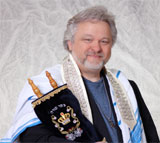
Are You Boasting Against the Natural Branches?

Are You Boasting Against the Natural Branches?
By
James Scott Trimm

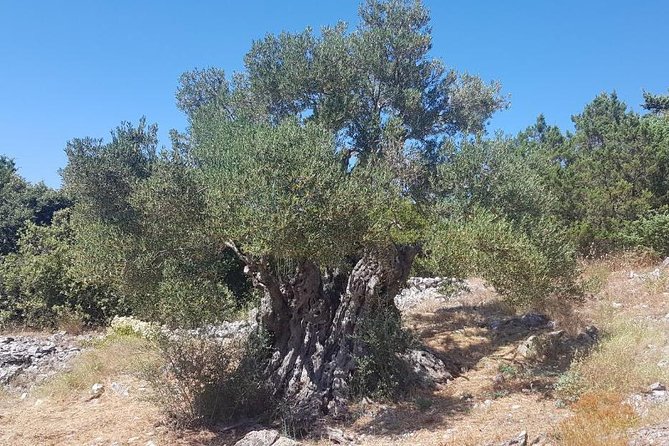
Unfortunately I hear many in the “Hebrew Roots” and “Two House” movements boasting against the natural branches. In his Parable of the Olive Tree (Romans 11) Paul admonishes the branches from the wild olive tree to “boast not against the natural branches” (Romans 11:18). In order to understand this admonition, it is important to understand just who the wild branches are, and who the natural branches are, that is, the identity of the two olive trees.

In order to understand this parable, we must first look back to the book of Hosea:

24 (2:22) And the earth shall respond to the grain, and the wine, and the oil–and they shall respond to Yizre’el.
25 (2:23) And I will sow her unto Me in the land, and I will have compassion upon her that had not obtained compassion. And I will say to them that were not My people: You are My people, and they shall say, You are my Elohim.
(Hosea 2:24-35 (2:22-23) HRV)

This passage from Hosea brings us to a most overlooked thread of prophecy, that of the ultimate restoration of the House of Israel.

The name Yizre’el (Jezreel in the KJV) is the key to this overlooked thread.  In Hosea 1:4 Hosea’s wife bears a son and YHWH names the son “Yizre’el”.  Throughout Hosea the names of Hosea’s sons had special prophetic meaning.  The name “Yizre’el” is a word play on “Yisra’el” (Israel) but has the maning “El sows” or “El scatters”:

4 And YHWH said unto him: Call his name Yizre’el, for yet a little while and I will visit the blood of Yizre’el upon the house of Yahu, and will cause to cease–the kingdom of the House of Yisra’el.
(Hosea 1:4 HRV)

The prophetic meaning of this name is revealed in Hosea chapter 2 where Elohim scatters Yisra’el.

At this point it is absolutely essential to distinguish the two houses of Israel in this book.  In these first two chapters of Hosea it is clear that it is not the House of Judah who are facing this chastisement.  In fact Hosea specifies that while he is punishing the House of Israel, He will have compassion on the House of Judah:

7 But I will have compassion upon the House of Y’hudah, and will save them by YHWH their Elohim: and will not save them by bow, nor by sword, nor by battle, nor by horses, nor by horsemen.
(Hosea 1:7 HRV)

By contrast the House of Israel will lose their identity as the people of YHWH.  His second and third sons are named “Lo-Ruchmah” (“not compassioned”) and “Lo-Ammi” (“Not My People”).

Finally YHWH tells us that at a time when the number of the descendants of Israel is as the “as the sand of the sea,  which cannot be measured nor numbered.” (Hosea 2:1 (1:10)) that this group known as Lo-Ammi “Not My People”  will come to be known as “Sons of the Living El.”

Romans 9 begins the contrast of the “Jews” and “Gentiles” by quoting Hosea 2:25(23); 2:1 (1:10) in Rom. 9:25-26.

23 And poured forth His mercy upon the vessels of mercy, that were prepared to Eloah to glory,
24 Which we are … the called; not only from the Jews, but also from the Goyim.
25 Thus also He said in Hoshea: I will call those who were not My people, My people: and to whom I have not shown mercy, I will show mercy.
26 For it will be, [that] in the place where they were called, Not my people: there they will be called, sons of the Living Eloah. (Hosea 2:1 (1:10); 2:25 (23))
27 And Yesha’yahu proclaimed concerning the B’nai Yisra’el, that even though the number of the B’nai Yisra’el should be like the sand that is in the sea, a remnant of them would be saved.
(Romans 9:23-27 HRV)

If we look up the context of the people “which were not my people” which he calls “my people” in Hosea we find that they are the “children of Israel”:

1 (1:10) Yet, the number of the children of Yisra’el shall be as the sand of the sea, which cannot be measured nor numbered. And it shall come to pass that, instead of that which was said unto them, You are not My people: it shall be said unto them, You are the children of the living El.
(Hosea 2:1 (1:10))

as opposed to “the children of Judah”:

2 (1:11) And the children of Y’hudah and the children of Yisra’el shall be gathered together, and they shall appoint themselves one head, and shall go up out of the land: for great shall be the day of Yizre’el.
(Hosea 2:2 (1:11))

So if Paul is quoting Hosea in context and contrasting Jews and Gentiles (Rom. 9:24) using Hosea 2:1-2 (1:10-11) then the “Jews” of Rom. 9:24 are the “Children of Judah” of Hosea 2:2 (1:11) and the “Gentiles” of Rom. 9:24 are the  “children of Israel” of Hosea 2:1 (1:10).

If this is true then as this contrasting pair advances into Rom. Chapter 11 the two trees are the two Houses.  This prophecy parallels the two “sticks” prophecy of Ezekiel 37 (note that the word “stick in Ezek. 37 is ETZ which also means “tree”).

16 And if the first is Set-Apart, the lump of dough is also: and if the root is Set-Apart, the branches [are] also.
17 And if some branches were broken off, and you who are a wild olive [tree], were grafted into their place and became partakers of the root and of the oil of the olive [tree],
18 Do not boast against the [natural] branches. But if you boast, you are not bearing the root, but the root bears you!
19 And perhaps you should say of the branches that were broken off, I will be grafted in their place.
20 These [matters] are beautiful. They were broken off because they did not have trust, but you stand, by trust. Do not be exalted in your mind, but fear:
21 For if Eloah did not spare the natural branches, perhaps He will also not spare you.
22 See then the gentleness and the harshness of Eloah: upon those who fell, harshness, but upon you, gentleness, if, you remain in the gentleness. And if not, you will also be broken off.
23 And those, if they do not remain in their lack of trust, also will be grafted in: for Eloah is able to graft them in again.
24 For if you, who are from the olive [tree] that was wild by your nature, were cut off and were grafted–contrary to your nature–into the good olive [tree], how much more then, those, if they be grafted in their natural olive [tree]?
25 For I want you to know this mystery, my brothers, so that you will not be wise in the thought of your nefesh: that blindness of the heart, in part, has happened to Yisra’el until the fullness of the Goyim should come,
26 And then all Yisra’el will have Life. Thus it is written, From Tziyon a Deliverer will come, and turn iniquity from Ya’akov.
27 And then they will have the covenant that is from Me, when I forgive them their sins. (Isaiah 59:20-21; 27:9)
(Romans 11:16-27)

The Aramaic for the phrase “fullness of the Goyim” (Rom. 11:25) could also be translated “multitude of nations” as we  read the blessing of Yoseph in Genesis:

18 And Yosef said unto his father, Not so, my father, for this is the firstborn: put your right hand upon his head.
19 And his father refused, and said, I know it, my son, I know it. He also shall become a people, and he also shall be great. Howbeit, his younger brother shall be greater than he, and his seed shall become a multitude of nations.
20 And he blessed them that day, saying, By you shall Yisra’el bless, saying, Elohim make you as Efrayim and as M’nasheh, and he set Efrayim before M’nasheh.
(Gen. 48:18-20 HRV)

Now the uncultivated olive tree in Romans 11 is clearly therefore Ephraim and the cultivated olive tree is clearly that of Judah. This prophecy tells us that branches from the tree/stick of Ephraim will be broken off and grafted into the tree/stick of Judah, are to be fed by the root of the tree/stick of Judah and are not to boast against the natural branches (Jews).”

So the Ephraimite branches are grafted into the Jewish Olive Tree, to be fed by its Jewish Root (Rom. 11:17) and to boast not against the Jewish branches (Rom. 11:18).

This brings us to a whole series of biblical prophecies that paint a picture that in the last days it is the gentiles that come to partake from Judah and not the other way around.

Ephraim Put With Judah

As we mentioned above, the Olive Tree Parable runs parallel to the Two Sticks Prophecy of Ezekiel 37:15-20.

In this prophecy each of the two houses of Israel are symbolized by two “sticks” which are brought together and made as one (Ezek. 37:15-18) the text goes on to specify that YHWH will:

…take the stick of Joseph, which is in the hand of Ephraim,
and the tribes of Israel his fellows, and will put them with him,
even with the stick of Judah, and make them one stick,…
(Ezek. 37:19)

So in this prophecy, Ezekiel is commanded to take the Stick of Joseph “and put them… with the Stick of Judah” (Ezekiel 37:19) not the other way around. Just as in the Olive Tree Parable, Ephaimite branches are grafted into Judah, not the other way around.

Take Hold of Judah

Now lets look at another prophecy in Zech. 8:23:

Thus said YHWH of hosts, ‘In those days ten men
from all languages of the nations take hold,
yea, they shall take hold of the edge of the garment of a man,
a Yehudite, saying, “Let us go with you,
for we have heard that Elohim is with you .” ‘ “j

Now lest anyone think that the “Jew” (Yehudite) in this passage is a certain Jew, such as the Messiah, I must point out that in the Hebrew the word “you” in “let us go with “you” and “Elohim is with you” is PLURAL and therefore refers not to an individual Jew, but to the House of Judah. No doubt the number “ten” here implies the lost ten tribes of Ephraim, so that Ephraim says to Judah:

“let us [Ephraim] go with you [Judah]
for we [Ephraim] have heard that YHWH is with you [Judah].”

So again, not the other way around.

Salvation is of the Jews

Let us also look at the encounter between Yeshua and an Ephraimite woman (a Samaritan). There is no doubt that this Samaritan woman is to be counted as an Ephraimite because she refers to “our father Jacob” (Jn. 4:12) and Yeshua makes no attempt to correct her on this point. (Note she mentions the two different places of worship on different mountains in 4:20). Then Yeshua tells her her religion is false and that the Jewish religion is the one true faith saying:

“You worship what you do not know.
We worship what we know,
because salvation is of the Jews.
“But the hour is coming, and now is,
when the true worshipers shall worship the Father in spirit and truth,
for the Father also does seek such to worship Him.
(Jn. 4:22-23)

So here the Ephaimite is told by Yeshua “salvation is of the Jews.”

To Whom Have Been Committed the Oracles of Elohim

Why is it that consistently we read that Ephraim and the Gentiles learn from Judah and not the other way around?

Paul writes:

1 What advantage then has the Jew? Or what profit is there in the circumcision?
2 Much every way! Chiefly because that unto them were committed the oracles of Elohim!
(Romans 3:1-2)

Notice that the oracles of Elohim were not committed to the Ephraimites or Gentiles, but to the Jews.

We see a consistent picture in the Scriptures that the House of Israel and/or Gentiles come to Judah, to whom the oracles of Elohim have been committed, take hold of Judah to go with Judah and be fed by the Jewish olive tree.

The Natural Branches

One thing must here be clarified. The true representative of Judah is Nazarene Judaism, not Rabbinic Judaism.

As laid out above, the restoration of the House of Israel (Ephraim) is typified in the parable of the olive tree, by the grafting of wild branches (Ephraimites) into the cultivated olive tree (Romans 11:16-19).

But an even more powerful stage of the restoration involves Judah being grafted back into its own olive tree:

And if their stumbling became riches for the world, and their loss, riches to the Goyim: how much more therefore, their fullness?
(Rom. 11:12 NHRV)

For if their reprobation was reconciliation to the world, how much more therefore, their return, but life that is from among the dead?
(Rom. 11:15 NHRV)

23 And those, if they do not remain in their lack of trust, also will be grafted in: for Elohim is able to graft them in again.
24 For if you, who are from the olive [tree] that was wild by your nature, were cut off and were grafted–contrary to your nature–into the good olive [tree], how much more then, those, if they be grafted in their natural olive [tree]?
(Rom. 11:23-24 NHRV)

Paul says here: You think the restoration of Ephraim is great, wait until you see the restoration of Judah!

The restoration of Judah is the modern restoration of Nazarene Judaism, which has been unfolding over the last several decades.

The picture in Scripture is that in the last days, Ephramites and other gentiles will realize that Elohim is with Judah to whom the oracles of Elohim have been committed. They will take hold of Judah and be fed by Judah.

Are you boasting against the natural branches? Do you think that the House of Judah needs take hold of the House of Ephraim to be fed? Or are you taking hold of Judah and being fed by the root of the Jewish olive tree?

In these uncertain times, we need your support more than ever. The time is short, and there is much work to be done. This is no time to pull back from the great work in front of us!

As I have said to you many times, I look on this work as a co-operative one with me, and all of you combining our resources together in order to get the job done of helping to teach this great truth to all in the world who will listen. Thank you so much from the bottom of my heart for your continued support, you are the ones who make it all possible by your contributions and your prayers for our work. I truly appreciate your help in every way.

If you can make a one time donation of $500 or $1,000 dollars to support this work.

Now is time to step up to the plate!

Donations can be sent by Paypal to donations@wnae.org, or by Zelle, Go Fund Me, Bitcoin or Ethereum.


Click HERE to donate

Understanding John 3:16

Understanding John 3:16
By
James Scott Trimm

For God so loved the world,
that he gave his only begotten Son,
that whosoever believeth in him
should not perish, but have everlasting life.
(John 3:16 KJV)

This verse is without a doubt this is the single most quoted passage from the “New Testament”.   It has appeared on bumper stickers and T-shirts and even Tim Tebo’s eye black.  I have even seen a book about chess that had “Jn. 3:16” written in one corner.

John 3:16 is also one of the most misunderstood verses in the “New Testament”. Christians generally interpret this verse with no regard for the surrounding context. By their interpretation this verse has Yeshua teaching Nakdimon (Nicodemus) the doctrine of salvation through the crucifixion of Messiah when he had yet to be crucified. They characterize this verse as their “ticket to heaven”.

However if we take this verse in context, we find that the following verses reveal, the phrase “believe in him” in John 3:16 refers not to simple acceptance of the fact of Yeshua’s existence, or his death (which had not even happened yet), but to belief or trusting faith in his words and teachings.

Verse 17 goes on to say:

For Eloah did not send his son into the world
to condemn the world
but to give life to the world through him.  
(John 3:17 HRV)

The Messiah was the Torah incarnate and the original Torah giver.  The Messiah gives life because he is the Torah incarnate and the Torah giver.  In teaching us Torah he gives us life, as the Torah itself says:

Take to your heart all the words with which I am warning you today, which you shall command your sons to observe carefully, even all the words of this Torah.  For it is not an idle word for you; indeed it is your life.  And by this word you shall prolong your days in the Land, which you are about to cross the Jordan to possess.
(Deut.  32:46-47)

The next verse defines “he who believes” vs. “he who does not believe”:

He who believes in him is not judged,
and he who does not believe is already condemned
because he does not believe
in the name of the only begotten son of Eloah.
(John 3:18 HRV)

Here Yeshua clearly breaks all of mankind into two categories.  Those who “believe” and are “not judged” and those who “do not believe” and are “condemned already”.  The Aramaic word for “believe” here is the Aramaic equivalent of Hebrew EMUNAH .   Emunah refers to belief in the sense of trusting faith.  Torah is the “way of EMUNAH” as the Pslamist writes:

Remove the false way from me,
And graciously grant me your Torah.
I have chosen the way of faith (EMUNAH);
I have placed your ordinances before me.
 (Psalm 119:29-30)

“believe in him” from verse 16 becomes “believe in the name of the only begotten” in verse 18.  This is an idiomatic way to say “believe in the reputation and teaching” of Messiah, which begins to becomes evident in the next two verses:

And this is the judgment,
because the light has come to the world,
and men loved darkness more than that light,
for their deeds are evil.
For everyone who does a hateful thing
hates the light and does not come to the light
lest his deeds be reproved.
(John 3:19-20 HRV)

This verse clarifies the two categories laid out in verse 18.  Those who “believe” are “not judged” but those who “do not believe” are “condemned already”.  These who “do not believe” love darkness more than light, hate the light, and do not come to the light lest their evil deeds be reproved.  Note that the key word here is “deeds”.  What is the light and what is the darkness?  The answer to this question is to be found in the Tanak:

For the commandment is a lamp;
and the Torah is light…
 (Prov. 6:23)

Your word is a lamp to my feet,
and a light to my path.
 (Ps. 119:105)

To the Torah and to the testimony;
if they speak not according to this word,
it is because there is no light in them.
(Isaiah 8:20)

…for a Torah shall proceed from Me,
and I will make my judgment to rest
for a light of the people.
 (Isaiah 51:4)

Elsewhere Yochanan speaks of those who “walk in darkness” (Jn. 8:12; 12:35; 1Jn. 1:6; 2:11).  These who “do not believe” love darkness more than Torah, they hate the Torah, and do not come to the Torah lest their evil deeds be reproved.

The next verse says:

But he who does truth comes to the light
that his works may be known
that they are done in Eloah.
(John 2:21 HRV)

“he who does truth”  This familiar phrase also appears in the Dead Sea Scrolls in the
Manual of Discipline in which members of the Qumran community were instructed to
“do truth” (Col.  1,5; col. 5, 3)

Who is “he who does truth”?  What is “truth”?  How is it that “truth” is something that one “does”?  The Torah is truth; all of the commandments are truth (Ps. 119:142, 151).  See more detailed information on truth in comments to Jn. 8:31-32.  Note that “truth” here is something that one does.  He who does truth comes to the light of Torah so that his works may be known that they are of Eloah.

From John 3:16-21, 36 we may construct the following chart that will help us to understand the meaning of John 3:16:

“believe in him”“do not believe”
“not judged”“already condemned”
“does truth”;
“comes to the light
that his works may be known”
“Loved darkness more than light”
“their deeds are evil”
“does not come to the light
lest their deeds be reproved”
[Obeys the son]“does not obey the son”
(John 3:36)

We can see that those who “believe in him” in John 3:16 are those who believe in him as the incarnate Torah and who accept the Torah which he taught. This is made clear in verse 36 in which it is clear that “believe in him” means “obey the son”.   They accept the Torah of truth and walk by its light.  They are set apart from Torah rejecters who reject the light of Torah:

He who believes in the Son has eternal life,
and he who does not obey the Son will not see life:
on the contrary, the wrath of Eloah will remain upon him.
(John 3:36 HRV)

Yeshua the Messiah is the Torah incarnate, and thus if we reject the Torah as bondage, we are rejecting the very substance of who the Messiah is. Is is not keeping Torah that is the key, it is accepting and embracing the Torah, keeping it simply naturally flows from that process.

You do not earn salvation any more than you get clean to take a bath.

We must raise at least $500 by the end of the day today (8/11/25) or our account will go into the negative and start a chain reaction of returned items and fees!

As I have said to you many times, I look on this work as a co-operative one with me, and all of you combining our resources together in order to get the job done of helping to teach this great truth to all in the world who will listen. Thank you so much from the bottom of my heart for your continued support, you are the ones who make it all possible by your contributions and your prayers for our work. I truly appreciate your help in every way.

If you can make a one time donation of $500 or $1,000 dollars to support this work.

Now is time to step up to the plate!

Donations can be sent by Paypal to donations@wnae.org or by Zelle, Go Fund Me, Bitcoin or Ethereum.


Click HERE to donate

The Truth about the Shema

The Truth about the Shema
by
James Scott Trimm

Many Anti-missionaries have argued that the Shema (Deut. 6:4) conflicts with any understanding of the Deity of Messiah as taught in the so-called “New Testament”.

In this article I will prove using only ancient Jewish sources that, to the contrary, the Shema itself has been anciently understood in Judaism to refer to the unity of the three Pillars of the Godhead.  Furthermore it has been taught anciently in Judaism that the Middle Pillar of the Godhead reconciles the two outer Pillars, that this Middle Pillar of the Godhead is the Son of Yah, the firstborn of all creation who will glorify all the bodies which are in the grave, and that this is the Word of YHWH in whom Abraham placed his faith and who made the covenant with Israel, and which is the Savior.  Most importantly it has been taught that this Middle Pillar, the Son of Yah, the Word is the Messiah himself.

The opening of the Shema reads:

SH’MA YISRAEL YHWH ELOHEYNU YHWH ECHAD
“Hear O Israel, YHWH, our Elohim, YHWH is one (ECHAD)”
(Deut. 6:4)

Let us examine other passages in the Torah to understand how this word ECHAD (“one”) is used in the Torah:

Therefore a man shall leave his father and mother and be joined
to his wife, and they shall become one [ECHAD] flesh.
(Gen. 2:24)

And YHWH said, “Indeed the people are one [ECHAD] and they
all have one language…
(Gen. 11:6)

Thus it is clear that the word ECHAD in no way requires a singularity and can refer to a composite unity.

Now let us to explore how this passage is understood by the Zohar:

The [profession of] unity that every day is [a profession of] unity
is to be understood and to be perceived. We have said in many places
that this prayer is a profession of Unity that is proclaimed:

”Hear O Yisrael, YHWH“ first, [then] “Eloheynu” [and] “YHWH” they are all One and thus He is called “One”.

Behold, these are three names, how can they be one? Is it because we call them one? (literally: And also concerning the proclamation that we call them one?). How these are one can only through the vision of the Holy Sprit be known. And these are through the vision of the closed eye (or the hidden eye) To make known that these three are one.
And this is the mystery of the voice that is heard. The voice is one. And is three GAUNIN: fire and air and water. And all these are one in the mystery of the voice.

And also here “YHWH, Eloheynu, YHWH” these are One. Three GAUNIN that are One. And this is the voice of the act of a son of man in [proclaiming] the Unity.
And to which he sees by the Unity of the “All” from Eyn Sof (the Inifinite One) to the end of the “All”. Because of the voice in which it is done, in these are three that are one.

And this is the [profession] of the daily profession of Unity that is revealed in the mystery of the Holy Spirit.

And there are many GAUNIN that are a Unity, and all of them are true, what the one does, that the other does, and what that one does, the other does.
(Zohar 2:43)

יחוד דכל יומא. איהו יחוד למנדע ולשואה רעותא.
יחודא דא. הא אמרן בכמה דוכתי יחיד דכל מא איהו יחוד דקרא. שמע ישראל יי קדמאח. אלהינו יי. הא כלהו חד. ועד אקרי אחד.
הא תלת שמהין אינון. היך אינון חד ואף על גב דקרינן אחד. היך אינון חד. אלא בחזיונא דרוח קודשא אתיידע. ואינון בחיזו דעינא סתימא. למנדע דתלתא אלין אחד.
ודא איהו רזא דקול דאשתמע. קול איהו חד.ואיהו תלתא גוונין. אשא ורוחא ומיא. וכלהו חד ברזא דקול.
ואף הכא יי אלהינו יי אינון חד תלתא גוונין דאינון חד. ודא איהו קול דעביד בר נש ביחודא ולשוואה רעותיה בחודא דכלא מאין סוף עד סופא דכלא. בהאי קול דקא עביד בהני תלתא דאינון חד.
ודא איהו יחודא דכל יומא דאתגלי ברזא דרוח קודשא.
וכמה גוונין דיחודא אתערו וכלהו קשוט. מאן דעביד האי עביד ומן דעביד האי עביד.

(The Aramaic word GA’UN (sing.)/GAUNIN (plural) comes from the word for “color” and refers to an “aspect, element, substance, essence”. )

Thus the Zohar understands the Sh’ma to mean that YHWH, Elohim and YHWH are three GA’UNIN. This section of the Zohar also recalls a reading from the Sefer Yetzirah:

Three “mothers”: Alef; Mem and Shin
Their foundation is a pan of merit
a pan of liability
and the tongue of decree deciding between them.
(Sefer Yetzirah 3:1)

Three “mothers”, Alef, Mem, Shin
in the universe are air, water, fire…
(Sefer Yetzirah 3:4a)

(Note: The letter SHIN has a gematria (numerical value) of 300 which is the same as the gematria of the phrase ”Ruach Elohim” (the Spirit of Elohim).)

As it we will demonstrate the “tongue of decree deciding between them” is the Middle Pillar of the Godhead which reconciles the two outer pillars of the Godhead.

The Three Pillars of the Godhead

The Zohar also calls these three GAUNIN the three pillars of the Godhead. The Zohar teaches that the two outer pillars are reconciled by the middle pillar just as the “tongue of decree” decides between the two pans of the scale in the Sefer Yetzirah. The Zohar reads as follows:


Concerning this, too, it is written: “Let there be light, and there was light” (Gen. I, 3). Why, it may be asked, was it necessary to repeat the word “light” in this verse? The answer is that the first “light” refers to the primordial light which is of the Right Hand, and is destined for the “end of days”; while the second “light” refers to the Left Hand, which issues from the Right. The next words, “And God saw the light that it was good” (Gen. 1, 4), refer to the pillar which, standing midway between them, unites both sides, and therefore when the unity of the three, right, left, and middle, was complete, “it was good”, since there could be no completion until the third had appeared to remove the strife between Right and Left, as it is written, “And Elohim separated between the light and between the darkness” (Ibid.).
(Zohar 2:167a)

This is the Middle Pillar: Ki Tob (that it was good) threw light above and below and on all other sides, in virtue of Tetragrammaton, the name which embraces all sides.
(Zohar 1:16b)

The First Century Jewish Writer Philo says similarly that the Word reconciles the two sides:

…the Divine Word (Logos)…fills all things and becomes a mediator and arbitrator for the two sides….from the Divine Word (Logos), as from a spring, there divide and break forth two powers. One is the creative through which the Artificer placed and ordered all things. This is named “God”. And the royal, since through it the Creator rules over created things. This is called “Lord” And from these two powers have grown the others. For by the side of the creative power there grows the propitious of which is named “beneficial” while (besides) the royal the legislative, of which is aptly named “punitive”. And below these and beside them is the ark.”
(Philo on Q&A on Exodus, II.68)

The Middle Pillar of the Godhead is the Son of Yah

According to the Zohar the Middle Pillar of the Godhead is the Son of Yah:

שכן קרוב מאח רחוק. דהיינו עמודא דאמצעיתא דאיהו בן יה,

Better is a neighbor that is near, than a brother far off.
This neighbor is the Middle Pillar in the Godhead,
which is the Son of Yah.
(Zohar 2:115)

The Zohar also says of the Son of YHWH:

The Holy One, blessed be He, has a son, whose glory (tifret)
shines from one end of the world to another. He is a great
and mighty tree, whose head reaches heaven, and whose roots
are set in the holy ground, and his name is “Mispar” and his
place is in the uppermost heaven… as it is written, “The heavens
declare (me-SaPRim) the glory (tifret) of God” (Ps. 19:1).
Were it not for this “Mispar” there would be neither hosts
nor offspring in any of the worlds.
(Zohar 2:105a)

This Zohar passage is intended to recall a passage from the Bahir:

Why are they called Sephirot?
Because it is written (Ps. 19:2),
“The heavens declare (me-SaPRim) the glory (tifret) of God.”
(Bahir 125)

The Zohar also says concerning the Son of Yah:

“We may also translate “he who withholds blessings
from the Son” (Prov. 11:26), whom the Father and Mother
have CROWNED and blessed with many blessings,
and concerning whom they commanded, “Kiss the SON
lest he be angry” (Ps. 2:12), since he is invested
with judgment (GEVURAH) and with mercy (CHESED)”
(Zohar 3:191b)

According to the Zohar, the Middle Pillar of the Godhead is not only known as the “Son of Yah” but also as “Metatron”:

Better is a neighbor that is near, than a brother far off.
This neighbor is the Middle Pillar in the godhead,
which is the Son of Yah.
(Zohar 2:115)

The Middle Pillar is also known as “Metatron”:

The Middle Pillar [of the godhead] is Metatron,
Who has accomplished peace above,
According to the glorious state there.
(Zohar 3:227)

In the Zohar we are also told that Metatron is “the firstborn”:

“And Abraham said to his oldest servant of his house…” (Gen. 24:2) Who is this of whom it said “his servant?” In what sense must this be understood? Who is this servant? R. Nehori answered:
“It is in no other sense to be understood than expressed in the word “His servant,”
His servant, the servant of Elohim, the chief to His service. And who is he? Metatron, as said. He is appointed to glorify the bodies which are in the grave.
This is the meaning of the words “Abraham said to His servant” that is to the servant of Elohim. The servant is Metatron, the eldest of His [YHWH’s] House, who is the firstborn of all creatures of Elohim, who is the ruler of all He has; because Elohim has committed to Him the government over all His hosts.
(Zohar Midrash Ha-Ne’lam; Parsha Hayyei Sarah 1:126b)

So in Judaism both Israel and “The Son of Yah” are identified as the “first-born Son of YHWH”.

According to the first century Jewish writer Philo, this firstborn Son of Elohim is also known as “The Word.”

Philo Writes of the Word (Logos):

For there are, as it seems, two temples belonging to God; one being this world, in which the high priest is the divine word, his own firstborn son. The other is the rational soul, the priest of which is the real true man,
(On Dreams 215)

And if there be not as yet any one who is worthy to be called a son of God, neverthless let him labour earnestly to be adorned according to his Firstborn Word, the eldest of his angels, as the great archangel of many names; for He is called, “the Authority”, and “the Name of God”, and “the Word”, and “man according to God’s image”, and “He who sees Israel”. . . For even if we are not yet suitable to be called the sons of God, still we may deserve to be called the children of his eternal image, of his most sacred Word; for the image of God is his most ancient word.
( On the Confusion of Tongues XXVIII:146-147)

Thus, indeed, being a shepherd is a good thing, so that it is justly attributed, not only to kings, and to wise men, and to souls who are perfectly purified, but also to God, the ruler of all things; and he who confirms this is not any ordinary person, but a prophet, whom it is good to believe, he namely who wrote the psalms; for he speaks thus, “The Lord is my shepherd, and he shall cause me to lack Nothing;” (Ps. 23:1.) and let every one in his turn say the same thing, for it is very becoming to every man who loves God to study such a song as this, but above all this world should sing it. For God, like a shepherd and a king, governs (as if they were a flock of sheep) the earth, and the water, and the air, and the fire, and all the plants, and living creatures that are in them, whether mortal or divine; and he regulates the nature of the heaven, and the periodical revolutions of the sun and moon, and the variations and harmonious movements of the other stars, ruling them according to law and justice; appointing, as their immediate superintendent, his own right reason, his first-born son, who is to receive the charge of this sacred company, as the lieutenant of the great king; for it is said somewhere, “Behold, I am he! I will send my messenger before thy face, who shall keep thee in the Road.”(Ex. 23:20.)
(On Husbandry 50-51)

The Targums were authoritative Aramaic paraphrases of the books of the Tanak which were read in the synagogues along with the Hebrew of the Torah and Haftorah readings. Whenever the Targums come to passages where YHWH is anthropomorphisised or seen, or where two or more YHWHs are indicated by the text, the Targums will often substitute “The Word [Memra] of YHWH” for YHWH. For example in Gen. 19:4 the Tanak has:

Then YHWH caused to rain upon S’dom and upon Amora,
brimstone and fire from YHWH, out of heaven.

The Hebrew grammar here indicates that one YHWH rains fire from another YHWH) But Targum Jonathan substitutes “The Word of YHWH/the LORD” for the first of the two YHWHs as follows:

And the Word of the YHWH caused to descend
upon the peoples of Sodom and Gommorah,
brimstone and fire from the YHWH in heaven.

In another example the Torah has:

Ex. 24:1a (YHWH is the speaker, see Ex. 20:1-2)

Now He [YHWH] said to Moses, “come up to YHWH…”

But Targum Jonathan paraphrases the speaker in Ex. 20:1 with the substitution “the Word [Memra] of YHWH” in place of “YHWH.”

And the Word of the Lord spoke all these glorious words…

So it would seem that one of these entities called “YHWH” in these Torah passages was actually understood by the Targumists as being the “Word of YHWH.” It was, according to Targum Onkelos, this Word of YHWH that Abraham trusted in:

And Abraham trusted in the Word [Memra] of YHWH,
and He counted it to him for righteousness.
(Targum Onkelos Gen. 15:6)

Moreover Abraham prayed in the name of the Word of YHWH:

And Abraham worshipped and prayed
in the name of the Word [Memra] of YHWH,
and said, “You are YHWH who does see, but You cannot be seen.”
(Jerusalem Targum Gen. 22:14)

Note that here Abraham prays “in the name of the Word of YHWH” to the YHWH who “cannot be seen.” Here two YHWHs are very apparent. Abraham is praying in the name of the Word of YHWH but is praying to the YHWH who cannot be seen. This idea is reinforced elsewhere as follows:

And Hagar praised and prayed

in the name of the Word [Memra] Of YHWH
who had revealed Himself to her…
(Jerusalem Targum Gen. 16:3)

It was this Word of YHWH that Jacob also trusted in:

And Jacob vowed a vow, saying,
“If the Word [Memra] of YHWH will be my support,
and will keep me in the way that I go,
and will give me bread to eat, and raiment to put on,
so that I come again to my father’s house in peace;
then shall the Word [Memra]of YHWH be my God.
(Targum Onkelos on Gen. 28:20-21)

King David also urged Israel to trust in the Word of Yah as the Targum of Psalm 62 reads:

Trust in the Word of Yah at all times,
O people of the house of Israel!
Pour out before Him the sighings of your heart;
Say, God is our trust forever.
(Targum on Psalm 62:9)

This “Word of YHWH” was, according to Targum Jonathan, the Creator:

And the Word [Memra] of YHWH
created man in his likeness,
in the likeness of YHWH, YHWH created,
male and female created He them.
(Targ. Jonathan Gen. 1:27)

This idea is also put forward in the Jerusalem Targum:

And the Word [Memra] of YHWH said to Moses:
“I am He who said unto the world ‘Be!’ and it was:
and who in the future shall say to it ‘Be!’ and it shall be.”
And He said: “Thus you shall say to the children of Israel:
‘I Am’ has sent me to you.”
(Jerusalem Targum Ex. 3:14)

The Fragmentary Targum of the Torah also expresses that the Word of YHWH was the Creator:

The first night, when the “Word of YHWH”
was revealed to the world in order to create it,
the world was desolate and void,
and darkness spread over the face of the abyss
and the “Word of the Lord” was bright and illuminating
and He called it the first night.
(Fragmentary Targum Ex. 12:42)

That the Word of YHWH was the Creator can also be seen in the Tanak itself:

By the Word of YHWH were the heavens made,
And all the hosts of them by the Spirit of His mouth.
(Ps. 33:6)

The Word was also the covenant maker. For example the Noachdic covenant was between the Word and all mankind:

And YHWH said to Noah,
“This is the token of the covenant
which I have established between My Word [Memra]
and between all flesh that is upon the earth.
(Targum Onkelos Gen. 9:17)

The Word also made the Abrahamic covenant as Targum Onkelos also paraphrases:

And I will establish my covenant
between My Word [Memra] and between you…
(Targum Onkelos Gen. 17:7)

The Word of YHWH was also the giver of the Mosaic Covenant and the Torah as the Jerusalem Targum (as quoted above) makes the Torah giver “the Word of YHWH” in Ex. 20:1. It was to th e Word that Jacob turned to for salvation:

Our father Jacob said: “My soul does not wait for salvation
such as that wrought by Gideon, the son of Joash,
for that was but temporal; neither for a salvation
like that of Samson, which was only transitory;
but for that salvation which You have promised to come,
through Your Word unto Your people, the children of Israel;
for your salvation my soul hopes.”
(Targum Jonathan Gen. 49:18)

That the Word of YHWH is the savior is expressed elsewhere:

But Israel shall be saved by the Word of YHWH
with an everlasting salvation…
By the Word of YHWH shall all the seed of Israel be justified…
(Targum Jonathan Is. 45:17, 25)

But I will have mercy upon the house of Judah,
and I will save them by the Word of YHWH, their God.
(Targum Jonathan Hosea 1:7)

Furthermore Philo tells us that “The Word” (Logos) and the Messiah are one and the same:

“The head of all things is the eternal Word (Logos) of the eternal God, under which, as if it were his feet or other limbs, is placed the whole world, over which He passes and firmly stands. Now it is not because Messiah is Lord that He passes and sits over the whole world, for His seat with His Father and God but because for its perfect fullness the world is in need of the care and superintendence of the best ordered dispensation, and for its own complete piety, of the Divine Word (Logos), just as living creatures (need) a head, without which it is impossible to live.”
(Q&A on Exodus, II, 117)

Thus the Zohar teaches that the Sh’ma (Deut. 6:4) refers to the three pillars of the Godhead as being ECHAD and that the Middle Pillar of the Godhead reconciles the two outer Pillars. The Zohar further teaches that this Middle Pillar of the Godhead is the Son of Yah, the firstborn of all creation who will glorify all the bodies which are in the grave. This is the Word of YHWH in whom Abraham placed his faith and who made the covenant with Israel, and which is the Savior and is the Messiah.

In these uncertain times, we need your support more than ever. Bills are past due! We need your help today! The time is short, and there is much work to be done. This is no time to pull back from the great work in front of us!

As I have said to you many times, I look on this work as a co-operative one with me, and all of you combining our resources together in order to get the job done of helping to teach this great truth to all in the world who will listen. Thank you so much from the bottom of my heart for your continued support, you are the ones who make it all possible by your contributions and your prayers for our work. I truly appreciate your help in every way.

If you can make a one time donation of $500 or $1,000 dollars to support this work.

Now is time to step up to the plate!

Donations can be sent by Paypal to donations@wnae.org or by Zelle, GoFundMe, Bitcoin or Ethereum.


Click HERE to donate

Channukah is Not a Pagan Holiday

Channukah is Not A Pagan Holiday
By
James Scott Trimm

Each year I hear certain individuals claim that certain Channukah elements originate from Christmas or from Saturnalia (the pagan Roman festival from which Christmas originates).

Now there certainly have been some customs that some have incorporated into their observances of Channukah that originate from Christmas, things such as a “Channukah Bush” (essentially a Christmas tree) or having “Channukah Harry” deliver Channukah gifts for the children. Like the two mentioned, these tend to be fairly recent.

However their are also to elements of Christmas that appear to have been copied from Channukah, and some of these may surprise you.

The 25th of the Month

It is hard to miss the fact that Channukah begins on the 25th of the Hebrew month of Chislev, while Christmas occurs on the 25th of the closely corresponding month of December.

While this may be a coincidence, it probably is not. The Winter solstice itself occurs between December 20th and 23rd depending on the year. The pagan festival of Saturnalia was celebrated on December 17th (Julian) and later expanded to encompass December 17th thru 23rd. Though it is true that sometime between the 1st and 4th Centuries followers of Roman Mithraism (distinct from earlier Persian Mithraism) celebrated the birth of Mitha on December 25th. The question is, did early Gentile Christians adopt December 25th as their date for Christmas because Jews celebrated Channukah on Chislev 25th, or because Roman Mithra worshipers celebrated the birth oi Mitha on December 25th? We may never know.

A Festival of Lights

We read in 2Maccabees that the first Channukah was actually a belated Sukkot (Feast of Tabernacles or Booths) Celebration. In 2Maccabees 1:9 Channukah is called “the feast of booths in the month of Chislev,” and later we read:

[3] They purified the sanctuary, and made another altar of sacrifice; then, striking fire out of flint, they offered sacrifices, after a lapse of two years, and they burned incense and lighted lamps and set out the bread of the Presence.
[4] And when they had done this, they fell prostrate and besought the Lord that they might never again fall into such misfortunes, but that, if they should ever sin, they might be disciplined by him with forbearance and not be handed over to blasphemous and barbarous nations.
[5] It happened that on the same day on which the sanctuary had been profaned by the foreigners, the purification of the sanctuary took place, that is, on the twenty-fifth day of the same month, which was Chislev.
[6] And they celebrated it for eight days with rejoicing, in the manner of the feast of booths, remembering how not long before, during the feast of booths, they had been wandering in the mountains and caves like wild animals.
[7] Therefore bearing ivy-wreathed wands and beautiful branches and also fronds of palm, they offered hymns of thanksgiving to him who had given success to the purifying of his own holy place.
[8] They decreed by public ordinance and vote that the whole nation of the Jews should observe these days every year.
(2Maccabees 10:3-8 RSV)

It is important to realize that Sukkot was the original “festival of lights”:

Sukkot was known as the “Festival of Light”. The entire city of Jerusalem was filled with light from giant 75 feet (50 cubit) tall menorahs. (m.Sukkah 5:2–4; b.Sukkah 52b).

AT THE CONCLUSION OF THE FIRST FESTIVAL DAY OF TABERNACLES THEY DESCENDED TO THE COURT OF THE WOMEN WHERE THEY HAD MADE A GREAT ENACTMENT. THERE WERE THERE GOLDEN CANDLESTICKS WITH FOUR GOLDEN BOWLS ON THE TOP OF EACH OF THEM AND FOUR LADDERS TO EACH, AND FOUR YOUTHS DRAWN FROM THE PRIESTLY STOCK IN WHOSE HANDS WERE HELD JARS OF OIL CONTAINING ONE HUNDRED AND TWENTY LOG WHICH THEY POURED INTO THE BOWLS. FROM THE WORN-OUT DRAWERS AND GIRDLES OF THE PRIESTS THEY MADE WICKS AND WITH THEM THEY KINDLED THE LAMPS; AND THERE WAS NOT A COURTYARD IN JERUSALEM THAT WAS NOT ILLUMINED BY THE LIGHT OF THE PLACE OF THE WATER-DRAWING.
(m.Sukkot 5:2-3)

FOUR LADDERS etc. A Tanna taught, the height of a candlestick was fifty cubits.
(b.Sukkot 52b)

It was for this reason that Sukkot was the original festival of lights.  Channukah became a festival of lights partly because the first Channukah was a belated Sukkot celebration.

The theme of “Festival of Lights” transferred from Sukkot to Channukah and later to Christmas, in imitation of Channukah (not the other way around).

Exchanging Gifts

It may surprise some of you to know the origin of exchanging gifts at Channukah. We read in the Book of Ester concerning the institution of the Festival of Purim:

[20] And Mordecai wrote these things, and sent letters unto all the Jews that were in all the provinces of the king Ahasuerus, both nigh and far,
[21] To stablish this among them, that they should keep the fourteenth day of the month Adar, and the fifteenth day of the same, yearly,
[22] As the days wherein the Jews rested from their enemies, and the month which was turned unto them from sorrow to joy, and from mourning into a good day: that they should make them days of feasting and joy, and of sending portions one to another, and gifts to the poor.
[23] And the Jews undertook to do as they had begun, and as Mordecai had written unto them;
[24] Because Haman the son of Hammedatha, the Agagite, the enemy of all the Jews, had devised against the Jews to destroy them, and had cast Pur, that is, the lot, to consume them, and to destroy them;
[25] But when Esther came before the king, he commanded by letters that his wicked device, which he devised against the Jews, should return upon his own head, and that he and his sons should be hanged on the gallows.
[26] Wherefore they called these days Purim after the name of Pur. Therefore for all the words of this letter, and of that which they had seen concerning this matter, and which had come unto them,
[27] The Jews ordained, and took upon them, and upon their seed, and upon all such as joined themselves unto them, so as it should not fail, that they would keep these two days according to their writing, and according to their appointed time every year;
[28] And that these days should be remembered and kept throughout every generation, every family, every province, and every city; and that these days of Purim should not fail from among the Jews, nor the memorial of them perish from their seed.
[29] Then Esther the queen, the daughter of Abihail, and Mordecai the Jew, wrote with all authority, to confirm this second letter of Purim.
[30] And he sent the letters unto all the Jews, to the hundred twenty and seven provinces of the kingdom of Ahasuerus, with words of peace and truth,
[31] To confirm these days of Purim in their times appointed, according as Mordecai the Jew and Esther the queen had enjoined them, and as they had decreed for themselves and for their seed, the matters of the fastings and their cry.
[32] And the decree of Esther confirmed these matters of Purim; and it was written in the book.
(Esther 9:20-32 KJV)

The exchanging of gifts is here (9:22) in context, part of a list of things that Jews did in general, because they were celebrating a festival of joy. While today the custom of exchanging gifts has remained only part of the observance of Channukah, it came into Channukah as part of the Jewish customs surrounding the celebration of a joyous festival in general. While the practice of exchanging gifts at Christmas we preceded by the Roman custom of exchanging gifts at Saturnalia, the practice of exchanging gifts at Channukah is actually a biblical custom of the general Jewish practices surrounding the celebration of celebrating a joyous festival.

The Channukah Menorah

Every year well meaning individuals attack the “nine branched menorah” used for Channukah. Their claim is that a menorah is supposed to have seven branches, and that a menorah with nine branches is counter to Torah or even “pagan”. The fact is that the Hebrew word “menorah” simply means “lamp” and does not refer only to the Temple Menorah. It is only the Temple menorah that must have seven branches. But other menorahs (lamps) for other purposes can have no branches (like my desk lamp) or five branches (like the lamp hanging in my dining room) or any other number of branches. Moreover a Channukah menorah (lamp) does not have to have nine “branches” or any branches at all. In fact a long plank with nails driven into it will do. I have a Channukah menorah with no branches, but just eight holes for eight candles and a separated place for a ninth candle. So a menorah is just a lamp, one can have many lamps for many purposes and they need not all have seven branches. And a Channukah menorah does not have to have branches at all.

We need your help today! In these uncertain times, we need your support more than ever. The time is short, and there is much work to be done. This is no time to pull back from the great work in front of us!

As I have said to you many times, I look on this work as a co-operative one with me, and all of you combining our resources together in order to get the job done of helping to teach this great truth to all in the world who will listen. Thank you so much from the bottom of my heart for your continued support, you are the ones who make it all possible by your contributions and your prayers for our work. I truly appreciate your help in every way.

If you can make a one time donation of $500 or $1,000 dollars to support this work.

Now is time to step up to the plate!

Donations can be sent by Paypal to donations@wnae.org

Donations can be sent by Paypal, Zelle or Go Fund Me


Click HERE to donate

Stay in Touch By Email


By submitting this form, you are consenting to receive marketing emails from: . You can revoke your consent to receive emails at any time by using the SafeUnsubscribe® link, found at the bottom of every email. Emails are serviced by Constant Contact

And don’t forget to join the conversations at the NazareneSpace Social Network

Channukah: The Light of Dedication

Channukah: The Light of Dedication
By
Robert O. Miller

I want to take you back 175 years before the Messiah was born in Bethlehem. The Holy Temple that Nehemiah had built was still standing.  The descendents of A’aron and Levi, authentic, registered priests were serving in the sanctuary according to the Torah.

The Middle East was dominated by the decaying Seleucid Empire – the Greek descendents of one of Alexander the Great’s four generals – today remembered only by scholars – General Seleucus.

“And now I will tell you the truth: Behold, three more kings will arise in Persia, and the fourth shall be far richer than them all; by his strength, through his riches, he shall stir up all against the realm of Greece. Then a mighty king shall arise, who shall rule with great dominion, and do according to his will. And when he has arisen, his kingdom shall be parceled out toward the four winds of heaven, but not among his posterity nor according to his dominion with which he ruled; for his kingdom shall be uprooted, even for others besides these. (Daniel 11:2-4)”

General Seleucus had set up his imperial base in Babylon, extending his rule over Syria and began ruthlessly expanding his power.  150 years later his dynasty was imploding on itself. As the Empire was crumbling created a power vacuum generating a bloodbath as contenders vied for the throne, in 175 BCE, Antiochus Epiphanes (meaning god manifested), the brother of the current king, killed his nephew, the heir apparent, and usurped the throne.

He inherited the nation of Israel that had been lumped into Syria, immediately he had murdered the High Priest of Yahweh, Onias III, who was the last of the direct line of priests from A’aron.  The true priests were exiled to Qumran. Antiochus then sold the office of High Priest to the highest bidder among the Edomites (Esau decadents), Menelaus.  Antiochus did this to denationalize Israel.

In 171 BCE, Antiochus decided to conquer Egypt, but there he clashed with the armies of the rising Roman Empire. When a false report came to Jerusalem that Antiochus had been killed in battle in Egypt, the Jews organized a revolt and threw out the puppet High Priest Menelaus who could not maintain himself in the city, so he fled to Egypt.

Antiochus, very much alive, swept into Jerusalem enraged, regained the city, killed some 40,000 Jews, forced his way into the Sanctuary to plunder the Temple, carrying away valuable utensils, such as the golden Menorah, the altar and the showbread table, everything that was gold, and destroyed the Torah scrolls. However, remember, the Ark of the Covenant was not there because it was still in hiding since the days of Jeremiah.

The Rabbis were infuriated at the desecration and began to preach against the occupation.  The true exiled Priests likewise railed against the false priests and insighted the people to rise up, began to walk in Torah, cry to Yahweh for the Messiah to come and throw off the yoke of captivity. They must have given vent to their resentment openly; for only thus can the policy of extermination waged by Antiochus against the Jews and Judaism, two years later, in 168 BCE, be explained.

As long as Antiochus was busy conquering Egypt, he had no time for the Land of Israel.  When Rome thwarted his ambition to rule all the Middle East he became preoccupied with Israel. Apollonius, was sent through Israel by Antiochus with an armed troop, commissioned to seek, kill and destroy. He first entered Jerusalem amicably; then suddenly turning upon the defenseless city, he murdered, plundered, and burnt the city. Jewish Men were butchered, women and children sold into slavery, and in order to give permanence to the work of desolation, the walls and the new part of the city was torn down, only the Old City of David was spared. The Syrians fortified the old City of David completely dominating the city making Jerusalem a Greek colony. Antiochus’s attention then turned to the destruction of the national religion, a royal decree proclaimed the abolition of the worship of Yahweh; the Sabbaths were not to be observed; circumcision was not to be performed; the sacred books were to be surrendered and burned, and the Jews were compelled to offer sacrifices to the idols that had been erected. An inquisition was established with monthly sessions for investigation of those Priests and Rabbis that spoke against Antiochus. The mere possession of a sacred book, be it Torah or commentary, or the performance of the rite of circumcision was punished with death.

Then on Kislev 25, 168, the “abomination of desolation” (, Dan. 11:31; 12: 11), a statue of Zeus, Ba’al Shamem in the likeness of Antiochus himself, was set up on the altar of burnt offering in the Temple, Then, to the horror of Israel, he took a pig and offered it on the sacred altar. He cooked the sow, and with the broth sprinkled all the implements in the Temple, completely defiling the Sanctuary. The pigs he continued to slaughter on the Altar of Yahweh were given to the Priests and Rabbis to eat, those who refused, he cut their tongues out, scalped them, cut off their hands and feet and burned them on the Altar. Even one of the most respected elders of that generation, Rabbi Eliezer, a man of 90, was ordered by the servant of Antiochus, Phillip, governor of Judea, to eat pork so that others would do the same. When he refused Phillip tried to cut a deal with him that he pick up the meat to his lips to appear to be eating. But Rabbi Eliezer refused to do even that and was put to death.

Soon after, Chanah and her seven sons were arrested.

When Antiochus, who was returning to Antioch, heard about the events which were taking place in Jerusalem, he decided to take an active role in enforcing his decrees. The mother and her sons were bound and brought before the king.

Antiochus tried to convince the eldest boy to abandon the Torah. The youth responded with great confidence, “Why do you bother with this long speech, trying to inflict your abominable religion upon us? We are ready to welcome death for the sake of our holy Torah!”

The king was furious and ordered the boy’s tongue, hands and feet severed and placed in a fire. The soldiers proceeded to torture the boy, forcing his mother and six brothers to watch his excruciating pain. Antiochus was sure that this sight would intimidate his prisoners into unquestioning submission.

Instead, the martyrdom spurred the family to a deep resolve to accept their fate and to sanctify Yahweh’s name. When the second brother was brought to the king, even the members of the king’s retinue begged the boy to obey the king. The boy, however, replied, “Do what you will with me. I am no less than my brother in devotion to Yahweh.” The second son’s torture was as bitter as his brother’s had been. As he died he told the king, “Woe to you, pitiless tyrant! Our spirits go to Yahweh. And when Yahweh will awaken the dead and His martyred servants, we will live. But you–your soul will dwell in a place of eternal abhorrence!”

To the amazement of all, the third brother unflinchingly suffered the same fate. The fourth brother echoed his brothers’ exhortations, and faced his brutal death with firm resolve. Before he was killed, the fifth brother turned to Antiochus and said: “Don’t suppose that Yahweh has handed us over to you to exalt you or because He hates us. It is because He loves us and has granted us this honor. Yahweh will take His vengeance upon you and your progeny.”

The blood-lust of the king was not assuaged, and the sixth brother was brought to the same end as his brothers who preceded him. His words bespoke his deep faith that Yahweh would ultimately requite the suffering of His servants.

Throughout this horrible sequence Chanah stood by her sons, giving them strength and encouragement. Now, only the youngest child remained to face the king. When they brought the boy, the king offered him gold and silver if he would do his will. The seven-year-old boy displayed the same courage as his brothers and taunted the king to carry out his threats.

The king couldn’t believe such words coming from a mere child, and he called out to Chanah. Chanah stood before the murderer of her children and listened to his words. “Woman, have compassion upon this child. Persuade him to do my will so that you will have at least one surviving child and you too will live.” She pretended to agree and asked to speak with her son.

When they stood together, Chanah kissed the boy, then said, “My son, I carried you in my body for nine months, I nursed you for two years and I have fed you until today. I have taught you to fear Yahweh and uphold His Torah. See the heaven and the earth, the sea and the land, fire, water, wind and every other creation. Know that they were all created by Yahweh’s word. He created man to serve Him and He will reward man for his deeds. The king knows he is condemned before Yahweh. He thinks that if he convinces you, Yahweh will have mercy on him. Yahweh controls your life’s breath and can take your soul whenever He desires. If only I could see the greatness of your glorious place where we would be illuminated with Yahweh ‘s light and rejoice and exult together.”

Chanah returned to the king, saying, “I was unable to prevail upon him.”

The exasperated king again addressed the child who answered him, “Who are you seeking to overpower with your words and enticements? I laugh at your foolishness. I believe in the Torah and in Yahweh Whom you blaspheme. You will remain an abomination upon all mankind, loathsome and far from Yahweh.”

The king was enraged. According to the Talmud, Antiochus gave the boy a chance to save himself by ostensibly bowing down to retrieve his signet ring, but the boy refused. As they removed him, Chanah begged to kiss him one last time. As if speaking to all seven children, Chanah said, “My children, tell your ancestor Abraham, ‘You bound only one son upon an altar, but I bound seven.” Then Antiochus ordered that the child be tortured even more than his brothers.

Chanah was left surrounded by the bodies of her sons, a prayer exalting Yahweh on her lips. Then the distraught woman threw herself from a roof and rested beside her martyred sons.

“And it shall come to pass that whoever calls on the name of Yahweh shall be saved. For in Mount Zion and in Jerusalem there shall be deliverance, s Yahweh has said, among the remnant whom Yahweh calls. (Joel 2:32)”

Antiochus had misunderstood the true character of the Faith of Yahweh, if he thought to exterminate it by force. We are a stiff-necked people, sometimes that can work for us as well as against us, his tyranny aroused both the religious and the political consciousness of Israel and out of the moment of supreme crisis raised a family of warriors from the priestly line of A’aron, the Hasmoneans or HaShemites – followers of the Name – Yahweh. When Apollonius, Antiochus’ official representative, ordered the Priest MattenYahu HaShemites to offer sacrifice to Zeus, Ba’al Shamem, not only did he refuse to do it, but he killed with his own hand the Levite who had stepped forward to do so.

MattenYahu then fled the Temple Mount for the mountains. From there the aged Priest and his five sons, Jonathan, Eleazar, Yochannan, YaHidah and Shimon, known as the Maccabees, the Hammers, led what we would call a spiritual revival, struggling against the secularization and growing paganism of their people, but at a great cost in human lives, as the book of Daniel forewarned. After the passive resistance of the Ḥasidim (pious ones), who, much to the surprise of the Hellenists, suffered martyrdom by hundreds, MattenYahu organized open resistance in 167-166, which, through the heroic achievements of his son and successor Judas the Maccabee in defeating two large and well-equipped armies of Antiochus, grew to formidable proportions.

“Those who do wickedly against the Covenant he shall corrupt with flattery; but the people who know their Elohim shall be strong, and carry out great exploits. And those of the people who understand shall instruct many; yet for many days they shall fall by sword and flame, by captivity and plundering. Now when they fall, they shall be aided with a little help; but many shall join with them by intrigue. And some of those of understanding shall fall, to refine them, purify them, and make them white, until the time of the end; because it is still for the appointed time.

Then the king shall do according to his own will: he shall exalt and magnify himself above every god, shall speak blasphemies against the El of Elohim, and shall prosper till the wrath has been accomplished; for what has been determined shall be done. (Daniel 11:32-36 )”

Antiochus realized that he had to put down the revolt, but was himself too preoccupied fighting the Parthians who themselves were descendents of the 10 Lost Tribes of Israel, to take personal charge. Lysias, whom he had left as regent in Syria, orders to send a large army against the Jews and totally exterminate them. But the generals Ptolemæus, Nicanor, and Gorgias, whom Lysias dispatched with large armies against Judah, were defeated one right after the other (166-165), and had to take refuge with the  Philistines. Lysias himself (165) was forced to flee to Antioch, having been completely defeated by the Jews. But although he began to gather new forces, nothing was accomplished in the lifetime of Antiochus, who died shortly thereafter in Tabæ in Persia, 164 BCE.

In the many battles fought by the HaShemites, MattenYahu and ultimately all his sons were killed, as were many thousands of Jews. Nevertheless, although greatly outnumbered, the HaShemites won battle after battle against Antiochus, actually freed the Jewish people from Syrian rule and in 164 BC, they succeeded in cleansing the Temple.

“But when [Judah the Maccabee] with the whole multitude came to Jerusalem and found the Temple deserted, its gates burned down, and plants growing in the Temple of their own accord because of the desolation, he and those with him began to lament in their distress at the sight of the Temple.

…When therefore he had carefully purged it he brought in new vessels the menorah, the table and the incense altar, which were made of gold, and hung up the veils at the doors and restored the doors themselves. He also took down the altar and built a new one of stones… [that] had not been hewn with iron tools.” (Antiquities 12.7.6-7 316-325)

They entered the Temple and cleared it of the idols placed there by the Syrian vandals. Judah and his followers built a new altar, which he dedicated on the twenty-fifth of the month of Kislev, in the year 3622.

Since the golden Menorah had been stolen by the Syrians, the Maccabees now made one of cheaper metal. When they wanted to light it, they found only a small cruse of pure olive oil bearing the seal of the High Priest Yochanan. It was sufficient to light only for one day. By a miracle of Yahweh, it continued to burn for eight days, till new oil could be produced. That miracle proved that Yahweh had again taken His people under His protection. In memory of this, our sages appointed these eight days for annual thanksgiving and for lighting candles.

The term “Chanukah” can be found in Ezra 6:16:

וַעֲבַדוּ בְנֵי-יִשְׂרָאֵל כָּהֲנַיָּא וְלֵוָיֵא וּשְׁאָר בְּנֵי-גָלוּתָא, חֲנֻכַּת בֵּית-אֱלָהָא

 Elohim        Bet   chanukah   gälüta Banai  vushay’ar  va’ Lava’ay  Kahana’a  Yisrä’āl’      Banai Va’avadu

 Elohim      House dedication   exile   sons  & remainder  & Levites    Priests      Israel      sons      And then

                         or consecration

דְנָה–בְּחֶדְוָה.

  bekhedvä’   daynah

   in joy         exhilarating

“And then the children of Israel, the Priests and the Levites, and the rest of the children of the exile, dedicated (the) House of Elohim exhilarating in joy.”

The name Chanukah was given in commemoration of the historical fact that the Jewish fighters rested (חונ nü’·akh meaning to rest) from their battles against Syrian-Greeks on the 25th of Kislev. 25 is spelled out chof-heh — the FINAL TWO LETTERS of “Chanukah.”

The Hebrew word ןח “chān ” (the FIRST TWO LETTERS of the word “Chanukah”) denotes grace. Thus ‘Chanukah’ could be meant to allude that the Jewish warriors found Divine ‘grace’ on the 25th of Kislev.

One of the most direct explanations of the name Chanukah is that it is related to the dedication (“chanukah”) of the Altar, [a centerpiece of the Holy Temple in Jerusalem]… We learn in the Talmud (Avodah Zarah 52b) that the Hasmoneans removed and stored away the Altar-stones which the Greeks had polluted with idolatry, and had to build a new Altar. That is why the festival is called ‘Chanukah’ which means ‘dedication.’

As Moses before him, “he anointed it and consecrated it and all its furnishings. He also anointed and Chanukah – consecrated the altar and all its utensils. (Numbers 7:1)”

It happened on the 25th of Kislev which is the day after the Second Temple had been dedicated.

“On the twenty-fourth day of the ninth month, in the second year of Darius, the word of Yahweh came to the prophet Haggai: ‘This is what Yahweh Almighty says: “Ask the Priests what the Torah says: If a person carries consecrated meat in the fold of his garment, and that fold touches some bread or stew, some wine, oil or other food, does it become consecrated?’ “
      The Priests answered, ‘No.’

 Then Haggai said, ‘If a person defiled by contact with a dead body touches one of these things, does it become defiled?’
      ‘Yes,’ the priests replied, ‘it becomes defiled.’

 Then Haggai said, ” ‘So it is with this people and this nation in my sight,’ declares Yahweh. ‘Whatever they do and whatever they offer there is defiled.

 ” ‘Now give careful thought to this from this day on —consider how things were before one stone was laid on another in Yahweh’s Temple.  When anyone came to a heap of twenty measures, there were only ten. When anyone went to a wine vat to draw fifty measures, there were only twenty. I struck all the work of your hands with blight, mildew and hail, yet you did not turn to me,’ declares Yahweh.  ‘From this day on, from this twenty-fourth day of the ninth month, give careful thought to the day when the foundation of Yahweh’s Temple was laid. Give careful thought…(Haggai 2:10-18)” It is because of this consecration (“chanukah”) of the Second Temple that the miracle of the lights that happened in that season — generations later — is called Chanukah.

“Then Judas and his brothers said, “Now that our enemies have been crushed, let us go up to purify the sanctuary and rededicate it.”

So the whole army assembled, and went up to Mount Zion. They found the Sanctuary desolate, the altar desecrated, the gates burnt, weeds growing in the courts as in a forest or on some mountain, and the priests’ chambers demolished. Then they tore their clothes and made great lamentation; they sprinkled their heads with ashes and fell with their faces to the ground. And when the signal was given with trumpets, they cried out to Heaven.

Judas appointed men to attack those in the citadel, while he purified the Sanctuary. He chose blameless Priests, devoted to the Torah; these purified the sanctuary and carried away the stones of the Abomination to an unclean place. They deliberated what ought to be done with the altar of burnt offering that had been desecrated.

The happy thought came to them to tear it down, lest it be a lasting shame to them that the Gentiles had defiled it; so they tore down the altar. They stored the stones in a suitable place on the temple hill, until a prophet should come and decide what to do with them. Then they took uncut stones, according to the law, and built a new altar like the former one. They also repaired the sanctuary and the interior of the Temple and purified the courts. They made new sacred vessels and brought the Menorah, the altar of incense, and the table into the Temple. Then they burned incense on the altar and lighted the lamps on the Menorah, and these illuminated the Temple. They also put loaves on the table and hung up curtains. Thus they finished all the work they had undertaken.

Early in the morning on the twenty-fifth day of the ninth month, that is, the month of Chislev, in the year one hundred and forty-eight, they arose and offered sacrifice according to the law on the new altar of burnt offering that they had made. On the anniversary of the day on which the Gentiles had defiled it, on that very day it was Chanukah – consecrated with songs, harps, flutes, and cymbals.

All the people prostrated themselves and adored and praised Heaven, who had given them success. For eight days they celebrated the dedication of the altar and joyfully offered burnt offerings and sacrifices of deliverance and praise. They ornamented the facade of the Temple with gold crowns and shields; they repaired the gates and the Priests’ chambers and furnished them with doors. There was great joy among the people now that the disgrace of the Gentiles was removed.

Then Judas and his brothers and the entire congregation of Israel decreed that the days of the Chanukah – dedication of the altar should be observed with joy and gladness on the anniversary every year for eight days, from the twenty-fifth day of the month Chislev. (1 Maccabee 4:36-59)”

“The Jews celebrated joyfully for eight days as on Sukkot (the Feast of Tabernacles), remembering how, a little while before, they had spent Sukkot living like wild animals in caves on the mountains. Carrying lulavs – palm, myrtle, willow and citron fruit , they sang hymns of grateful praise to him who had brought about the purification of his own Place. By public edict and decree they prescribed that the whole Jewish nation should celebrate these days every year. Such was the end of Antiochus surnamed Epiphanes.  (2 Macabees 10:6-9)”

We celebrate this Chanukah by lighting lights for eight days.  Symbolically, at the time of the lighting of the Chanukah candles, there is a revelation of part of the “Ohr Haganuz,” the great light hidden away since the beginning of Creation — the light of Messiah. And that is why the festival is called Chanukah — because it is a spiritual preparation ןונכ “chinuch”] for our destined Redemption.

From Sukkot till Chanukah YahShua was preaching, “As long as it is day, we must do the work of Him who sent me. Night is coming, when no one can work. While I am in the world, I am the light of the world. (John 9:4, 5)”

“Then came the Feast of Chanukah – Dedication or Consecration at Jerusalem. It was winter, and YahShua was in the Temple area walking in Solomon’s Porch.  The Jews gathered around him, saying, ‘How long will you keep us in suspense? If you are the Messiah,tell us plainly.’

 YahShua answered, ‘I did tell you, but you do not believe. The miracles I do in my Father’s name speak for me,  but you do not believe because you are not my sheep.  My sheep listen to my voice; I know them, and they follow me.  I give them eternal life, and they shall never perish; no one can snatch them out of my hand.  My Father, who has given them to me, is greater than all; no one can snatch them out of my Father’s hand. I and the Father are one.’

 Again the Jews picked up stones to stone him, but YahShua said to them, ‘I have shown you many great miracles from the Father. For which of these do you stone me?’

 ‘We are not stoning you for any of these,’ replied the Jews, ‘but for blasphemy, because you, a mere man, claim to be Elohim.’

 YahShua answered them, ‘Is it not written in your Torah, “I have said you are gods?” (Psalm 82:6) If he called them “elohim,” to whom the Word of Elohim came—and the Scripture cannot be broken— what about the one whom the Father set apart as his very own and sent into the world? Why then do you accuse me of blasphemy because I said, “I am Yahweh’s Son?”  Do not believe me unless I do what my Father does.  But if I do it, even though you do not believe me, believe the miracles that you may know and understand that the Father is in me, and I in the Father.’ Again they tried to seize him, but he escaped their grasp.

 Then YahShua went back across the Jordan to the place where Yochannan had been immersing in the early days. Here he stayed and many people came to him. They said, ‘Though Yochannan never performed a miraculous sign, all that Yochannan said about this man was true.’ And in that place many believed in YahShua. (John 10:22-42)”

“Now a certain man was sick, Lazarus of Bethany, the town of Miriam and her sister Martha.  It was that Miriam who anointed the King with fragrant oil and wiped His feet with her hair, whose brother Lazarus was sick.  Therefore the sisters sent to Him, saying, ‘Sovereign, behold, he whom You love is sick.’

When YahShua heard that, He said, ‘This sickness is not unto death, but for the glory of Yahweh, that the Son of Yahweh may be glorified through it.’

Now YahShua loved Martha and her sister and Lazarus. So, when He heard that he was sick, He stayed two more days in the place where He was.’ Then after this He said to the disciples, “Let us go to Judea again.’

The disciples said to Him, ‘Rabbi, lately the Jews sought to stone You, and are You going there again?’

YahShua answered, ‘Are there not twelve hours in the day? If anyone walks in the day, he does not stumble, because he sees the Light of this World.  But if one walks in the night, he stumbles, because the light is not in him.’ These things He said, and after that He said to them, ‘Our friend Lazarus sleeps, but I go that I may wake him up.’ (John 11:1-11)”

“Arise, shine; for thy light is come, and the glory of Yahweh is risen upon thee.  For, behold, the darkness shall cover the earth, and gross darkness the people: but Yahweh shall arise upon thee, and his glory shall be seen upon thee. And the Gentiles shall come to thy light, and kings to the brightness of thy rising.  Lift up thine eyes round about, and see: all they gather themselves together, they come to thee: thy sons shall come from far, and thy daughters shall be nursed at thy side. Then thou shalt see, and flow together, and thine heart shall fear, and be enlarged; because the abundance of the sea shall be converted unto thee, the forces of the Gentiles shall come unto thee. (Isaiah 60:1-5)”

Originally written by Rabbi Robert O. Miller on Dec.7 2007
(Robert Owen Miller 1957-2021)

We need your help today! Our rent is due in less than a week!

As I have said to you many times, I look on this work as a co-operative one with me, and all of you combining our resources together in order to get the job done of helping to teach this great truth to all in the world who will listen. Thank you so much from the bottom of my heart for your continued support, you are the ones who make it all possible by your contributions and your prayers for our work. I truly appreciate your help in every way.

If you can make a one time donation of $500 or $1,000 dollars to support this work.

Now is time to step up to the plate!

Donations can be sent by Paypal to donations@wnae.org.

Donations can be sent by Paypal, Zelle or Go Fund Me


Click HERE to donate

In the Vespers of Channukah

In the Vespers of Channukah
By
Robert O. Miller

            Since Chanukah I received a lot of correspondence for and against the observation of Chanukah.  The greatest objection to this Holy Day seems to be an erroneous connection with the pagan Feast of Saternalia.

                The Saturnalia was originally celebrated in Ancient Rome for only a day, but it was so popular it soon lasted a week, despite Augustus’ efforts to reduce it to three days, and Caligula’s, to five. Like our Christmas, this important holy day (feriae publicae) was for more than fun and games. Saturnalia was a time to honor the god of sowing, Saturn. Saturnalia commemorated the dedication of the temple of the god Saturn, which took place on 17 December to 23 December. Seven days not eight. The Saturnalia was the most popular holiday of the Roman year. It involved a couched throne (lectisternium) for Saturn to recline on being set out in front of the temple of Saturn and the untying of the ropes that bound the idol of Saturn during the rest of the year. The Simulacrum Saturni or Image of Saturn depicted an old, dignified but jovial man; his usual attribute is the sickle. When gathering, worshippers greeted each other with “Yo Saturnalia!”

                Besides the public rites there were special home holiday customs celebrated by the Romans such as decorating outdoor trees with sun and star symbols, and using swathes of greenery over doorways, windows, and on people. But the decorations were secondary to the revelry, feasting, drinking, merry-making, pranks, and gift-giving of Saturnalia. The celebrations included a school holiday, the making and giving of small presents (saturnalia et sigillaricia) and a special market (sigillaria). Gambling was allowed for all, even slaves.  In fact Slaves were permitted to use dice and did not have to work. Petronius speaks of an impudent slave being asked at some other time of the year whether it was December yet.

                It was an opportunity for everyone to be completely free with themselves, running around naked, sometimes erupting into homosexual and also pedophilic relations.  In fact the children were emphasized during this time of year.

                According to Aulus Plautius once during the invasion of Britain the Roman Army refused to fight “indignant at the thought of carrying on a campaign outside the limits of the known world.” Only when they were entreated by a former slave dispatched by Claudius did they relent, shouting “Yo, Saturnalia” (LX.19.3).

                In the Saturnalia, Lucian relates that “During My week the serious is barred; no business allowed. Drinking, noise and games and dice, appointing of kings and feasting of slaves, singing naked, clapping of frenzied hands, an occasional ducking of corked faces in icy water—such are the functions over which I preside.”

                Seneca the Younger wrote about Rome during Saturnalia around 50 CE:

“It is now the month of December, when the greatest part of the city is in a bustle. Loose reins are given to public dissipation; everywhere you may hear the sound of great preparations, as if there were some real difference between the days devoted to Saturn and those for transacting business….Were you here, I would willingly confer with you as to the plan of our conduct; whether we should eve in our usual way, or, to avoid singularity, both take a better supper and throw off the toga.” Seneca complains that the “whole mob has let itself go in pleasures” (Epistles, XVIII.3).

                By the end of the first century CE, Statius lamented: “For how many years shall this festival abide! Never shall age destroy so holy a day! While the hills of Latium remain and father Tiber, while thy Rome stands and the Capitol thou hast restored to the world, it shall continue” (Silvae, I.6.98ff). And though its face keeps changing from the celebrated Brumalia (from bruma, winter solstice – December 21st) down to the Christian era, when, by the middle of the fourth century CE, its rituals had become absorbed in the celebration of Christmas on December 25th.

                However, the Jews refused to participate in this festival. Pliny the Younger writes when visiting some Romans during this time that he retired to his room while the rest of the household celebrated (Epistles, II.17.24).

                Obviously, it is Christmas that’s associated with Saturnalia not Chanukah.  Chanukah is the rededication of the Temple at Jerusalem on the 25th of Kislev. The lighting of the Chanukah Menorah is symbolic of the relighting of the Temple Menorah. Why an 8 day celebration?  This answer lies in the celebration of the Feast of Tabernacles.

                “Yahweh said to Moses, ‘Say to the Israelites: “On the fifteenth day of the seventh month Yahweh’s Feast of Tabernacles begins, and it lasts for seven days. The first day is a sacred assembly; do no regular work. For seven days present offerings made to Yahweh by fire, and on the eighth day hold a sacred assembly and present an offering made to Yahweh by fire. It is the closing assembly; do no regular work. (Leviticus 23:33-36)”

                The Book of 2nd Maccabees says that Chanukah happened because the Jews had not been able to keep Sukkot while hiding in the hills so they celebrated it late and ordered later generations to have an eight day festival at this time.

“The Jews celebrated joyfully for eight days as on Sukkot (the Feast of Tabernacles), remembering how, a little while before, they had spent Sukkot living like wild animals in caves on the mountains. Carrying lulavs – palm, myrtle, willow and citron fruit, they sang hymns of grateful praise to him who had brought about the purification of his own Place. By public edict and decree they prescribed that the whole Jewish nation should celebrate these days every year. Such was the end of Antiochus surnamed Epiphanes.  (2 Macabees 10:6-9)”

Once they had control of the Temple Mount, YaHudah who was foremost a Priest said, “Then YaHudah and his brothers said, ‘Now that our enemies have been crushed, let us go up to purify the sanctuary and rededicate it.’

… they took uncut stones, according to the law, and built a new altar like the former one. They also repaired the sanctuary and the interior of the Temple and purified the courts. They made new sacred vessels and brought the Menorah, the altar of incense, and the table into the Temple. Then they burned incense on the altar and lighted the lamps on the Menorah, and these illuminated the Temple. They also put loaves on the table and hung up curtains. Thus they finished all the work they had undertaken.

Early in the morning on the twenty-fifth day of the ninth month, that is, the month of Kislev, in the year one hundred and forty-eight, they arose and offered sacrifice according to the law on the new altar of burnt offering that they had made. On the anniversary of the day on which the Gentiles had defiled it, on that very day it was Chanukah – consecrated with songs, harps, flutes, and cymbals.

All the people prostrated themselves and adored and praised Heaven, who had given them success. For eight days they celebrated the dedication of the altar and joyfully offered burnt offerings and sacrifices of deliverance and praise. (1 Maccabee 4:36, 47-56)

Much is made that the miracle of the Menorah is not mentioned in the Books of the Maccabees, however it is documented in the Talmud: “For our Rabbis taught: On the 25th of Kislev begin the days of Chanukah, which are eight, during which lamentation for the dead and fasting are forbidden. For when the Greeks entered the Temple, they defiled all the oils in it, and when the Hasmonean dynasty prevailed against and defeated them, they [the Hasmoneans] searched and found only one cruse of oil which possessed the seal of the High Priest, but which contained sufficient oil for only one day’s lighting; yet a miracle occurred there and they lit [the Menorah] for eight days. The following year these days were appointed a Festival with the recitation of praise and thanksgiving…Our Rabbis taught: It is incumbent to place the Chanukah lamp by the door of one’s house on the outside; if one dwells in an upper chamber, place it at the window nearest the street. (Babylonian Talmud, Tractate Shabbat, page 21b)”

Others have said that Josephus doesn’t mention it. “Judah and his fellow citizens celebrated the festival of the restoration of the sacrifices of the Temple for eight days, and omitted no sort of pleasure, but everyone feasted upon very rich and splendid sacrifices; and they honoured Yahweh, and delighted themselves with psalms of praise and the playing of harps. Indeed, they were so very glad at the revival of their customs and, after so long a time, having unexpectedly regained their right to worship, that they made it a law for their posterity that they should keep a festival celebrating the restoration of their Temple worship for eight days. And from that time to this we celebrate this, which we call the Festival of Lights [phôta], because, I imagine, beyond our hopes this right was brought to light [phanênai], and so this name was placed on the festival. (Antiquities of the Jews 12)” Notice, that although he stresses the military victory and doesn’t mention the miracle of the lights He does not refer to the Festival by the name of Chanukah; instead he calls it the Festival of Lights.

                During the last week of Messiah YahShua’s life on earth he made a triumphant entry into Jerusalem to cleanse the Temple.  It is obvious that the people think that he is coming to rededicated and sanctify the Temple. “Then Rebbe YahShua went into the Temple of Yahweh and drove out all those who bought and sold in the Temple, and overturned the tables of the money changers and the seats of those who sold doves.  And He said to them, “It is written, “My house shall be called a House of Prayer,’but you have made it a “den of thieves.”‘  Then the blind and the lame came to Him in the Temple, and He healed them.   But when the chief priests and scribes saw the wonderful things that He did, and the children crying out in the temple and saying, “Hoshanu ben David!” they were indignant and said to Him, “Do You hear what these are saying?”  And Rebbe YahShua said to them, “Yes. Have you never read, “Out of the mouth of babes and nursing infants you have perfected praise’?” (Matthew 21:12-16)”

The Triumphant Entry was the high point of Rebbe YahShua’s ministry.  This time when He enters everybody knows who he is.  The apocalyptic hopes, which had centered on Him, first as a prophet and then as the Prophet-King, burst into an ecstatic welcome as the teeming crowds of Jerusalem hailed Him with the cry, “Hoshanu!” Save Us!

“O Yahweh, save us [Hoshanu]; O Yahweh, grant us success. Blessed is he who comes in the name of Yahweh. From the House of Yahweh we bless you. (Psalms 118:25-26)”

What was the date of Rebbe YahShua’s Triumphant Entry?  According to the Messianic Accounts, it was at the time of the Feast of Passover so why were the people acting like it is Sukkot – Feast of Tabernacles?

The use of the term “Hoshanu” by the crowd has a special liturgical connection to the Sukkot/Feast of Tabernacles.  The people were acknowledging that Yahweh was tabernacling with them in the personage of Immanuel, King Messiah YahShua.  The cry was addressed to Yahweh, not to Rebbe YahShua, and meant “Save us, Yahweh, through Your Messiah!”  The word “save” is especially associated, throughout the Holy Scriptures, with Yahweh’s mercies through anointed Rulers and Freedom Fighters who protected Israel against their enemies.  A prayer for such a salvation was offered up during Sukkot and would have been especially fitting as an accompaniment to Rebbe YahShua’s Triumphant Entry on a mission of Salvation.

“And they brought the colt to YahShua, and threw their garments on it; and he sat upon it. And many spread their garments on the road, and others spread leafy branches, which they had cut from the fields. And those who went before and those who followed cried out, ‘Hoshanu! Blessed is he who comes in the name of Yahweh! Blessed is the kingdom of our father David that is coming! Hoshanu in the highest!’ And he entered Jerusalem, and went into the Temple area… (Mark 11:8-11a; (Matthew 21:7-10a; Luke 19:35b-38, 45a))”

This leads us to an even more important point: that Sukkot was in a very special sense a Royal Festival.  In general, the Jewish Royal Family had little part to play in the ceremonies of Faith of Yahweh, the exception was Sukkot.  During this feast the King actually entered the Temple Court and read aloud the “Parsha Melekim,” the portion of Torah relating to the King and His duties.

“When you come to the land which Yahweh your Elohim is giving you, and possess it and dwell in it, and say, “I will set a king over me like all the nations that are around me,’you shall surely set a king over you whom Yahweh your Elohim chooses; one from among your brethren you shall set as king over you; you may not set a foreigner over you, who is not your brother.  But he shall not multiply horses for himself, nor cause the people to return to Egypt to multiply horses, for Yahweh has said to you, “You shall not return that way again.’  Neither shall he multiply wives for himself, lest his heart turn away; nor shall he greatly multiply silver and gold for himself.

Also it shall be, when he sits on the throne of his kingdom, that he shall write for himself a copy of this law in a book, from the one before the priests, the Levites.  And it shall be with him, and he shall read it all the days of his life, that he may learn to fear Yahweh his Elohim and be careful to observe all the words of this law and these statutes, that his heart may not be lifted above his brethren, that he may not turn aside from the commandment to the right hand or to the left, and that he may prolong his days in his kingdom, he and his children in the midst of Israel. (Deuteronomy 17:14-20)”

This reading of the Torah by the King was done every seven years.

He then would enter the Inner Court as King and renew the rite preformed by his great predecessors of the Throne of Israel.  This act more than any other would signal his ascension to the throne and his intention to carry out the duties of King & Savior.

As King Messiah YahShua was entering the city He must have had one figure on His mind, namely King Solomon.  It was Sukkot that Solomon preformed the Dedication of the Temple offering a long and moving prayer to Yahweh standing on a platform specially built in the Temple Court.

“Yahweh, Elohim of Israel, there is no Elohim in heaven or on earth like You, who keep Your covenant and mercy with Your servants who walk before You with all their hearts.  You have kept what You promised Your servant David my father; You have both spoken with Your mouth and fulfilled it with Your hand, as it is this day.Therefore, Yahweh, Elohim of Israel, now keep what You promised Your servant David my father, saying, “You shall not fail to have a man sit before Me on the throne of Israel, only if your sons take heed to their way, that they walk in My law as you have walked before Me.’ And now, O Yahweh, Elohim of Israel, let Your word come true, which You have spoken to Your servant David.

But will Elohim indeed dwell with men on the earth? Behold, heaven and the heaven of heavens cannot contain You. How much less this Templewhich I have built!Yet regard the prayer of Your servant and his supplication, O Yahweh, my Elohim, and listen to the cry and the prayer which Your servant is praying before You:that Your eyes may be open toward this Temple day and night, toward the place where You said You would put Your name, that You may hear the prayer which Your servant makes toward this place.  And may You hear the supplications of Your servant and of Your people Israel, when they pray toward this place. Hear from heaven Your dwelling place, and when You hear, forgive.

If anyone sins against his neighbor, and is forced to take an oath, and comes and takes an oath before Your altar in this temple,  then ear from heaven, and act, and judge Your servants, bringing retribution on the wicked by bringing his way on his own head, and justifying the righteous by giving him according to his righteousness.

Or if Your people Israel are defeated before an enemy because they have sinned against You, and return and confess Your name, and pray and make supplication before You in this Temple,then hear from heaven and forgive the sin of Your people Israel, and bring them back to the land which You gave to them and their fathers.

When the heavens are shut up and there is no rain because they have sinned against You, when they pray toward this place and confess Your name, and turn from their sin because You afflict them,  then hear in heaven, and forgive the sin of Your servants, Your people Israel, that You may teach them the good way in which they should walk; and send rain on Your land which You have given to Your people as an inheritance.

When there is famine in the land, pestilence or blight or mildew, locusts or grasshoppers; when their enemies besiege them in the land of their cities; whatever plague or whatever sickness there is;  whatever prayer, whatever supplication is made by anyone, or by all Your people Israel, when each one knows his own burden and his own grief, and spreads out his hands to this Temple:then hear from heaven Your dwelling place, and forgive, and give to everyone according to all his ways, whose heart You know (for You alone know the hearts of the sons of men),that they may fear You, to walk in Your ways as long as they live in the land which You gave to our fathers.

Moreover, concerning a foreigner, who is not of Your people Israel, but has come from a far country for the sake of Your great name and Your mighty hand and Your outstretched arm, when they come and pray in this temple;then hear from heaven Your dwelling place, and do according to all for which the foreigner calls to You, that all peoples of the earth may know Your name and fear You, as do Your people Israel, and that they may know that this temple which I have built is called by Your name.

When Your people go out to battle against their enemies, wherever You send them, and when they pray to You toward this city, which You have chosen, and the temple, which I have built for Your name,then hear from heaven their prayer and their supplication, and maintain their cause.

When they sin against You (for there is no one who does not sin), and You become angry with them and deliver them to the enemy, and they take them captive to a land far or near;yet when they come to themselves in the land where they were carried captive, and repent, and make supplication to You in the land of their captivity, saying, “We have sinned, we have done wrong, and have committed wickedness’; and when they return to You with all their heart and with all their soul in the land of their captivity, where they have been carried captive, and pray toward their land which You gave to their fathers, the city which You have chosen, and toward the temple which I have built for Your name:  then hear from heaven Your dwelling place their prayer and their supplications, and maintain their cause, and forgive Your people who have sinned against You.  Now, my Elohim, I pray, let Your eyes be open and let Your ears be attentive to the prayer made in this place.

Now therefore, arise, O Yahweh, Elohim, to Your resting place, You and the ark of Your strength.  Let Your priests, O Yahweh, Elohim, be clothed with salvation, and let Your saints rejoice in goodness.  O Yahweh, Elohim, do not turn away the face of Your Anointed; remember the mercies of Your servant David. (Psalm 132:8-10)” (2 Chronicles 6:14-42)”

King Messiah YahShua was at the height of power.  Though He had no organized army, just a band of armed Talmidim (disciples); the Jewish masses applauded His every move.  The Temple Police who were descendants of Jethro and had no allegiance to any tribe were bound only to the Temple.  They would have moved in against a mere commoner.  But they recognized Rebbe YahShua as a lawful prince and were powerless to hinder His reforms.  If this had been the time, King Messiah YahShua would have appointed a new High Priest (Himself), which as King He was entitled to do.

This was the first thing that YaHudah did after recapturing Jerusalem. The Maccabees founded the Hasmonean  royal dynasty and established Jewish independence in the Land of Israel for about one hundred years, from 164 BCE to 63 BCE.

Messiah YahShua did not choose to commemorate the military victory of Chanukah, instead he capitalized on the miracles of the lights.

“Then came the Feast of Chanukah – Dedication or Consecration – at Jerusalem. It was winter, and YahShua was in the Temple area walking in Solomon’s Porch.  The Jews gathered around him, saying, ‘How long will you keep us in suspense? If you are the Messiah,tell us plainly.’

 YahShua answered, ‘I did tell you, but you do not believe. The miracles I do in my Father’s name speak for me,  but you do not believe because you are not my sheep.  My sheep listen to my voice; I know them, and they follow me.  I give them eternal life, and they shall never perish; no one can snatch them out of my hand.  My Father, who has given them to me, is greater than all; no one can snatch them out of my Father’s hand. I and the Father are one.’

 Again the Jews picked up stones to stone him, but YahShua said to them, ‘I have shown you many great miracles from the Father. For which of these do you stone me?’

 ‘We are not stoning you for any of these,’ replied the Jews, ‘but for blasphemy, because you, a mere man, claim to be Elohim.’

 YahShua answered them, ‘Is it not written in your Torah, “I have said you are gods?” (Psalm 82:6) If he called them “elohim,” to whom the Word of Elohim came—and the Scripture cannot be broken— what about the one whom the Father set apart as his very own and sent into the world? Why then do you accuse me of blasphemy because I said, “I am Yahweh’s Son?”  Do not believe me unless I do what my Father does.  But if I do it, even though you do not believe me, believe the miracles that you may know and understand that the Father is in me, and I in the Father.’ Again they tried to seize him, but he escaped their grasp.

 Then YahShua went back across the Jordan to the place where Yochannan had been immersing in the early days. Here he stayed and many people came to him. They said, ‘Though Yochannan never performed a miraculous sign, all that Yochannan said about this man was true.’ And in that place many believed in YahShua. (John 10:22-42)”

“Now a certain man was sick, Lazarus of Bethany, the town of Miriam and her sister Martha.  It was that Miriam who anointed the King with fragrant oil and wiped His feet with her hair, whose brother Lazarus was sick.  Therefore the sisters sent to Him, saying, ‘Sovereign, behold, he whom You love is sick.’

When YahShua heard that, He said, ‘This sickness is not unto death, but for the glory of Yahweh, that the Son of Yahweh may be glorified through it.’

Now YahShua loved Martha and her sister and Lazarus. So, when He heard that he was sick, He stayed two more days in the place where He was.’ Then after this He said to the disciples, “Let us go to Judea again.’

The disciples said to Him, ‘Rabbi, lately the Jews sought to stone You, and are You going there again?’

YahShua answered, ‘Are there not twelve hours in the day? If anyone walks in the day, he does not stumble, because he sees the Light of this World.  But if one walks in the night, he stumbles, because the light is not in him.’ These things He said, and after that He said to them, ‘Our friend Lazarus sleeps, but I go that I may wake him up.’ (John 11:1-11)”

Rabbi Sha’ul says, “Follow my example, as I follow the example of Messiah. (1 Corinthians 11:1)” It was the Messiah’s custom to celebrate Chanukah by capitalizing on the miracle of the lights, proclaiming Himself to be the Divine Light of the World.  He in turn has ignited our lights to be like Him:

“You are the light of the world. A city that is set on a hill cannot be hidden. (Matthew 5:14,15)”

“Arise, shine; for thy light is come, and the glory of Yahweh is risen upon thee.  For, behold, the darkness shall cover the earth, and gross darkness the people: but Yahweh shall arise upon thee, and his glory shall be seen upon thee. And the Gentiles shall come to thy light, and kings to the brightness of thy rising.  Lift up thine eyes round about, and see: all they gather themselves together, they come to thee: thy sons shall come from far, and thy daughters shall be nursed at thy side. Then thou shalt see, and flow together, and thine heart shall fear, and be enlarged; because the abundance of the sea shall be converted unto thee, the forces of the Gentiles shall come unto thee. (Isaiah 60:1-5)”

                And this we shall do throughout our generations.

Originally written by Rabbi Robert O. Miller on Dec. 14 2007
(Robert Owen Miller 1957-2021)

Our rent is due in just three days! The time is short, and there is much work to be done. This is no time to pull back from the great work in front of us!

As I have said to you many times, I look on this work as a co-operative one with me, and all of you combining our resources together in order to get the job done of helping to teach this great truth to all in the world who will listen. Thank you so much from the bottom of my heart for your continued support, you are the ones who make it all possible by your contributions and your prayers for our work. I truly appreciate your help in every way.

If you can make a one time donation of $500 or $1,000 dollars to support this work.

Now is time to step up to the plate!

Donations can be sent by Paypal to donations@wnae.org

Donations can be sent by Paypal, Zelle or Go Fund Me


Or click HERE to donate

And don’t forget to join the conversations at the NazareneSpace Social Network