How Constantine Buried the Hebrew New Testament

For nearly two millennia, Christians have assumed—without question—that the New Testament was originally written in Greek. This assumption has shaped theology, translation, and doctrine. But what if it isn’t true? What if the Greek New Testament is only a witness to something older, and far more Jewish?

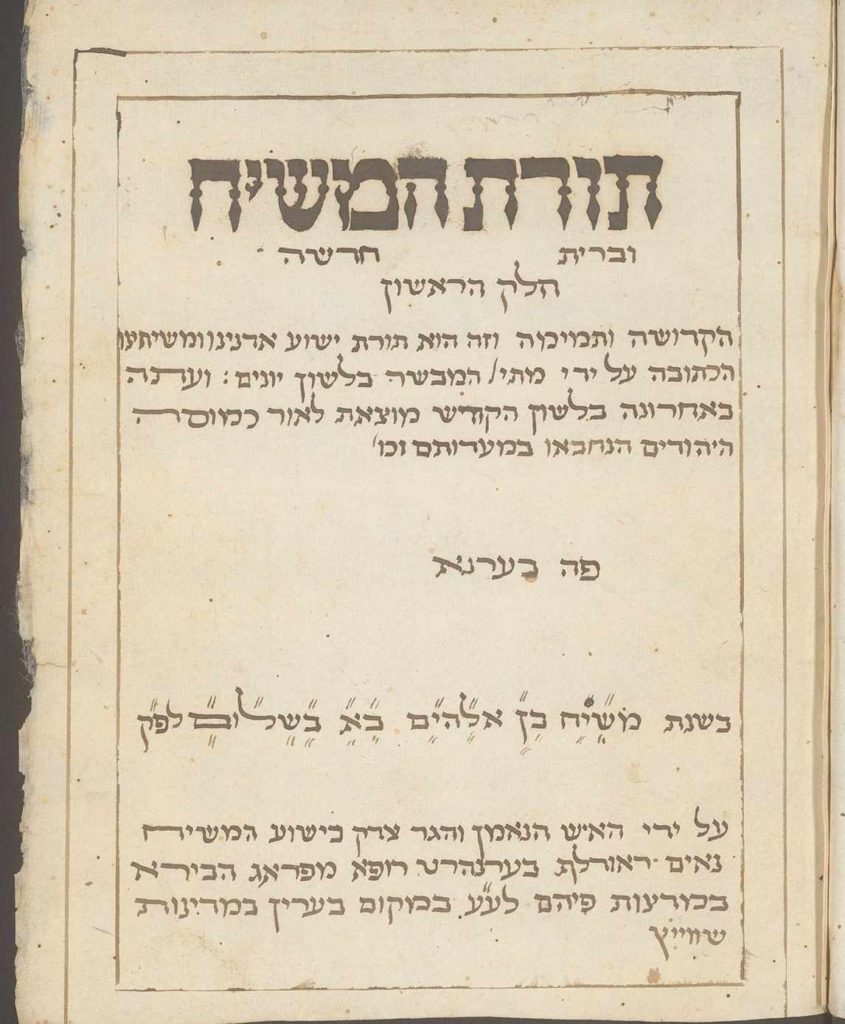
The truth is that the first followers of Yeshua—the Nazarenes—wrote their accounts in the languages they actually spoke: Hebrew and Aramaic. The fingerprints of those Semitic originals remain embedded in the text, hidden beneath the Greek. And history shows us exactly how those originals were pushed aside.


From Jerusalem to Rome

After the last Jewish revolt was crushed in 132 CE, the Roman Empire exiled Jews from Jerusalem. In their place, Rome appointed a Gentile bishop named Markus over the Jerusalem community (Eusebius, Ecclesiastical History 4:5–6). It was the first time the leadership of Yeshua’s movement was torn from its Jewish foundation.

This marked the beginning of a systematic effort to separate Christianity from its roots. Anti-Jewish sentiment became a badge of loyalty to the Empire. The Nazarenes, the original Jewish disciples of Yeshua, were increasingly marginalized and branded as heretics. Epiphanius later catalogued them in his Panarion as if they were apostates (Epiphanius, Panarion 29:9:4).


The Turning Point: Constantine and Nicaea

The real break came in 325 CE. Emperor Constantine, still a pagan sun-worshipper, convened the Council of Nicaea and imposed a new “orthodoxy.” He outlawed Jewish practices (Council of Nicaea, Canon 1; Eusebius, Life of Constantine), replaced biblical feasts with Roman holidays, and formally excluded the Nazarenes from the council.

From that point forward, Jewish followers of Yeshua were erased from the official story. Their writings, in Hebrew and Aramaic, were suppressed. In their place, the Greek versions—already paraphrased and smoothed for a Gentile audience—became the new “originals.”


Erasing the Evidence

To fully Hellenize the faith, it was not enough to reinterpret the Scriptures. The Semitic origins of the New Testament itself had to be buried. The Greek text was treated as though it had always been the original, while the Hebrew and Aramaic manuscripts were ignored, destroyed, or dismissed as “heretical.”

Yet the fingerprints of the Semitic originals could not be completely erased. They survive in the awkward Greek of Revelation, in mistranslations of Hebrew idioms, and in the testimony of early Church Fathers:

  • Papias (c. 150 CE): “Matthew composed the words in the Hebrew dialect, and each translated as he was able” (Eusebius, Ecclesiastical History 3:39).
  • Irenaeus (c. 170 CE): “Matthew also issued a written Gospel among the Hebrews in their own dialect” (Against Heresies 3:1).
  • Jerome (c. 382 CE): “Matthew… first of all evangelists composed a Gospel of Messiah in Judea in the Hebrew language and letters… the Hebrew itself is preserved to this day in the library at Caesarea” (Of Illustrious Men 3).

Why It Matters Today

This isn’t just an academic curiosity. If the New Testament was originally written in Hebrew and Aramaic, then much of Christian tradition is built on a translation of a translation. Meaning has been lost, idioms misunderstood, and theology reshaped through the lens of Greek philosophy rather than Hebraic thought.

Recovering the Semitic original is about more than language. It is about restoring the faith of Yeshua to its authentic Jewish roots—the faith once delivered to the saints, before Rome redefined it.


Conclusion

Constantine buried the Hebrew New Testament under layers of Greek and Roman tradition. But it was never completely lost. The task before us now is to uncover it again—to strip away the veneer of Hellenization and rediscover the words of Messiah and his emissaries in the language they actually spoke.

For those who long to walk in the footsteps of the first disciples, this restoration is not optional. It is essential.

Urgent Appeal – September 16, 2025

Friends,

As you know, NazareneSpace exists to restore the original Hebrew and Aramaic foundations of the New Testament and to proclaim the truth of Nazarene Judaism in a world that has forgotten it. This work takes time, study, and resources—and right now, we are facing a serious need.

We must raise at least $500 by the end of today (Septehttps://nazarenespace.com/blog/donate/mber 16, 2025) to cover bills pending in our account. If this need is not met, it will trigger a chain reaction of returned items and fees that will make our situation even more difficult.

If this ministry has blessed you—if you believe in the importance of recovering the original words of Messiah and his emissaries—please prayerfully consider helping us at this critical moment.

Every gift, large or small, will make a difference today.

Donations can be sent by Paypal to donations@wnae.org or

👉 Click here to donate now

Thank you for standing with us. Together, we are rebuilding the ancient foundations.

The Hebrew and Aramaic Roots of the Apostolic Writings

For nearly two thousand years, most of the world has assumed that the New Testament was written in Greek. That assumption has shaped how generations of believers read the words of Yeshua and His disciples. But what if the text we’ve inherited is not the original, but a translation—sometimes a mistranslation—of something deeper, more ancient, and more authentically Jewish?

Language Shapes Thought

Language is not just a tool for communication. It is the house of thought itself. Hebrew and Aramaic, the daily tongues of first-century Jews, carry within them the rhythm of Torah, the poetry of the prophets, and the logic of the sages. Greek, by contrast, expresses a different worldview—steeped in Hellenistic philosophy, abstraction, and categories foreign to Israel’s way of thinking.

If the Apostolic Writings were first penned in Hebrew and Aramaic, then what we call the “New Testament” is not a rupture with the Hebrew Scriptures but their natural continuation. It is Torah and prophecy flowing forward into fulfillment through the Messiah. (See my book Unveiling the Hebrew and Aramaic Origins of the New Testament)

The Testimony of History

The early Church Fathers themselves admitted that Hebrew and Aramaic versions of the Apostolic Writings circulated among the Nazarenes. Epiphanius records that Jewish believers in the fourth century still had Hebrew copies of John and Acts preserved in a genizah in Tiberias, and they regarded these as authentic, not secondary translations . Jerome also testifies that he had access to a Hebrew copy of Matthew, which the Nazarenes were still using in his day .

If the early believers had truly abandoned Hebrew in favor of Greek in the first century, why would such Hebrew manuscripts still be circulating in the Holy Land centuries later? The survival of these texts is itself evidence of a Semitic origin.

The Fingerprints Beneath the Greek

Even in the Greek New Testament, we find the fingerprints of Hebrew and Aramaic everywhere. The Gospels contain idioms that make little sense in Greek but flow naturally when read in Hebrew or Aramaic. For example, when Matthew and Mark speak of “Simon the leper,” the Greek is awkward—but when reconstructed into Aramaic, the phrase reads as Simon the jar merchant, which makes far more sense in context.

Likewise, the Book of Revelation contains Greek that is notoriously “bad grammar” to the Greek ear. Yet when re-read in Hebrew, the text suddenly becomes smooth and coherent, as if the Greek were simply a too-literal translation of a Hebrew original.

These patterns are not accidents. They are echoes—remnants of the Hebrew and Aramaic foundations that undergird the Apostolic Writings.

What This Reveals About the Nazarene Worldview

The original followers of Yeshua were Jews. Acts 24:5 calls them “the sect of the Nazarenes” . They did not see themselves as founders of a new religion but as faithful Jews who believed Yeshua was the Messiah promised in the Torah and Prophets . (See my book Returning to the Way: The Rebirth of Nazarene Judaism)

They used Hebrew and Aramaic Scriptures , kept the Sabbath, observed the feasts, and tithed to YHWH. Their faith was not Greek philosophy dressed in biblical clothing; it was Israel’s ancient way, lived out in the light of the Messiah.

To recover the Hebrew and Aramaic roots of the Apostolic Writings is to recover that worldview. It is to see the texts not as a departure from Torah, but as its magnification and fulfillment in Yeshua.

A Call to Action

The world has buried the Hebraic foundation of the Apostolic Writings under layers of Greek and Latin tradition. But the restoration has already begun. We are remembering ourselves in the lands of our captivity, as Baruch foretold, and returning to the “way of our fathers” (Baruch 2:30–35) .

Restoring the ancient Nazarene faith requires more than keeping Sabbath and eating clean foods. Torah obedience includes the whole covenant—justice, mercy, faithfulness, and also the tithe of YHWH. Supporting the altar of restoration with our offerings is part of living out that covenant.

Right now, this work faces an urgent need. We must raise at least $932 by the end of the day today to cover a negative balance in our account and prevent a chain reaction of returned items and fees.

If this message resonates with you, please prayerfully consider standing with us.

📌 Donate online: http://nazarenespace.com/blog/donate/
📌 Or send via PayPal: donations@wnae.org

Together, as living stones, we can rebuild the altar of YHWH and prepare the way for the return of our Messiah.

Chag Yeshua and the Amidah: A Lost Festival of Deliverance

More than two thousand years ago, a forgotten miracle of our people was written into history—yet most of Israel no longer remembers it. The book of 3rd Maccabees records a time of terror, prayer, and deliverance when YHWH saved His people from destruction. From this salvation arose a festival called Chag Yeshua—“The Feast of Deliverance.”

This feast was once celebrated annually, but with the removal of 3 Maccabees from the canon, the celebration vanished. Today, as we seek to restore the ancient paths, this festival deserves its place once more on our calendar.


The Story of Deliverance

In 217 BCE, after the Battle of Raphia, Ptolemy IV Philopator of Egypt attempted to enter the Holy of Holies in Jerusalem but was miraculously repelled (3Macc. 1–2). Humiliated, he returned to Egypt and sought revenge on the Jewish people there.

He lowered their political status, forced pagan practices upon them, and slaughtered those who refused (3Macc. 2:25–5:51). It seemed the Jews of Alexandria would be annihilated.

But then, a righteous elder priest named El’azar lifted up his voice in prayer:

“O king, mighty in power, most high, Almighty Elohim, who regulate the whole creation with Your tender mercy, look upon the seed of Avraham, upon the children of the sanctified Ya’akov, Your sanctified inheritance, O Father, now being wrongfully destroyed as strangers in a strange land.”
(3 Maccabees 6:1–3)

YHWH heard. He intervened with power, turned the king’s heart to repentance, and delivered His people (3Macc. 6–7). In response, the Jews established an annual feast called Chag Yeshua (The Feast of Deliverance), to be kept each year on the 12th of Elul.


Parallels to the Amidah

El’azar’s prayer is striking in its resemblance to the opening blessing of the Amidah, known as Avot (“the Fathers”):

“Blessed Are You YHWH, our Elohim and Elohim of our fathers;
Elohim of Avraham, Elohim of Yitzchak, Elohim of Yaacov,
the great and mighty and awesome Elohim, the most high Elohim,
who bestows grace and creates all
and remembers the kindnesses of the fathers
and brings a Redeemer to their children’s children,
for His Name’s sake with love.
O King, helper, Savior, and Shield!
Blessed are You YHWH, Shield of Avraham.”

The echoes are unmistakable. El’azar calls upon the Elohim of the patriarchs, as the Amidah does. He invokes YHWH as King, Mighty, and Merciful. And he pleads for the seed of Avraham to be spared.

When we pray the Amidah today, we are joining in the same cry for deliverance that brought salvation in Alexandria. On Chag Yeshua, we recite this prayer with renewed meaning, remembering that our Elohim does not abandon His people.


Why “Chag Yeshua”?

The Hebrew word for “deliverance” is Yeshua. Thus, the “Feast of Deliverance” can rightly be called the Feast of Yeshua. For us who follow Messiah, this festival shines with prophetic light:

  • The salvation of Israel in Egypt foreshadows the greater salvation of Israel through Messiah Yeshua.
  • The shield and deliverance provided in Alexandria reminds us that Messiah is the Shield and Redeemer of Avraham’s seed.
  • This festival becomes both a memorial of past deliverance and a rehearsal for the greater redemption yet to come.

How to Celebrate Chag Yeshua

3 Maccabees tells us how the ancient Jews kept this festival. We can draw on these traditions in our own observance:

  1. The Banquet of Deliverance – A celebratory meal, more like a thanksgiving feast than a Passover seder. In modern times, a festive barbeque or family dinner fits the spirit. (3Macc. 6:31)
  2. Songs of Praise – They sang “songs of their fathers,” rejoicing in YHWH’s salvation. Songs that declare Him as Savior and Shield are especially fitting. (3Macc. 6:32)
  3. Hebraic Dance – Traditional rejoicing included dance before YHWH. (3Macc. 6:35)
  4. Recounting the Story – Retell the account from 3 Maccabees, so the miracle is never forgotten.

Since the festival falls in late summer (Elul), it naturally lends itself to outdoor gatherings, music, and community celebration.


When Is Chag Yeshua in 2025?

The festival was originally celebrated on the 12th of Elul. In 2025, this corresponds to:

📆 Wednesday, September 3rd (at sunset) through Wednesday, September 10th (at sunset)
🗓️ Elul 12–18, 5785 on the Hebrew calendar

This year, let us restore the forgotten feast of Chag Yeshua to its rightful place and honor the Shield of Avraham who still delivers His people.


A Call to Support the Work

Dear friends and supporters,

As the end of the month approaches, we are facing a critical need. Our rent is due in less than a week, and as of right now, we do not yet have the funds to cover it. If this work has blessed you—if the teachings, translations, or insights shared here have strengthened your walk—please consider helping us in this moment of need.

Every donation, no matter the amount, makes a difference.

🙏 Send a donation via PayPal: donations@wnae.org
🔗 Or donate online: https://nazarenespace.com/blog/donate/

Thank you for standing with us in restoring the ancient paths and proclaiming the Good News of the Kingdom. May Yah bless you richly for your generosity.

With gratitude and shalom,
James Trimm

Rebuilding the Lost Altar: A Prophetic Call for Our Generation

There are moments in history when the Spirit of YHWH stirs hearts, calls forth a remnant, and sets in motion a restoration that has been long foretold. We live in such a time. Across the world, men and women are awakening to the realization that the faith of Yeshua and His first followers was not the religion later called “Christianity,” but a living form of Judaism—the way of the Nazarenes. What was once scattered and nearly erased is now being gathered again. The ancient altar is being rebuilt.

A Prophetic Dream of the Broken Altar

When I was about eighteen years old, not long after coming to believe in Yeshua as the Messiah, I had a dream that I now recognize as prophetic.

In this dream, I stood before the ruins of an ancient stone altar. Its stones were toppled, broken, and scattered, as though enemies had trampled it down long ago. I knelt and began gathering the stones, one by one, carefully setting each in its proper place. When at last I set the final stone, the altar shone with a light brighter than the noonday sun—so radiant that I could not look directly at it. Then I saw shafts of blue light descending from heaven, illuminating the altar with glory.

Behind me stood the Messianic synagogue I was attending at the time. I rushed inside to tell my friends what I had seen. To my dismay, most were indifferent. Only a few were willing to step outside and behold the heavenly light with me.

For years, I did not fully understand what this dream meant. But now, looking back, I realize: the broken altar was the ancient Nazarene faith itself—the original Jewish movement of Yeshua and His disciples, lost and obscured by centuries of distortion. The act of rebuilding represented the restoration of that faith. The blinding light symbolized the revelation of YHWH’s truth shining again, and the blue shafts from heaven were His confirmation that this restoration was His work.

The Maccabean Parallel: Restoring the Altar

This imagery has a powerful biblical precedent. In the days of the Maccabees, the altar of YHWH in the Temple had been desecrated under the reign of Antiochus IV. The Jewish people, led by Judah Maccabee, reclaimed the Temple and sought to rededicate it. But they faced a dilemma: what to do with the defiled altar?

The book of 1 Maccabees tells us that the Maccabees dismantled the polluted altar stone by stone and set the pieces aside “until a prophet should come to tell them what to do with them” (1 Maccabees 4:44–46). In its place they built a new altar, pure and undefiled, upon which they could once again offer sacrifices to YHWH.

This historical act of dismantling and rebuilding provides a vivid metaphor for our own time. The ancient Nazarene movement—the true altar of YHWH—was broken and scattered after the first century, when what later became Christianity rejected the Torah, shifted the Sabbath to Sunday, and distanced itself from Israel. The Nazarenes, however, never abandoned the Torah; they remained within Judaism, recognizing Yeshua as the Messiah. Just as the Maccabees set aside the broken stones of the old altar, awaiting a time of prophetic restoration, so the truths of Nazarene Judaism have been preserved, waiting for this very age.

Baruch’s Vision: Remembering Ourselves

The prophet Baruch foresaw a time when the children of Israel would awaken from exile and remember who they truly were:

“But in the land of their captivities they shall remember themselves.
And shall know that I am YHWH their Elohim:
for I will give them a heart, and ears to hear:
And they shall praise Me in the land of their captivity, and think upon My name,
And return from their stiff neck, and from their wicked deeds:
for they shall remember the way of their fathers, which sinned before YHWH.”
(Baruch 2:30–35)

This is not merely a poetic hope—it is prophecy. Today, across the nations where the House of Israel was scattered, men and women are awakening to their identity. They are remembering the Torah, the covenant, and Yeshua the Messiah. The very act of “remembering themselves” is part of the prophetic rebuilding of the altar.

The Meaning of the Altar Today

In the days of Moses, the altar was the place where heaven and earth met. Sacrifices ascended in smoke, and YHWH’s presence sanctified the camp. For the prophets, the altar symbolized Israel’s covenantal faithfulness. When Israel strayed into idolatry, the altar was desecrated. When Israel repented, the altar was restored.

The prophet Jeremiah called Israel to return to the ancient way:

“Thus says YHWH, ‘Stand by the ways and see and ask for the ancient paths, where the good way is, and walk in it: and you shall find rest for your souls….’” (Jeremiah 6:16)

Today, the rebuilding of the altar is not just about laying new stones in Jerusalem. Rather, it is about restoring the faith of the Nazarenes, that Torah-faithful Jewish movement which embraced Yeshua as Messiah. It is about reclaiming the identity of being both fully Jewish and fully devoted to Him, living as “the Assembly of Israel” (Ekklesia of Israel) rather than as a Greco-Roman “Church”.

A Call to Our Generation

The altar is being rebuilt—but not everyone sees it. Just as in my dream, many are content to stay inside, unmoved, while only a few step outside to witness the light. Yet YHWH is moving in our day. The restoration of Ephraim—the lost tribes scattered among the nations—is already underway. And Paul tells us that something even greater is coming:

“If their stumbling became riches for the world, and their loss riches for the Goyim, how much greater therefore, their fullness? … For if their rejection was reconciliation for the world, what will their acceptance be but life from the dead?” (Romans 11:12, 15, NHRV)

The final stage is before us: the restoration of Judah, the rebuilding of the Nazarene movement, and the uniting of the two houses of Israel into one redeemed people.

Will You Step Outside?

This restoration is not the work of one man or one moment. It is a movement that spans generations. The call is going out even now, in the “land of our captivities,” for the people of YHWH to remember themselves and return to the covenant.

The altar that was broken is being rebuilt. The light is shining again, just as it did in that dream of my youth. The only question that remains is the same one I asked then:

Will you step outside and see it? Will you take your place in rebuilding the altar of Nazarene Judaism, preparing the way for the return of Messiah?

The time is not someday in the distant future. The time is now.

Partner in the Work of Restoration

NazareneSpace and this teaching ministry exist to rebuild the ancient altar of Nazarene Judaism—to restore the original faith of Yeshua and His disciples for our generation. This work is made possible by the faithful prayers and support of those who see the light and choose to step outside and take part in the restoration.

Torah observance is not only about eating clean foods or guarding the Sabbath—it also includes honoring YHWH with the tithe. As the prophet reminds us:

“Bring all the tithes into the storehouse, that there may be food in My house, and prove Me now in this,” says YHWH of Hosts, “if I will not open for you the windows of heaven, and pour you out a blessing, that there shall not be room enough to receive it.” (Malachi 3:10)

When you support this work, you are not only giving to a ministry—you are walking in obedience to YHWH’s command concerning His tithe.

You can send your tithes and offerings securely in either of two ways:

📌 Online: https://nazarenespace.com/blog/donate/
📌 PayPal: donations@wnae.org

Every contribution, large or small, helps us keep this work alive and growing.

Together, we are rebuilding the altar.

Take Hold – Understanding Zech. 8:23

“Thus says YHWH Tzva’ot: In those days it shall come to pass, that ten men shall take hold, out of all the languages of the nations, shall even take hold of the skirt (KANAF), of him that is a Jew, saying, We will go with you, for we have heard that Elohim is with you.”
Zechariah 8:23 (HRV)

The Plural “You” That Changes Everything

English blurs a key feature of the Hebrew text. In Zech. 8:23 the word “you” is plural. The nations say: “Let us go with you [plural], for we have heard that Elohim is with you [plural].”
This cannot refer merely to a single Jew (not even the Messiah); it refers to the Jewish people, the House of Judah. The prophecy is Ephraim and the nations taking hold of Judah because Elohim is with Judah.

Taking Hold of the Kanaf: Torah in the Hand

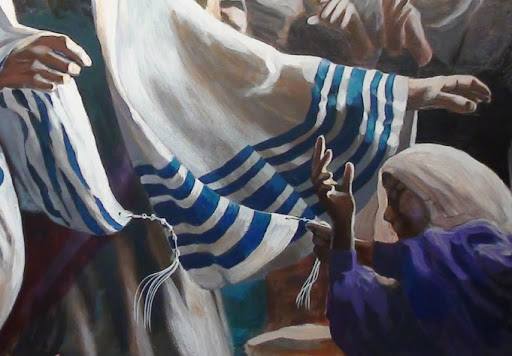
The “skirt” is קָנָף (kanaf)—the corner/edge of the garment. That’s exactly where YHWH commanded tzitziyot (fringes) to be attached:

Numbers 15:37–41 (HRV)
“Speak unto the children of Yisra’el … that they make … fringes (tzitziyot) in the corners (kanafot) of their garments … and it shall be unto you for a fringe, that you may look upon it, and remember all the commandments of YHWH, and do them….”

To “take hold of the kanaf of a Jew” is to seize hold of the Torah-sign—the covenantal marker entrusted to Judah.

Ephraimites Taking Hold

So what is Ephraim’s prophetic hope? A separate last-days restoration apart from Judah—or a return to be joined to Judah?

Ezekiel 37: Ephraim Put With Judah

Ezekiel’s “two sticks” is the clearest picture of reunion:

“I will take the stick of Joseph, which is in the hand of Ephraim, and the tribes of Israel his fellows, and put them with the stick of Judah, and make them one stick … and they shall be one in My hand.”
Ezek. 37:19–20

Note the direction and ordering:

  • YHWH takes Ephraim’s stick,
  • puts it with Judah’s stick,
  • and makes them one in His hand.

This is not two equal halves meeting in the middle. Ephraim is brought over and put with Judah. The unity is real; the ordering is covenantally Judah-ward.

Transition to Romans 11: etz = stick / tree

The Hebrew word עֵץ (etz) means “stick” or “tree.”
Ezekiel’s two etz (two sticks) therefore map naturally to Paul’s two etz (two trees) in Romans 11. The prophetic images are the same picture in two registers:

  • Ezekiel 37: two etz (sticks) → one in YHWH’s hand.
  • Romans 11: two etz (trees)—cultivated and wild—with the wild branches grafted into the cultivated tree.

Hosea → Romans 9–11: Who Are “Jews” and “Gentiles”?

Paul sets up Romans 11 by quoting Hosea:

  • Rom. 9:25–26 cites Hos. 2:25(23); 2:1 (1:10)—the children of Israel who were “not My people” becoming “My people.”
  • In Hosea’s context, “children of Israel” (Ephraim) are contrasted with “children of Judah” (Hos. 2:2 [1:11]).

If Paul is reading Hosea in context, then his contrast in Rom. 9:24 (“Jews and Gentiles”) primarily tracks Judah and Ephraim among the nations—not paganism as a rival faith.

Romans 11: Two Trees, One Root

With Hosea’s categories in hand, Romans 11 snaps into focus:

  • The cultivated olive tree = Judah.
  • The wild olive = Ephraim, scattered in the nations.

Ephraim’s wild branches are broken off their feral stock and grafted into Judah’s cultivated tree, to be nourished by Judah’s root—and warned not to boast against the natural branches:

“Do not boast against the [natural] branches… you are not bearing the root, but the root bears you.”
Rom. 11:18 (HRV)

This mirrors Ezekiel’s movement: Ephraim is put with Judah; Ephraim is grafted into Judah. The etz (stick) of Ephraim is joined to Judah’s etz (tree)—same Hebrew word, same prophetic logic.

“Salvation Is of the Jews”: Yeshua and an Ephraimite

In John 4, the Samaritan woman identifies with “our father Jacob” (Jn. 4:12)—an Ephraimite claim Yeshua does not challenge. He does, however, correct her worship:

“You worship what you do not know; we worship what we know, because salvation is of the Jews. But the hour is coming, and now is, when the true worshipers shall worship the Father in spirit and truth…”
Jn. 4:22–23 (HRV)

Ephraim’s path is not a rival mountain. It is taking hold of Judah, through whom salvation and the oracles were entrusted (cf. Rom. 3:2).

Judah’s Fullness: Life from the Dead

Paul presses the hope further:

“If their stumbling became riches for the world… how much more, therefore, their fullness?”
Rom. 11:12 (HRV)

“If you… were grafted into the good olive tree, how much more they, if they be grafted into their own olive tree?”
Rom. 11:24 (HRV)

Judah’s restoration is “life from the dead” (Rom. 11:15). Isaiah mapped both the blindness and its cure:

“For YHWH has poured out upon you the spirit of deep sleep, and has closed your eyes…” — Isa. 29:10 (HRV)
“And in that day shall the deaf hear the words of a book, and the eyes of the blind shall see…” — Isa. 29:18 (HRV)

The book opens, the root nourishes, the natural branches awaken—on YHWH’s timetable, by YHWH’s hand.

Read Zechariah 8:23 Straight—With Ezekiel and Paul in View

“Ten men from all languages of the nations shall take hold—they shall take hold of the kanaf of a Jew—saying, ‘Let us go with you [pl.], for we have heard that Elohim is with you [pl.].’”

  • Ten men” → the Ten Tribes (Ephraim) in dispersion.
  • “From all languages” → Ephraim assimilated among the nations.
  • “Take hold of the kanaf” → seize the tzitzit, the Torah-sign Judah bears.
  • You [pl.]” → Judah, the House of Judah—not a solitary figure.

Set alongside Ezekiel 37 and Romans 11, the line reads plainly:

“Let us [Ephraim] go with you [Judah], for we [Ephraim] have heard that YHWH is with you [Judah].”

Ephraim is not the root, trunk, or standard. Ephraim is taken, put with, and grafted into Judah’s living covenantal tree, to be fed by the root and to walk in the Torah Judah bears.

Are You Boasting—or Taking Hold?

The last-days picture is consistent:

  • Ephraim and the nations awaken to the reality that Elohim is with Judah.
  • They take hold of Judah’s kanafTorah—and are grafted into Judah’s cultivated tree.
  • They do not boast against the natural branches, and they do not demand that Judah take hold of them.

So test yourself:

  • Are you expecting Judah to be grafted into your system?
  • Or are you humbling yourself to take hold of Judah and be fed by the root of the Jewish olive tree?

The sticks are being joined—and the branches are being grafted—exactly in the order the prophets gave. The faithful response is simple and hard: take hold.

Support NazareneSpace

Friends, our community space makes this work possible—but our rent is due today and we must raise at least $200 to cover it. If the teachings and resources we share have blessed you, would you prayerfully consider supporting us?

You can send a gift securely via PayPal to donations@wnae.org or give online here: nazarenespace.com/blog/donate

Every contribution, no matter the size, helps us keep this work going. Thank you for standing with us in restoring the ancient faith of the Nazarenes!