How Christianity has Obscured the Identity of Messiah

How Christianity has Obscured the Identity of Messiah
By
James Scott Trimm

In the Zohar we read of Isaiah 53:13:

R. Simeon further discoursed on the text: Behold, my servant shall prosper, he shall be exalted and lifted up, and shall be very high (Is. 52:13). ‘Happy is the portion of the righteous’, he said, ‘to whom the Holy One reveals the ways of the Torah that they may walk in them. This verse contains an esoteric meaning. When God created the world, He made the moon, and made her small, for she possesses no light of her own, but because she accepted her diminution she receives reflected light from the sun and from the other superior luminaries.
(Zohar 1:181a)

Now to fully understand Rabbi Simeon’s meaning here, we must look to another passage in the Zohar:

It is strange that the Messiah should be called “poor” [in Zech. 9:9]. R. Simeon explained that it is because he has nothing of his own, and he is compared to the holy moon above, which has no light save from the sun. This Messiah will have dominion and will be established in his place. Below he is “poor”, because he is of the side of the moon, and above he is poor, being a “mirror which does not radiate”, “the bread of poverty”. Yet withal he “rides upon an ass and upon a colt”, to overthrow the strength of the Gentiles; and God will keep him firm.
(Zohar 1:238a)

So we can see plainly that Rabbi Simeon in the Zohar is identifying the servant of Isaiah 52:13 as the Messiah.

Now as we continue to read our initial passage of the Zohar (1:181a) the passage immediately continues with:

Now, as long as the Temple existed, Israel were assiduous in bringing offerings, which together with all the other services performed by the priests, Levites, and Israelites had for their object to weave bonds of union and to cause luminaries to radiate.
(Zohar 1:181a)

This brings us to another passage in which the Zohar alludes to the “servant” of Isaiah 52 and 53 saying:

In the Garden of Eden there is a hall that is called the
“hall of  the afflicted.” Now it is into this hall that
the Messiah goes and summons all the afflictions and pains
and sufferings of Israel to come upon him.  And so they all
come upon him. And had he not eased the children of Israel
of their sorrow, and taken their burden upon himself, there
would be none who could endure the suffering of Israel
in penalty of neglecting the Torah. Thus it is written:
“Surely our diseases he did bear and our pains he carried.”
(Is. 53:5) As long as the children of Israel dwelt in the
Holy Land, they averted all afflictions and sufferings from
the world by the service of the sanctuary and by sacrifice.
But now it is the Messiah who is averting them from the
habitants of the world.
(Zohar 2:212a)

Our initial passage of Zohar (1:181a-b) continues:

But after the Temple was destroyed there was a darkening of the lights, the moon ceased to receive light from the sun, the latter having withdrawn himself from her, so that not a day passes but is full of grievous distress and afflictions. The time, however, will come for the moon to resume her primordial light, and in allusion to this it is written: “Behold, my servant will prosper.” That is to say, there will be a stirring in the upper realms as of one who catches a sweet odour and stands alert. “He shall be exalted”, from the side of the most exalted luminaries; “and lifted up”, from the side of Abraham; “and shall be high”, from the side of Isaac; “very”, from the side of Jacob. At that time, then, the Holy One will cause a stirring on high with the object of enabling the moon to shine with her full splendour, as we read: “Moreover the light of the moon shall be as the light of the sun, and the light of the sun shall be sevenfold, as the light of the seven days” (Ibid. XXX, 26). There will thus be added to the moon an exalted spirit whereby all the dead that are in the dust will be awakened. This is the esoteric meaning of “my servant”, viz. the one that has in his hand the key of his Master.
(Zohar 1:181a-181b)

The Zohar tells us that the revealing of Messiah is like the revealing of the moon.  Initially the moon cannot be seen, however in time the moon is gradually restored to its full light.  So it is with Messiah,  and when the Messiah is fully revealed, the resurrection will take place.

We read in Matthew:

38 Behold, your house is forsaken; to you desolate.
39 And I tell you, that you will not see Me here after,
until you say,
Blessed is He that comes in the Name of YHWH!
(Matt. 23:38-39)

Of course this is quoting Ps. 118:26:

“Blessed be he that comes in the Name of YHWH; we bless you out of the House of YHWH.” (Ps. 118:26).

Above this is the phrase “the stone the builders rejected is become the chief corner-stone” (Ps. 118:22)

Now we read in the Zohar concerning the stone that the builders rejected:

David, indeed, was king in this world and will be king in the time to come; hence “the stone the builders rejected is become the chief corner-stone”. For, when the sun turns away his face from the moon, and does not shine upon her, she has no light whatever and so does not shine, but is poverty-stricken and dark on all sides; but when the sun turns towards her and radiates his light upon her, then her face is illumined and she adorns herself for him as a woman for a man. She thus is then invested with the dominion of the world. So David adorned himself after this very manner. Now he would appear poor and dejected, but then again he would be revelling in riches. Hence David’s declaration, “I am small and despised, yet have I not forgotten thy precepts.” It behoves, indeed, every man to follow this example and to humble himself in every respect so as to become a vessel in which the Holy One, blessed be He, may find delight. This lesson has also been expounded in connection with the phrase, “with him also that is of a contrite and humble spirit’ (Isa. LVII, 15).’
(Zohar 2:232b)

The Zohar says that when this stone is rejected “the sun turns away his face from the moon, and does not shine upon her.”

Earlier the Zohar says:

So it says: AND HIS HAND HAD HOLD ON ESAU’S HEEL , i.e he put his hand on Esau’s heel in order thereby to force him down. According to another explanation, the words “and his hand had hold” imply that he could not escape him entirely, but his hand was still clinging to his brother’s heel. Esoterically speaking, the moon was obscured through the heel of Esau; hence it was necessary to deal with him cunningly, so as to thrust him downwards and make him adhere to the region assigned to him.’
(Zohar 1:138a)

The moon is obscured “through the heel of Esau”, and therefore the stone is rejected “through the heel of Esau” because the sun “turns away his face”.

So what does this mean?

It points us to Gen. 25:26 which reads:

And after that, came forth his brother. And his hand had hold on Esav’s heel, and his name was called Ya’akov. And Yitz’chak was threescore years old when she bore them.

If we take the first letter of each word (a process called Notarikon) starting with the name Ya’akov (Jacob) and ending with Esav (Esau) going backwards we spell the name YESHUA, and if we continue through the next two words we read “Yeshua comes.”

So the moon is obscured in shining the light of Messiah by the heal of Esau.

Now the last letter in YESHUA in the Hebrew is an AYIN and that is the initial letter of the name ESAU in “Esau’s heel”. So if the heal of “Esau” is taken from YESHUA we have “YESHU”.

“Yeshu” is a name used in Rabbinic Judaism which refers to the anathema Rabbinic Judaism associates with Yeshua.

For Rabbinic Jews is is a acronym for a curse on the name of Yeshua meaning “may the name be blotted out forever”.

But Yeshua said:

38 Behold, your house is forsaken; to you desolate.
39 And I tell you, that you will not see Me here after,
until you say,
Blessed is He that comes in the Name of YHWH!
(Matt. 23:38-39)

They will say “Blessed is He that comes in the Name of YHWH!” (Ps. 118:26) when they accept the “stone that the builder rejected” (Ps. 118:22). This happens when the AYIN is restored to the name YESHUA, the reversal of the anathema, thus the Messiah was obscured by the “heel of Esau”. And when the “heel of Esau” no longer obscures the Messiah and YESHU is restored to YESHUA, then we can clearly see that “Yeshua comes”!

Our original Zohar passage continues:

So, too, in the verse: “And Abraham said unto his servant, etc.” (Gen. 24:2), the servant is an allusion to the moon as already explained. Also, the servant is identical with Metatron, who is the servant and messenger of his Master, and who was, as we read further, the elder of his house, the same who is alluded to in the text: “I have been young, and now am old” (Ps. 37:25). “That ruled over all that he had”; this applies to the same Metatron by reason of his displaying the three colours, green, white, and red. “Put, I pray thee, thy hand under my thigh”; this is symbolic of the foundation of the world, for this servant was destined to bring to life again the dwellers in the dust, and to be made the messenger by the spirit from on high to restore the spirits and souls to their places, to the bodies that were decomposed underneath the dust.
(Zohar 1:181b)

The Zohar also identifies the Metatron as the “Middle Pillar”

The Middle Pillar [of the Godhead] is Metatron,
Who has accomplished peace above,
according to the glorious state there.
(Zohar 3:227)

And according to the Zohar the Middle Pillar is the Son of Yah:

Better is a neighbor that is near, than a brother far off.
This neighbor is the Middle Pillar in the Godhead,
which is the Son of Yah.
(Zohar 2:115b)

And what is the Middle Pillar?  The Zohar says:

Concerning this, too, it is written: “Let there be light, and there was light” (Gen. I, 3). Why, it may be asked, was it necessary to repeat the word “light” in this verse? The answer is that the first “light” refers to the primordial light which is of the Right Hand, and is destined for the “end of days”; while the second “light” refers to the Left Hand, which issues from the Right. The next words, “And God saw the light that it was good” (Gen. 1:4), refer to the pillar which, standing midway between them, unites both sides, and therefore when the unity of the three, right, left, and middle, was complete, “it was good”, since there could be no completion until the third had appeared to remove the strife between Right and Left, as it is written, “And Elohim separated between the light and between the darkness” (Ibid.).
(Zohar 2:167a)

And:

This is the Middle Pillar: Ki Tov (that it was good) threw light above and below and on all other sides, in virtue of YHWH, the name which embraces all sides.
(Zohar 1:16b)
The Midrash Rabba clearly identifies Esau with Rome.

AND ISAAC… ANSWERED AND SAID… BEHOLD, OF THE FAT PLACES OF THE EARTH SHALL BE THY DWELLING (XXVII, 39): this refers to Italy.
(Midrash Rabbah LXVII:6)

AND ESAU HATED JACOB (XXVII, 41). R. Leazar b. R. Jose said: He was filled with hatred, hostility, and vindictiveness toward him [Jacob], so that to this very day one speaks of the senatores [enemies] of Rome.’
(Midrash Rabbah LXVII:8)

This sheds light on the words of 2Esdras:

7 Then answered I and said, What shall be the parting asunder of the times? or when shall be the end of the first, and the beginning of it that followeth?
8 And he said unto me, From Abraham unto Isaac, when Jacob and Esau were born of him, Jacob’s hand held first the heel of Esau.
9 For Esau is the end of the world, and Jacob is the beginning of it that followeth.
10 The hand of man is betwixt the heel and the hand: other question, Esdras, ask thou not.
(2Esdras 6:7-10)

So it is Rome which has obscured the identity of Messiah from the Jewish people.  Christianity has recast the Messiah as a Torahless apostate from Judaism who came to free us from the bondage of the law, and to create a new non-Jewish religion, filled with pagan customs and practices, called “Christianity” and of course Rabbinic Judaism has rightly rejected this version of Messiah.  The Torah (Deut. 13) would require us to reject such a Messiah as a false prophet.

But the time has come to remove the heel of Esau and reveal to the true Messiah to the Jewish people and this ministry is uniquely qualified for this great work.  I hope you will partner with us and support us in this monumental task.

We need your help today!

I need to pick up medication for my wife which is $268 (our cost, after insurance). Funds are very low, several bills will be hitting our account this week! If you can help, now is the time!

I want to thank all of you supporting this work. I literally could not do it without you!

This work takes hours of my time. As many of you know, my wife is very ill, and I spend most of my time at home as her caretaker. So I am in a position to dedicate many hours to this important work that I have been directed to do.

But I also realize that it is not the activity of James Trimm alone who is responsible to do this work, it is all of us together who are charged with the responsibility of accomplishing this work. I very much look on the efforts of this restoration work as a cooperative one with each one of you. We are all joint heirs with Messiah and should always be about our Father’s business. I am honored to be able to be partnered with truth seekers as this restoration of Scripture moves forward in fulfillment of prophecy.
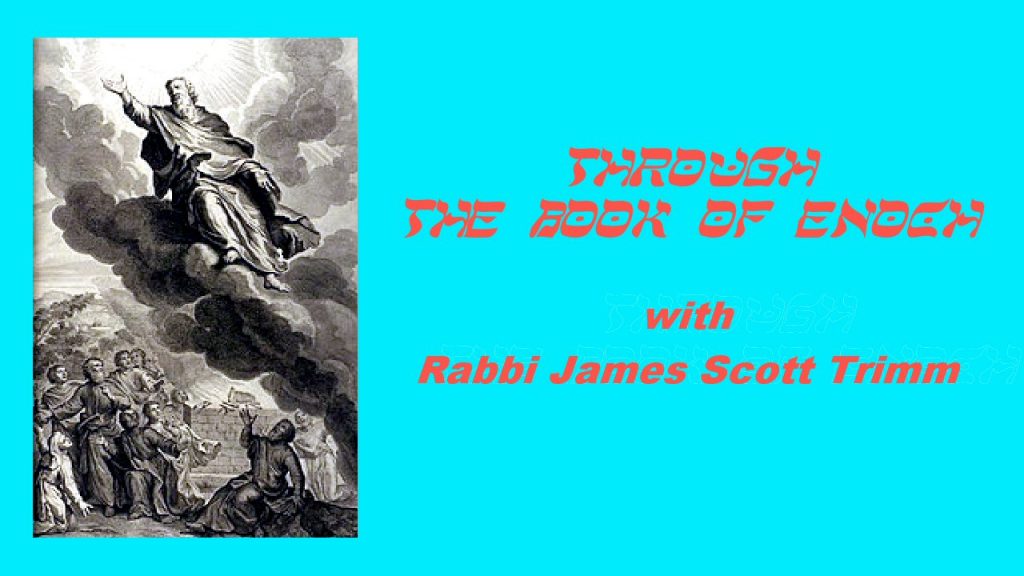
Donations can be sent by Paypal to donations@wnae.org or by Zelle or Go Fund Me

or click here to donate by Zelle or Go Fund Me


Through the Book of Enoch Lesson 12

Lesson 12 Handouts

We need your help today! Funds are very low, several bills will be hitting our account this week! If you can help, now is the time!

I want to thank all of you supporting this work. I literally could not do it without you!

This work takes hours of my time. As many of you know, my wife is very ill, and I spend most of my time at home as her caretaker. I work at a desk less than six feet from her bed. So I am in a position to dedicate many hours to this important work that I have been directed to do.

But I also realize that it is not the activity of James Trimm alone who is responsible to do this work, it is all of us together who are charged with the responsibility of accomplishing this work. I very much look on the efforts of this restoration work as a cooperative one with each one of you. We are all joint heirs with Messiah and should always be about our Father’s business. I am honored to be able to be partnered with truth seekers as this restoration of Scripture moves forward in fulfillment of prophecy.
Donations can be sent by Paypal to donations@wnae.org.

or click here

The Melchizedek Document (11Q13) Unveiled

The following is a commentary on Leviticus 25 found in cave 11 of the Dead Sea Scrolls. It could have written by a Nazarene, except for the fact that it predates the birth of Yeshua.

The document is very interesting as it speaks of a Messiah who it identifies as “EL” and “ELOHIM”. It also quotes Isaiah 61:2 substituting “Melchizadek” for YHWH.

This Melchizadek figure “shall atone for all the Sons of Light” thus “releasing them from the debt of all their sins” in a fulfillment of the true meaning of Yom Kippur and “establish a righteous kingdom”. This will be the fulfillment of the “Salvation” (Hebrew: Yeshua) proclaimed from the mountains in Isaiah 52:7 (which in context would identify this Melchizadek with the servant of Isaiah 53. This figure is then identified with the Messiah who is “cut off” in Daniel 9:26. This makes the blocks of seven years in Daniel 9:24-27 to tie in with the “year of favor” of Isaiah 61:1-3 and thus as the ultimate fulfillment with Lev. 25:13 as a fulfillment of the Day of Atonement. Finally this connects to a prophetic fulfillment of the blowing of the trumpet in Lev. 25:9.

And now, without further adue, The Melchizadek Document:

The Melchizedek Document (11Q13)
Translated by James Scott Trimm

And concerning what Scripture says:

“In this year of Jubilee you shall return,
everyone of you, to your property”
(Lev. 25:13)

And what is also written:

“And this is the manner of the remission; every creditor shall remit the claim that is held against a neighbor, not exacting it of a neighbor who is a member of the community, because Elohim’s remission has been proclaimed”
(Deut.15:2)

The interpretation is that it applies to the Last Days and concerns the captives, just as Isaiah said:

“To proclaim the Jubilee to the captives”
(Isa. 61:1)

(…) just as (…) and from the inheritance of Melchizedek, for (… Melchizedek) , who will return them to what is rightfully theirs. He will proclaim to them the Jubilee, thereby releasing them from the debt of all their sins. He shall proclaim this decree in the first week of the jubilee period that follows nine jubilee periods.

Then the “Day of Atonement” shall follow after the tenth jubilee period, when he shall atone for all the Sons of Light, and the people who are allotted to Melchizedek. (…) upon them (…) For this is the time decreed for the “Year of Melchizedek’s favor“, and by his might he will judge Elohim’s holy ones and so establish a righteous kingdom, …as it is written about him [Melchizedek] in the Songs of David:

“Elohim has taken his place in the council of EL;
in the midst of the ELOHIM he holds judgment”
(Ps. 82:1)

Scripture also says about him [Melchizedek]:

“Over it take your seat in the highest heaven;
EL will judge the peoples”
(Ps. 7:7-8)

Concerning what scripture says:

“How long will you judge unjustly,
and show partiality with the wicked?
Selah”
(Ps. 82;2)

The interpretation applies to Belial and the spirits predestined to him, because all of them have rebelled, turning from Elohim’s precepts and so becoming utterly wicked. Therefore Melchizedek will thoroughly prosecute the vengeance required by Elohim’s statutes. Also, he will deliver all the captives from the power of Belial, and from the power of all the spirits destined to him. Allied with him will be all the “righteous Elohim” (Isa. 61;3).

(The …) is that whi(ch …all) the Elohim. The visitation is the Day of Salvation that He has decreed through Isaiah the prophet concerning all the captives, inasmuch as Scripture says:

“How beautiful upon the mountains are the feet of the messenger who announces peace, who brings good news, who announces salvation, who says to Zion “Your Elohim reigns”.
(Isa. 52:7)

This scriptures interpretation: “the mountains” are the prophets, they who were sent to proclaim Elohim’s truth and to prophesy to all Israel. “The messengers” is the Anointed (Messiah) of the spirit, of whom Daniel spoke:
“After the sixty-two weeks, a Messiah shall be cut off” (Dan. 9;26)

The “messenger who brings good news, who announces Salvation” is the one of whom it is written:

“to proclaim the year of the YHWH’s favor,
the day of the vengeance of our Elohim;
to comfort all who mourn”
(Isa. 61;2)

This scripture’s interpretation: he is to instruct them about all the periods of history for eternity (… and in the statutes) of the truth. (…) (…. dominion) that passes from Belial and returns to the Sons of Light (….) (…) by the judgment of Elohim, just as t is written concerning him: “who says to Zion “Your Elohim reigns” (Isa. 52;7)

“Zion” is the congregation of all the sons of righteousness, who uphold the covenant and turn from walking in the way of the people. “Your Elohim” is Melchizedek, who will deliver them from the power of Belial.

Concerning what scripture says:

“Then you shall have the trumpet sounded loud;
in the seventh month . . . “
(Lev. 25;9)

— the rest of the document has not survived–

Our Rent is past due and we are now at the end of our grace period, and we do not have it! We need your help today!

I want to thank all of you supporting this work. I literally could not do it without you!

This work takes hours of my time. As many of you know, my wife is very ill, and I spend most of my time at home as her caretaker. So I am in a position to dedicate many hours to this important work that I have been directed to do.

But I also realize that it is not the activity of James Trimm alone who is responsible to do this work, it is all of us together who are charged with the responsibility of accomplishing this work. I very much look on the efforts of this restoration work as a cooperative one with each one of you. We are all joint heirs with Messiah and should always be about our Father’s business. I am honored to be able to be partnered with truth seekers as this restoration of Scripture moves forward in fulfillment of prophecy.

Donations can be sent by Paypal to donations@wnae.org or by Zelle or Go Fund Me.

Click HERE to donate

The Book of Enoch- Key to Jude and 2nd Kefa

The Book of Enoch- Key to Jude and 2nd Kefa
By
James Scott Trimm


The Book of Y’hudah (Jude) not only quotes the Book of Enoch (Jude 1:14-15) it is also a sort of short commentary on the Book of Enoch, with almost every verse referencing the Enoch material.  This makes the Book of Enoch an invaluable source in understanding the Book of Y’hudah, and vice-versa.

Moreover much of the Book of 2nd Kefa (2nd Peter) is a commentary on the Book of  Y’hudah.  We know Kefa is commenting on Y’hudah and not the other way around, because Kefa often generalizes information that is more specific in Y’hudah.  Since Kefa is commenting on Y’hudah, he is also indirectly commenting on the Book of Enoch, and so his book helps us understand both Y’hudah directly, and Enoch indirectly (and the other books help us understand 2nd Kefa as well.

So lets go you line by line through the Book of Y’hudah using 2nd Kefa and the Book of Enoch and related sources to help us better understand what Y’hudah is saying (and what the Book of Enoch is saying as well).

Y’hudah opens with:

1 Y’hudah, a servant of Yeshua the Messiah, and brother of Ya’akov: to those who are called; Set-Apart by Eloah the Father, and preserved in Yeshua the Messiah,
2 Mercy, shalom, and love, be multiplied to you.
3 Beloved, while I was very diligent to write to you, concerning our common salvation, I found it necessary to write to you, exhorting that you should earnestly contend for the Trust, which was once for all delivered to the Set-Apart-Ones.
4 For certain men have crept in unnoticed: who long ago were marked out for this condemnation; wicked men, who turn the grace of our Eloah into perversion, and deny the only Master and Adon, Yeshua the Messiah.
5 But I want to remind you, though you once knew this: that YHWH, having saved the people out of the land of Egypt, afterward destroyed those, who did not believe.
(Jude 1:1-5)

And Kefa comments on these verses saying:

1 But there were also false prophets among the people, even as there will be, false teachers among you–who will secretly bring in destructive sects–even denying the Adon who redeemed them, and bring on themselves swift destruction.
2 And many will follow their destructive ways: because of whom, the Way of Truth will be blasphemed.
3 And by covetousness, they will exploit you with deceptive words; whose judgment for a long time has not been idle, and their destruction does not slumber.
(2Kefa 2:1-3)

Kefa understands the “certain men” of Y’hudah to be “false prophets” who are like false prophets of old.  The subject of false prophets arises for Kefa from2Kafa 1:19-21.

19 We also have the prophetic Word made more sure, which you do well to heed as a light that shines in a dark place, until the day dawns and the morning star rises in your hearts.
20 Knowing this first: that no prophecy of Scripture is of any private, interpretation,
21 For prophecy never came by the will of man: but Set-Apart men of Eloah, spoke as they were moved by the Ruach HaKodesh.
(2Kefa 1:19-21)

As we will see as we continue, Kefa is talking about the prophets in general, ane the prophet Enoch in specific.  Y’hudah says that these false prophets “turn the grace if our Eloah into perversion”, Kefa says that they “bring in destructive sects” and that because of these men “the way of truth will be blashphemed”.  The way of truth is the way of Torah.  The Tanak tells us that the Torah is truth (Ps. 119:142, 151).  These false teachers will create sects that turn grace into perversion and blaspheme against the way of Torah.

Y’hudah continues:

6 And the angels who did not keep their first estate, but left their own habitation: He
has reserved in everlasting chains under darkness, for the judgment of the great day;
(Jude 1:6)

Kefa comments on this verse as follows:

4 For if Eloah did not spare the angels who sinned, but cast them down to takh’ti, and delivered them into chains of darkness to be reserved for judgment,
5 And, did not spare the ancient world but saved Noach, one of eight people, a proclaimer of righteousness, bringing in the flood on the world of the wicked,
(2Kefa 2:4-5)

Kefa tells us only that the angels in question “sinned” however Jude says more specifically that they “did not keep their first estate, but left their own habitation”.  Both 2Kefa and Jude (as well as 3Maccabees 2:4-5) immediately follow by paralleling their sin to that of S’dom and Amora “in similar manner having given themselves over to sexual immorality” (Jude 1:7).  Thus making it clear that the angels sin was sexual.  This refers back to the Book of Enoch:

1 And it came to pass when the children of men had multiplied that in those days were born unto them beautiful and comely daughters.  
2 And the angels, the children of the heaven, saw and lusted after them, and said to one another: ‘Come, let us choose us wives from among the children of men and beget us children.’  
3 And Shemikhazah, who was their leader, said unto them: ‘I fear you will not indeed agree to do this deed, and I alone shall have to pay the penalty of a great sin.’
4 And they all answered him and said: ‘Let us all swear an oath, and all bind ourselves by imprecations not to abandon this plan but to do this thing.’
5 Then they all swore together and bound themselves by imprecations upon it.
6 And they were in all two hundred; who descended in the days of Yared on the summit of Mount Hermon, and they called it Mount Hermon, because they had sworn and bound themselves by imprecations upon it.
7 And these are the names of their leaders:  
Shemikhazah, their leader,
Ar’tekif, the second to him,
Ram’tel, the third to him,
Kokav’el, the fourth to him,
Tami’el,  the fifth to him,
Ra’m’el, the sixth to him,
Dani’el the seventh from him,
Zik’el, the eighth to him,
Barak’el, nineth to him,
8  Asa’el, tenth to him,
Hermoni, eleventh to him,
Matr’el, twelfth to him,
‘Anan’el, thirteenth to him,
Sitwa’el, fourteenth to him,
Shimsh’el, fifteenth to him,
Sahr’el, sixteenth to him,
Tamm’el, seventeenth to him,
Tur’el, eighteenth to him,
Yamm’el, nineteenth to him,
Zohari’el,  twentieth to him.
These are their chiefs of tens.  
(1Enoch 6:1-7)

Y’hudah says that YHWH has reserved them in everlasting chains under darkness, for the judgment of the great day which Kefa interprets to mean that He cast them down to takh’ti, and delivered them into chains of darkness to be reserved for judgment, Kefa tells us that these chains are in Takh’ti.  The Greek has “Tarturus” which is used in the LXX (Job 40:20, 41:21) as a translation of Takh’ti.  Takh’ti indicates the lowest parts of She’ol, a place reserved only for the Fallen Angels.  The word Tarturus is used in the Greek text of 1Enoch 20:2 where Uriel is the jailer of these 200 angels.  In Greek mythology the Titans were cast down by the gods and imprisoned in Tarturus.  The Greeks must have incorporated the story of the Nephilim into their pagan mythology.  The reference is of course to the Book of Enoch which says:

4 And again YHWH said to Rafa’el: ‘Bind Azaz’el hand and foot, and cast him into the darkness: and make an opening in the desert, which is in Dudael, and cast him therein.
5 And place upon him rough and jagged rocks, and cover him with darkness, and let him abide there for ever, and cover his face that he may not see light.
6 And on the day of the great judgment he shall be cast into the fire.
7 And heal the earth, which the angels have corrupted, and proclaim the healing of the earth, that they may heal the plague, and that all the children of men may not perish through all the secret things that the Watchers have disclosed and have taught their sons.
(1Enoch 10:4-7)

Y’hudah continues:

7 As S’dom and Amora, and the cities around them in a similar manner to these, having given themselves over to sexual immorality, and gone after strange flesh, are set forth asan example–suffering the vengeance of eternal fire.
(Jude 1:7)

Kefa comments on this verse:

6 And, turning the cities of S’dom and Amora into ashes, condemned them to destruction; making them an example to those who afterward would live wickedly,
7 And, delivered righteous Lot, who was oppressed with the filthy conduct of the wicked:
8 (For that righteous man, dwelling among them, tormented his righteous nefesh from day to day, by seeing and hearing their unlawful deeds).
(2Kefa 2:6-8)

This reference to the fallen angels event of Gen. 6 as detailed in the Book of Enoch which brought the birth of “giants” wiped out by the flood immediately followed by a reference to the judgment of Sodom certainly alludes to 3rd Maccabees:

It was you who did destroy the former workers of unrighteousness, among whom were the giants, who trusted in their strength and hardihood, by covering them with a measureless flood. It was you who did make the Sodomites, those workers of exceeding iniquity, men notorious for their vices, an example to after generations, when you did cover them with fire and brimstone.
(3Macc. 2:4-5)

Notice also the common phrase “an example to after generations” (3Macc. 2:5) and “an example to those afterward” (2Kefa 2:6).  Kefa and Y’hudah are definitely alluding to this material in 3rd Maccabees.

Y’hudah continues:

8 Likewise also, these dreamers defile the flesh, reject authority, and speak evil of rulers.
(Y’hudah 1:8)

Kefa comments:

9 YHWH knows how to deliver the Set-Apart out of temptations, and to reserve the unjust under punishment for the day of judgment,
10 And especially those who walk according to the flesh, in the lust of uncleanness, and despise authority. They are presumptuous; self-willed: they are not afraid to speak evil of dignitaries.
(2Kefa 2:9-10)

Kefa interprets “these dreamers [who] defile the flesh” in Y’hudah as “those who walk according to the flesh, in the lust of uncleanness”.   Kefa interprets those who “reject authority” as those who “despise authority” saying that “they are presumptuous” and that the reason they “speak evil of rulers” is that they are “not afraid” and interpreting the “rulers” to be “dignitaries”.

Y’hudah continues:

9 Yet Mikha’el the chief angel, in contending with Akel Kartza, when he disputed about the body of Moshe, dared not bring against him a reviling accusation: but said, YHWH rebuke you!
(Y’hudah 1:9)

Kefa comments as follows:

11 Whereas angels, who are greater in power and might, do not bring a reviling accusation against them before YHWH.
(2Kefa 2:11)

The so-called “Church Fathers” (Clement, Origin and Didymus) maintained that this was a reference to an account found in the Assumption of Moses which is now lost.

According to Targum Jonathan, Michael had charge over the grave of Moses.  (Targ. Jon. Deut. 34:6) moreover the Midrash Rabba to Deut.  records that YHWH sent Mikhael to collect the soul of Moshe and that Sammael (angel of death, often identified with Satan) also tried to collect his soul.  (Midrash Rabba Deut. 183).  Taking all of this material combined, it appears that Mikhael and Satan disputed over the body of Moshe, because Satan wanted to make Moshe’s body into an idol.  YHWH sent Mikhael to bury Moshe’s body in such a way that its location could not be discovered by man or Satan.

Y’hudah then writes:

10 But these speak evil of whatever they do not know: and whatever they know naturally, like brute beasts, in these things, they corrupt themselves.
(Y’hudah 1:10)

Kefa Comments:

12 But these, like natural brute beasts, made to be caught and destroyed, speak evil of thethings that they do not understand, and will utterly perish in their own corruption,
(2Kefa 2:12)

Then Y’hudah writes:

11 Woe to them: for they have gone the way of Kayin; run greedily in the error of Bil’am for profit, and perished in the rebellion of Korach.
(Y’hudah 1:11)

On which Kefa comments (slightly out of order):

15 They have forsaken, the right Way, and gone astray, following the way of Bil’am ben B’or, who loved the wages of unrighteousness:
16 But he was rebuked for his iniquity. A dumb ass speaking with a man’s voice, restrained the madness of the prophet.
(2Kefa 2:15-16)

What is “the way of Kayin”?  The way of Cain refers here to being seduced by deceptive spirits.  The Zohar  paralles the seduction of Cain by k’lifah (a demon, a husk of darkness) to the seduction of “the sons of God” Uzza and Azael.

When Cain was born this k’lifah tried for a time without success to attach herself to him, but at length she had intercourse with him and bore spirits and demons. Adam for a hundred and thirty years had intercourse with female spirits until Naamah was born. She by her beauty led astray the “sons of God”, Uzza and Azael, and she bore them children, and so from her went forth evil spirits and demons into the world. She wanders about at night time, vexing the sons of men and causing them to defile themselves. Wherever these spirits find people sleeping alone in a house, they hover over them, lay hold of them and cleave to them, inspire desire in them and beget from them.
(Zohar 1:19b)

The Zohar here refers to the fall of angels referred to in the Book of Enoch, in which Uzza and Azael are called “Shemikhazah” and “Azazel.”

What is the “error of Bil’am”?  Kefa combines “way of Kayin” and “error of Bil’am (Balaam)” as “the way of Baalam”.  The Zohar says that Balaam learned his magic from Uzza and Azael:

R. Jose further asked him: ‘In which place and from whom did Balaam derive all his magical practices and knowledge?’ R. Isaac replied: ‘He learned it first from his father, but it was in the “mountains of the East”, which are in an eastern country, that he obtained a mastery of all the arts of magic and divination. For those mountains are the abode of the angels Uzza and Azael whom the Holy One cast down from heaven, and who were chained there in iron fetters. It is they who impart to the sons of men a knowledge of magic.
(Zohar 1:126a)

The “Church Father” Irenaeus (early 2nd century – c. CE 202), makes a similar statement.  Irenaeus accuses a Gnostic of his time of deriving magical knowledge and powers form Azazel, saying:

…wonders of power that is utterly severed from God and apostate, which Satan, thy true father, enables thee still to accomplish by means of Azazel, that fallen and yet mighty angel.
(Adv. Haereses; Ante-Nicean Fathers 1:340)

This also draws from the Book of Enoch, which relates that the Fallen angels taught sorcery to mankind (1Enoch 7:1; 8:2).

What does Kefa mean when he says “restrained the madness of the prophet.”  Here Kefa refers to the Targum Jonathan which reads:

Wo to you, Balaam, you sinner, you madman:
there is no wisdom found in you.
(Targum Jonathan Numbers 22:28)

Y’hudah continues:

12 These are spots in your love feasts, while they feast with you without fear, tending only to themselves. They are clouds without water, carried about by the winds; late autumn trees without fruit; twice dead, pulled up by the roots;
(Y’hudah 1:12)

And Kefa (returning to the original order) comments:

13 And, will receive the wages of unrighteousness, as those who count it pleasure to carouse in the daytime. They are spots and blemishes, carousing in their own deceptions while they feast with you;
14  Having eyes full of adultery, and that cannot cease from sin; beguiling unstable nefeshot. They have a heart trained in covetous practices, and are accursed children.
(2Kefa 2:12-14)

Y’hudah then writes:

13 Raging waves of the sea, foaming up their own shame; wandering stars for whom is reserved the blackness of darkness forever.
(Y’hudah 1:13)

Kefa comments:

17 These are wells without water; clouds carried by a tempest, to which the gloom of darkness is reserved forever.
(2Kefa 2:17)

What does Y’hudah mean when he says “wandering stars for whom is reserved the blackness of darkness forever.”?  Y’hudah refers again to the Book of Enoch where we read:

14 The angel said: ‘This place is the end of heaven and earth: this has become a prison for the stars and the host of heaven.
15 And the stars which roll over the fire are they which have transgressed the commandment of YHWH in the beginning of their rising, because they did not come forth at their appointed times.
16 And He was wroth with them, and bound them till the time when their guilt should be consummated  (even) for ten thousand years.’
(1Enoch 18:14-16)

Y’hudah continues:

14 And Chanokh, the seventh from Adam, prophesied about these men also, saying, Behold, YHWH comes with ten thousands of His Set-Apart-Ones:
15 To execute judgment on all, to convict all who are wicked among them of all their wicked deeds which they have committed in a wicked way, and all the harsh things which wicked sinners have spoken against Him.
16 These are murmurers; complainers: walking according to their own lusts. And their mouth speaks great swelling words, flattering people to gain advantage.
(Y’hudah 1:14-16)

And Kefa comments:

10 But the day of YHWH will come as a thief in the night: in which the heavens will pass away with a great noise, and the elements will melt with fervent heat; both the earth and the works that are in it, will be burned up.
11 Seeing then, that all these things will be dissolved, what manner of persons ought youto be, in Set-Apart conduct and upright;
12 Looking for, and hastening the coming of the Day of Eloah, because of which, the heavens, being on fire will be dissolved, and the elements will melt with fervent heat?
13 Nevertheless we, according to His promise, look for a new heaven and a new earth, in which righteousness dwells.
(2Kefa 3:10-13)

Some commentators have tried to minimize the importance of thisquotation, claiming that Y’hudah was only quoting the Book of Enoch in the way that Paul quoted Greek philosophers. In fact there are two very important features in Y’hudah’s citation.

First of all, while the Book of Enoch is quoted (specifically 1Enoch 1:9), Y’hudah attributes his quote, not to the Book of Enoch, but to the man Enoch (Enoch, seventh from Adam). Since we have copies of the Book of Enoch which predate the Book of Y’hudah, this quote tells us that Enoch seventh from Adam wrote the Book of Enoch.

Secondly Y’hudah uses the word “prophecy”. Y’hudah tells us that this quote from Enoch which comes from the Book of Enoch is “prophecy”. That is a very important statement.

As we saw above Kefa (Peter) wrote specifically about prophecy, and particularly about the Book of Enoch when he said:

knowing this first, that no prophecy of Scripture
is of any private interpretation; for prophecy never
came by the will of man, but set-apart men of Eloah
spoke as they were moved by the Ruach HaKodesh.
(2Kefa (2Pt.) 1:20-21 – HRV)

So if, as Y’hudah tells us, the Book of Enoch is “prophecy” then Kefa tells us that it was inspired by the Ruach HaKodesh (Holy Spirit).

Paul has some important words for us about Scripture that is inspired:

Every writing which was written by the spirit is profitable
for teaching and for reproof and for correction and for
instruction in righteousness, that the son of man of Eloah
may be complete and whole for every good work.
(2Timothy 3:16-17 – HRV)

So if the Book of Enoch is prophecy then it was inspired by the Ruach HaKodesh. And if Enoch was inspired by the Ruach then it is profitable for teaching and for reproof and for correction and for instruction in righteousness. In other words, if Y’hudah is telling the truth then we should be using the Book of Enoch as Scripture and not taking it lightly!

Enoch prophecies “Behold, YHWH comes with ten thousands of His Set-Apart-Ones”, to Y’hudah the “coming of the Lord to judge the earth” is the coming of YHWH to the earth.  There is little doubt that for Y’hudah the return of Messiah is the same “coming of the Lord” as this coming of YHWH to judge the earth.

Enoch says that He comes “to convict all who are wicked among them of all their wicked deeds which they have committed in a wicked way” to judge men according to their deeds.

But there is more, He will also hold them accountable for their words “…and all the harsh things which wicked sinners have spoken against Him. These are murmurers; complainers: walking according to their own lusts. And their mouth speaks great swelling words, flattering people to gain advantage. “

Here Y’hudah speaks of a last days judgment on the “false prophets” of whom he has been speaking.  These are the teachers of Torahlessness.  According to Enoch (as shown above) they have given ear to the teachings of the Fallen Angels and are themselves following in their footsteps of doing their own will apart from the will of YHWH.  They speak “harsh words” concerning the Torah, falsely characterizing the Torah as “bondage” and promising “freedom” to their followers.  But unfortunately they will only take them down the same path as Shemikhazah and Azazel.

Our rent was due yesterday (10/1/24) and we do not have it! We need your help today!

I want to thank all of you supporting this work. I literally could not do it without you!

This work takes hours of my time. As many of you know, my wife is very ill, and I spend most of my time at home as her caretaker. So I am in a position to dedicate many hours to this important work that I have been directed to do.

But I also realize that it is not the activity of James Trimm alone who is responsible to do this work, it is all of us together who are charged with the responsibility of accomplishing this work. I very much look on the efforts of this restoration work as a cooperative one with each one of you. We are all joint heirs with Messiah and should always be about our Father’s business. I am honored to be able to be partnered with truth seekers as this restoration of Scripture moves forward in fulfillment of prophecy.

Donations can be sent by Paypal to donations@wnae.org or by Zelle or Go Fund Me.

Click HERE to donate

Saved by Water? A Look at 1Kefa 3:20-21

Saved by Water? A Look at 1Kefa 3:20-21
by
James Scott Trimm

In a recent discussion 1Kefa 3:20-21 came up. This passage is a stock “proof text” used by the “Church of Christ” (i.e. “Cambelites”). Those of this movement often use this verse to “prove” their doctrine that a person cannot be saved unless they have been water baptized.

This false doctrine is rooted in the KJV wording of these verses:

3:20 Which sometime were disobedient, when once the longsuffering of God
waited in the days of Noah, while the ark was a preparing, wherein few, that is,
eight souls were saved by water.
3:21 The like figure whereunto even baptism doth also now save us (not the
putting away of the filth of the flesh, but the answer of a good conscience toward God,) by the resurrection of Jesus Christ:
(1Peter 3:20-21 KJV)


The key phrases that these “Water Works” Salvationists home in on are “were saved by water” and “baptism doth also now save us”. Now it is very interesting how quickly this “proof text” evaporates when we look at it in the original Aramaic.

First of all lets look at 1Kefa 3:20 and at the Aramaic which correspond with the phrase “were saved by water”. The Aramaic word for “were saved” is CHAYA (Strong’s Heb. no. 2418) “to live:– live, keep alive” which is often used to mean “salvation”. The word for “by” is the Aramaic preposition B’ which can have a wide variety of meaning “in, at, on, by or with”. Now the Aramaic phrase in 1Kefa is best translated “were kept alive on the water” as it reads in the HRV rather than “were saved by water” as the KJV (and the Greek) reads. The Greek translator misunderstood the word CHAYA to mean “saved” and the preposition B’ to mean “by” or “through” resulting in the errant translation meaning “were saved by water”. On the contrary Noah and his family were not “saved by water” but were saved FROM water BY their trusting faithfulness. As we read in Hebrews:

By a work of faith Noach honored Elohim and prepared an ark to save his
house by which he was given a warning from Elohim from which was yet not seen by which he condemned the world and inherited righteousness by a work of faith.
(Hebrews 11:7 HRV)


Thus we see that Noach and his house were saved BY faith FROM the water.

Let us next examine the phrase “The like figure whereunto even baptism doth also now save us…”. The HRV reads here “For also you live by the same type, by immersion…”. Again the word “saved”/”live” is CHAYA (Strong’s Heb. 2418).

This immersion was distinct from water immersion. Yochanan stated:

Behold I am only immersing you in water to repentance,
and he that comes after me us mightier than I, whose
sandles I am not fit to carry, and he will immerse you
with the fire of the Ruach HaKodesh.
(Mt. 3:11 HRV; See also: Mk. 1:8; Lk. 3:16 and Acts 11:16)


In Acts 19:2-4 Paul met some persons who had been immersed in water but
had not experienced this immersion of the Ruach HaKodesh.

We have been immersed into Messiah (Rom. 6:3-4; Gal. 3:27), we all have “the Spirit of Messiah”, which is the Spirit which raised Messiah (Rom. 8:9-11) in our hearts (Gal. 4:6; Eph. 3:17). This is the “Spirit of Eloah” (1Jn. 4:12-13), or the “Holy Spirit” (1Cor. 6:19; 1Thes.4:8). Thus we were all saved by receiving the “baptism of the Holy Spirit” by faith. (see also Jn. 7:37-39; 14:7; Acts 10:44; 11:15-17; 15:8-9).

Kefa is actually referring to an allegory found in 4th Maccabees. Unfortunately the Aramaic text of 4th Maccabees has never been translated into English, all English texts to date have been translated from the Greek version.

However part of our work here at the Worldwide Nazarene Assembly of Elohim has been to recover the books of the “Apocrypha” (a small collection of Tanak books which were taken out of your Bibles) from the original Hebrew and Aramaic and publish a reliable English translation (A Hebraic Roots Version Apocrypha).

The portions Kefa was drawing from are as follows:

7:1 For like a swift ship captain, thus was the mind of the aged Eleazar. By way of the steering of the fear of Eloah, his thought was leading, over the great sea of torture and emotions.
7:2 And while threats and tortures of the Tyrant were coming upon him, and tumultuous waves of tribulation.
7:3 And in no way did he turn the rudder from fear of Eloah until he voyaged and arrived to the haven of victory that does not die.
7:4 No city besieged ever held out against mighty vassals coming against its walls and its various parts like this. He was dressed in all the armor. For while his soul was suffering, consumed by torture, and by tribulation, and by burning, he conquered the tribulation because of his mind was fighting with the shield of truth.
(4th Maccabees 7:1-4 HRV)


15:31 For like the ark of Noach, in the flood of all the world, were the throes within him. And he kept to the covenant and was sustained, and his strong word was fixed.
15:32 Thus also you keeper of the Torah, from every way overwhelmed with emotion you are drawn in and the violent winds of the torture of your sons, here and there weeping they blow. Strong is hope [over] the storm against shield of truth.
(4th Maccabees 15:31-32 HRV)


From these passages we see that the “water” represents “torture and emotions” with “waves of fear” and the Ark represents “the fear of Eloah” “the covenant” “Hope” and “the shield of truth” which in Ephesians 6 is called “the shield of faith”.

Note that 1Kefa 3:21 refers to “the resurrection of Yeshua…” while 4th Maccabees 7:3 refers to “the haven of victory that does not die”.

Lets look again at 1Kefa 3:20-21 in context from the Aramaic:

20 Those who previously were disobedient in the days of Noach, when [in] the longsuffering of Eloah he commanded that an ark be made, upon the hope of their repentance, and only eight nefeshot entered it and were kept alive on the water.
21 For also you live, by the same type–by immersion: not when you wash the body of filth, but when you confess Eloah with a pure conscience, and, by the Resurrection of Yeshua the Messiah,
22 Who is raised up to heaven and is at the right hand of Eloah: and the angels, and authorities, and powers, are subject to Him.
CHAPTER 4
1 If the Messiah therefore, suffered for your sake in the flesh, also arm yourselves with this same mind: for whoever dies in his flesh has ceased from all sins,
2 That from now on, he should not live for the lusts of the sons of men for what time that he is in the body, but for the will of Eloah.
3 For the time that has passed by, is sufficient–when you served in the will of the heathen–in excesses, and in drunkenness, and in filthiness, and in music, and in the service of shadim.
4 And behold, now they marvel and blaspheme against you, in that you do not burn with passion [emotion] with them, in that previous excess—
(1Kefa 3:20-4:4 HRV)

Clearly Kefa refers to the material in 4th Maccabees:

1:1 The word of philosophy that I am about to discuss before you:
If the true mind of shalom (peace) is sovereign to the fear of Elohim. I am an upright adviser to you, that you should pay earnest attention in philosophy.
1:2 For it is also necessary for all men to suffer, more especially these are steps to virtue.
1:3 For I bear a good report:
If the mind of balance is over the emotions that stand against temperance, showing that the mind of virtue rules over gluttony [and] over lust.
1:4 And it is not only over the walk, but also over the other emotions that hinder righteousness. It is shown to be sovereign, over fornication [and] evil and over other emotions that impede courage, over rage, and that a man be not soft before tribulation, and over fear.
(4Macc. 1:1-4 HRV)

Note that the these of 4th Maccabees in general is “the true mind of shalom” While 1Kefa goes on to say: “If the Messiah therefore, suffered for your sake in the flesh, also arm yourselves with this same mind…” (1Kefa 4:1 HRV). Both passages focus on self control and especially over the emotions/passions.

1Kefa 3:20-21 has been totally misunderstood by the KJV and by “Water Works Salvationists” such as the “Church of Christ (Cambelite). But when we look at this passage in the original Aramaic in light of 4th Maccabees, suddenly the true meaning and depth of this passage emerges.

Our rent is due *today* and we do not have it! We need your help today!

I want to thank all of you supporting this work. I literally could not do it without you!

This work takes hours of my time. As many of you know, my wife is very ill, and I spend most of my time at home as her caretaker. I work at a desk less than six feet from her bed. So I am in a position to dedicate many hours to this important work that I have been directed to do.

But I also realize that it is not the activity of James Trimm alone who is responsible to do this work, it is all of us together who are charged with the responsibility of accomplishing this work. I very much look on the efforts of this restoration work as a cooperative one with each one of you. We are all joint heirs with Messiah and should always be about our Father’s business. I am honored to be able to be partnered with truth seekers as this restoration of Scripture moves forward in fulfillment of prophecy.
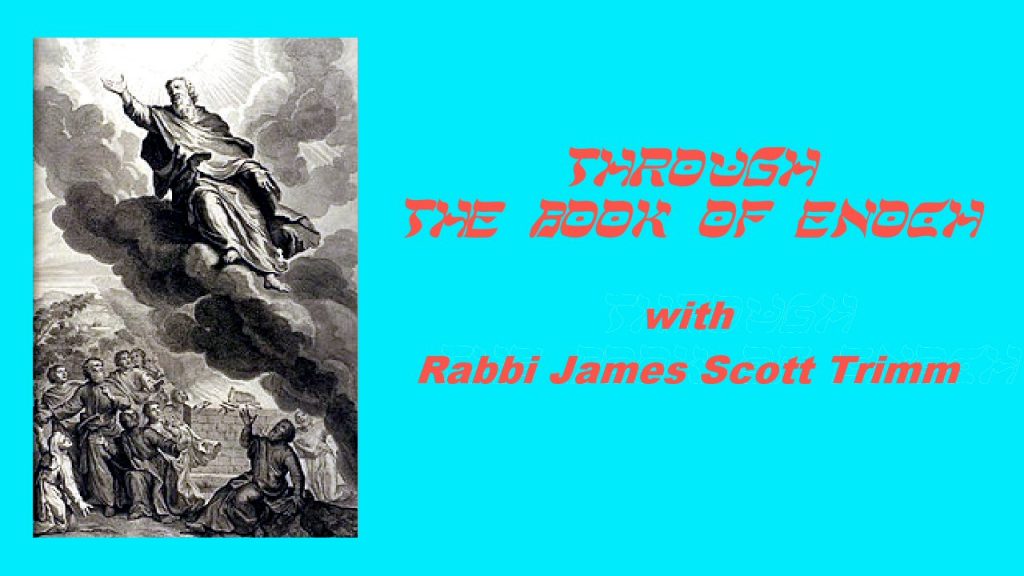
Donations can be sent by Paypal to donations@wnae.org or by Zelle or by Go Fund Me!

Click HERE to donate

Through the Book of Enoch Lesson 11

Handouts for Lesson 11

Today is the third, the rent is past due, and right now we do not have it!

I want to thank all of you supporting this work. I literally could not do it without you!

This work takes hours of my time. As many of you know, my wife is very ill, and I spend most of my time at home as her caretaker. I work at a desk less than six feet from her bed. So I am in a position to dedicate many hours to this important work that I have been directed to do.

But I also realize that it is not the activity of James Trimm alone who is responsible to do this work, it is all of us together who are charged with the responsibility of accomplishing this work. I very much look on the efforts of this restoration work as a cooperative one with each one of you. We are all joint heirs with Messiah and should always be about our Father’s business. I am honored to be able to be partnered with truth seekers as this restoration of Scripture moves forward in fulfillment of prophecy.

Donations can be sent by Paypal to donations@wnae.org.

or click here